
_edited.png)


Mediterranean Islands Travel Guide
The Mediterranean islands
The Mediterranean islands are synonymous with romance, passion, and ultimate relaxation. They capture the imagination due to their beautiful beaches, colours and vibrant spirit of the people. Life seems to burst forth from their luscious landscapes, cobbled streets and sparkling oceans, offering the perfect place to experience a slice of la dolce vita.
However, there are a variety of islands in the Mediterranean, each with its own unique cultural heritage, character, and ambience. When it comes to picking a destination for a Mediterranean holiday, you can’t exactly go wrong – you’ll no doubt be blessed with gorgeous beaches and warm weather. But there may be an island that suits you best, depending on if you’re a culture connoisseur, nature lover or history buff. Here, we’ve compiled a guide so you can plan your perfect escape.
Balearic Islands
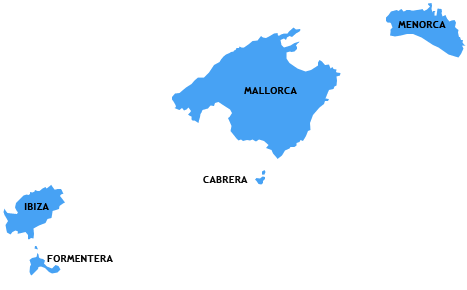
The Balearic Islands—Mallorca, Menorca, Ibiza, and Formentera—offer a blend of Mediterranean culture, natural beauty, vibrant nightlife, and tranquil escapes. This guide provides key highlights, travel tips, and must-see experiences for each island.


Island Highlights
Ibiza
-
Known for: Nightlife, bohemian villages, UNESCO-listed old town
-
Top Experiences:
-
Party at iconic clubs (Pacha, Amnesia)
-
Stroll Ibiza Town’s Dalt Vila (old town, UNESCO site)
-
Visit artisanal markets and beach clubs at Playa de Las Salinas
-
Discover quiet coves and sunset spots in the north
-
Formentera
-
Known for: Peaceful beaches, nature, cycling
-
Top Experiences:
-
Cycle to secluded beaches (Es Caló, Ses Illetes)
-
Try local cheesecake (flaó) in Sant Francesc
-
Enjoy crystal-clear waters and laid-back atmosphere
-
Access via ferry from Ibiza only
-
Mallorca
-
Capital: Palma de Mallorca
-
Known for: Varied landscapes, historic towns, beaches, hiking
-
Top Experiences:
-
Visit Palma’s Gothic Cathedral (La Seu)
-
Explore the Serra de Tramuntana mountains (UNESCO World Heritage)
-
Relax on beaches like Es Trenc and Cala Pi
-
Discover charming villages: Valldemossa, Deià, Sóller
-
Enjoy local markets and cuisine in Palma’s Santa Catalina district
-
-
Unique Activities:
-
Boat trip to Cabrera National Park (nature reserve, birdwatching)
-
Visit the Botanicactus garden in Ses Salines
-
Menorca
-
Known for: Unspoiled nature, tranquility, biosphere reserve
-
Top Experiences:
-
Wander the historic streets of Ciutadella and Maó
-
Swim at pristine beaches: Cala Macarella, Cala Mitjana
-
Explore prehistoric sites: Naveta d’Es Tudons
-
Hike coastal trails and discover hidden coves
-
5 Fascinating Facts About the Balearic Islands
-
The Balearic Islands have been a part of Spain since 1349.
-
Menorca, the smaller island, boasts more kilometers of beach than both Mallorca and Ibiza combined.
-
The island is home to ancient funeral structures known as Naveta Tudons, which date back to1200 BC.
-
Each year, over 13 million tourists flock to the Balearic.
-
Notable tennis stars Rafael Nadal and Carlos Moya hail from the Balearic Islands.
Getting There & Around
-
Airports: Palma de Mallorca, Menorca (Maó), Ibiza
-
Ferries: Connect mainland Spain (Barcelona, Valencia, Denia) with the islands. Inter-island ferries are frequent, especially in summer.
-
Getting Around: Car rental is recommended for exploring each island. Buses and taxis are also available.
Island Hopping Tips
-
Suggested Duration: 7–10 days to explore all four islands
-
Ferry Routes: Frequent connections between Mallorca, Menorca, and Ibiza; Formentera accessible from Ibiza
-
Recommended Itinerary:
-
Start in Menorca (historic sites, beaches)
-
Ferry to Mallorca (mountains, towns, nightlife)
-
Ferry to Ibiza (old town, clubs, bohemian north)
-
Day trip or overnight in Formentera (beaches, cycling)
-
Top Activities Across the Balearics
-
Water sports: kayaking, sailing, snorkeling
-
Hiking: Serra de Tramuntana (Mallorca), coastal trails (Menorca)
-
Beach-hopping: Each island offers unique coves and sands
-
Nightlife: Ibiza is world-famous, but Mallorca and Menorca also have vibrant scenes
-
Culinary experiences: Fresh seafood, local cheeses, pastries (ensaimada, flaó)
-
Markets: Find artisanal goods in island villages
Practical Tips
-
Book in Advance: Especially for ferries, popular attractions, and accommodations in high season
-
Pack Appropriately: Light clothing for summer, layers for spring/autumn, swimwear, sunscreen
-
Sustainability: Respect local environments, especially in protected areas like Cabrera and Menorca’s biosphere reserve
-
Language: Spanish and Catalan are official; English is widely spoken in tourist areas
The Balearic Islands offer something for every traveler—whether you seek adventure, relaxation, culture, or vibrant nightlife. With easy connections, diverse landscapes, and a welcoming Mediterranean spirit, they make for an unforgettable holiday destination

Ibiza Travel Guide
Ibiza is a Spanish island located just 80 kilometers from the mainland, part of the Balearic Islandsipelago. Despite its modest size of 41 by 15 kilometers, it is renowned as one of the most vibrant and enjoyable islands globally. Here you can relax on serene beaches with turquoise waters, explore stunning natural parks, unforgettable nightlife at world-class clubs, and immerse yourself in traditional towns and hippie culture. Enjoy a bohemian atmosphere, indulge in exquisite national and international cuisine, and witness breathtaking sunsets over Mediterranean Sea.
Table of Content
2. How To get to Ibiza
3. Things to Do
4.Getting Around
5. Best Beaches
7. Gastronomy
8. Where to stay

Useful Facts about Ibiza
Airport
Ibiza Airport (IBZ)
Time Difference
UTC-2
Visa Requiered
No
Population
160.000
Currency
Euro
Capital
Ibiza
Int.Dial Code
+34
Languages
Spanish, Catalan
Voltage
240V 50HZ
Credit Card
Credit Cards,ATM, Travellers Cheques
When is the best time to visit Ibiza?
The White Island is a very diverse destination where you will find the holiday you want if you know when to go. Find out when the best time to visit Ibiza is depending on your plans, because it’s one thing to want to squeeze all the emotions you can from the island and another to choose it for a hiking getaway or a fabulous romantic trip as a couple.
Ibiza has a mild climate most of the year, so it’s always a good idea to island hop if the chance arises. However, you can imagine that arriving in July and August, in the middle of the high season, when the island is at its most vibrant, is very different from arriving in spring or early autumn. Most hotels are open from May to October, with the season being brought forward to April if Easter is late, so if you like to get your tan before anyone else or be the last to say goodbye, you can.
When is the best time to visit Ibiza?
The White Island is a very diverse destination where you will find the holiday you want if you know when to go. Find out when the best time to visit Ibiza is depending on your plans, because it’s one thing to want to squeeze all the emotions you can from the island and another to choose it for a hiking getaway or a fabulous romantic trip as a couple.
Ibiza has a mild climate most of the year, so it’s always a good idea to island hop if the chance arises. However, you can imagine that arriving in July and August, in the middle of the high season, when the island is at its most vibrant, is very different from arriving in spring or early autumn. Most hotels are open from May to October, with the season being brought forward to April if Easter is late, so if you like to get your tan before anyone else or be the last to say goodbye, you can.
What the weather is like in Ibiza in summer
The hottest months in Ibiza are July, August and September, with average temperatures between a maximum of 30ºC in August to a minimum of 19.5ºC in September. In general, and with the exception of a few days when temperatures are higher and humidity rises, the summer temperature in Ibiza is pleasant. As is the sea temperature, which in June is around 21ºC and in August is over 24ºC.
Tips for your holidays in Ibiza in high season
-
Pack some beach shoes for when you want to swim in the quieter coves, where the seabeds often include both sand and pebbles.
-
If you want to rent a boat, we recommend that you make your reservation as early as possible, as sailing is in high demand during the high season months.
-
In July and August, there are restaurants in Ibiza where you have to book well in advance, such as El Bigotes, Can Pilot, Can Pujol and Balàfia. So we recommend that you don’t rest on your laurels…
-
Book your rental car early to ensure the best price and availability of the model you want.
-
If you are looking for a hotel in Ibiza in July and August, don’t delay. Book early to find the best rates and extras.
What the weather is like in Ibiza in spring and autumn
The weather in April, May and October is usually quite pleasant, with warm daytime temperatures and fairly cool nights. To give you an idea, April has an average maximum temperature of 19 °C and a minimum of 11 °C. In May it is between 22ºC and 14ºC and October between 23.5ºC and 16ºC. Although the water is still cool in April, by autumn, the sea remains warm for swimming, thanks to the heat accumulated during the summer. And if you’re afraid of the rains, don’t worry; it rains an average of four days in April, three in May and six in October.
Tips for your holidays in Ibiza in mid-season
-
-
Pack your favourite ‘just in case’ clothes in your suitcase and don’t be afraid of being called grandpa or grandma: In April, May and October there might be some rain showers, and at night you’re bound to need some warm clothes when the seasons are changing. Don’t forget your swimsuit and, if you like walking, the right footwear.
-
Take advantage of the attractive promotions available in May and October for renting boats and enjoy a marvellous day at sea.
-
Note that many restaurants close after the Fiestas del Pilar (12 October), so call to make sure they are open if you are travelling to Ibiza in the second half of October.
-
Enjoy Ibizan cuisine: Most restaurants specialising in traditional dishes only close during their holiday month, usually in January or February.
-
Take the opportunity to visit Formentera in May and October and enjoy it as it was before becoming famous around the world.
-
What the weather is like in Ibiza in Winter
Average winter temperatures range from a low of 7ºC in January to a high of 17ºC in March, so the island usually has a mild low season, which even allows you to sit out on a terrace in the sun without the need to wrap up. The average rainfall is around 5 days per month, so its not absolutely necessary to pack an umbrella.
Tips for your holidays in Ibiza off-season
-
Daytime temperatures on sunny days without wind can be quite warm: Bear this in mind if you’re going hiking.
-
January and February are the months chosen by many restaurants to close for holidays. For these dates, we recommend Wild Beets Ibiza, Rita’s Cantina, Vista Alegre, Ca n’Anita, S’Espardell, Casa Mama, Sa Caleta, Ca n’Alfredo and La Escollera.
-
Due to the absence of mist and cooler air temperatures, winter sunsets are even more spectacular than those you’ll see in summer. So get organised to catch the sunset every day somewhere on the west coast.
How To Get to Ibiza
You can reach the island by plane, ferry or yacht charter.
-
Travelling to Ibiza by plane: the island is connected to the main Spanish airports and, during summer, to many European cities. Ibiza airport is located in the south, just over 7 km from the city centre, 20 km from Sant Antoni, 22 km from Santa Eulària and 35 km from Portinatx, among other connections.
-
Travelling to Ibiza by ferry: theisland has maritime connections with the ports of La Savina (Formentera), Valencia, Denia (Alicante), Palma de Mallorca, Maó (Menorca) and Barcelona. The shipping companies operating these routes are Baleària, Trasmed and GNV. This option is the only one possible when you want to travel to Ibiza by car.
-
Travelling to Ibiza by yacht charter: If you want to discover Ibiza by boat, Ibiza has marinas in Sant Antoni, Santa Eulària and the capital. You can also anchor in numerous coves, as long as you do not drop anchor in posidonia oceanica (Mediterranean tapeweed seagrass) meadows.
How To Get around in Ibiza
The options are truly endless. No, really. Here you can find anything from regular taxis to water buses and scooters. To figure out which variant will be the best for you, we offer to take a closer look at the transportation system in Ibiza.
To begin with, there’s an airport right next to Playa D’en Bossa, not far from Ibiza Town. Other ways to get to the island from the mainland are by ferry from Valencia, Dénia, or Barcelona. As for traveling around the place, public transport, taxis, and car rentals are at your command.
Nonetheless, there are some intriguing alternatives that you’ll definitely want to know about. Stay tuned to learn more!
Transportation in Ibiza: All the Options
Let’s start with the easiest way of getting around Ibiza – a taxi service.
1) Taxis
What can be easier than catching a cab? Indeed, taxis are a popular and convenient mode of transportation to get to your accommodation after a long night of partying and drinking.
You can simply book one over the phone or call the reception in your hotel to order one for you. Alternatively, you can catch one on the street, although please note if you are close to the taxi rank, the taxi may not stop on the street to pick you up and you will have to walk to the taxi rank.
However, there is a pitfall to be aware of. The availability of cars to order can differ depending on the time of the day. You can encounter long lines at the taxi ranks after 11 pm when the majority of tourists head to bars and clubs, as well as around 6 am when everyone goes back to their hotels. Also please note that there is no Uber in Ibiza.
How to avoid queues? Well…There’s an interesting solution. Just go by the disco bus (if you’ll be able to confidently stand on your feet by that time, of course)! Yeah, the Ibiza transportation system is never boring! For more info about Disco Bus, stay with us.
2) Disco Bus
Wondering how to get around Ibiza at night? Getting back to the hotel after a night of disco on a Disco Bus? What? Is this a joke? Don’t judge until you try it! This vehicle is really cherished here because it is probably the best way to get around in Ibiza.
It runs between the most popular places, such as San Antonio, Playa D’en Bossa, and Ibiza Town (the only exception is Santa Eulalia) by road. Starting its route at 16:00 and finishing at 07:00 in the morning, the Disco Bus is a lifesaver for party people who are unable to take a cab during rush hour and it connects the majority of super clubs – Amnesia, DC-10, Hї Ibiza, Ushuaїa, and Pacha. And as for Eden and Es Paradis, there’s a bus stop only 5 minutes away.
This season, the service was available from May 28 to October 3, although this may change slightly in the future. The service costs €4 for a single journey.
While everyone is crowding in lines to get a taxi, just have a fun ride on a Disco Bus! Also, some drivers even put on good tunes to get you in the mood!
3) Water Bus
You’d better not have seasickness for this one! A water bus is one more option for moving around. Why choose it? It is a fast way to get wherever you want to, it’s pretty cheap, the service is exceptional, and the experience is unforgettable.
The schedules are frequent from the early morning until late at night. Available routes are: Ibiza Town – Figueretas – Playa d’en Bossa; Playa d’en Bossa – Figueretas – Ibiza Town.
Trust us, this type of transport is particularly beneficial during the high season, when regular buses are packed and sweltering. And even if you have already figured out how to get around in Ibiza, we still recommend taking a water bus to enjoy the views of the Mediterranean Sea.
4) Car Rental
For those who strive to be as independent as possible, car rental is a big yes. There are numerous services in Ibiza, and most of them are excellent. Usually, you can choose a pickup point yourself or even order a car to be brought to the desired location.
We highly suggest families with children rent a car as it provides mobility, privacy, and the freedom to plan your day as a bonus. It will also be a perfect fit for tourists seeking luxury, as there is a vehicle to suit every taste and budget. Wondering how long it takes to travel around Ibiza and how long it takes to get from one side of Ibiza to the other? The island is quite small and takes around 1 hour to get from the North to the South; however, if you want to explore the island all around, then we recommend 2-3 days.
If renting a car is not for you and you’re asking yourself where to stay in Ibiza without a car, then we highly recommend in sticking to the major towns reachable by public transport. If you still want to explore Ibiza without a car, keep reading!
5) Scooters
Are you a hopeless romantic going on a vacation to Ibiza? Or getting around Ibiza without a car? Good news! All your dreams will come true here: captivating views, golden beaches, an azure sea, mesmerising sunsets, and scooters!
Often, you can easily find some to rent at the majority of car services. Please note, to rent a scooter here ,you will need a valid passport or identity card, a driving license, and be at least 18 years old. This doesn’t apply to e-scooters, though; they are usually treated as bikes.
6) Public Transport
You decided when to go to Ibiza, chose the hotel of your dreams, and bought the tickets already, but forgot to figure out how to travel around the island. No worries about that!
Luckily, the public transport system is very convenient and cheap here.
Buses are the most popular and cost-effective way to get around sunny Ibiza. Before catching one, make sure to have some cash on you, as this is the only payment option; also monthly travel cards are available. The service cost between €2 – €3.50, depending on the destination.


Must-See Sights & Experiences
-
Dalt Vila (Old Ibiza Town):
UNESCO World Heritage Site with beautiful, winding, cobblestone streets, ancient walls, and sunset city views.
Located in the upper part of the city, the old quarter known as Dalt Vila is surrounded by a wall built in the 16th century to protect the city from pirates and the Ottomans.
The steep, cobbled streets of Dalt Vila invite you to take a peaceful walk past charming whitewashed houses until you reach the highest part, where you can enjoy exceptional views. You'll also find a lot of lovely restaurants in this area.
Dalt Vila has many interesting and beautiful monuments such as its 13th-century Cathedral, the Plaza de la Vila square, the bastions of the wall (where you can enjoy great views), the 16th century Church of Santo Domingo and the Town Hall, located in an old Dominican Convent.
-
Port of Ibiza
The port area is full of bars and restaurants and shops stay open until midnight, making it one of the liveliest areas on the island. The bars in the port are a great place to start for a night out. You'll find many offers on drinks and a vibrant atmosphere.
-
Es Vedrà Islet:
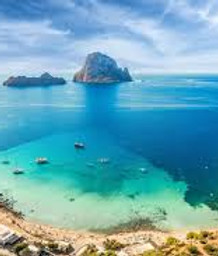
Mystical island shrouded in legend; best seen from Cala d’Hort or a sunset boat cruise.One of the nine islands that lie around the perimeter of Ibiza, Es Vedrá definitely draws the most attention from residents and visitors. Located to the south-east of Ibiza, less than 2 km from its coast, this mysterious rocky pyramid is almost 400 m high and makes a huge impression on anyone who comes to see it. Es Vedrá belongs to around thirty Ibizan families and since 2002 it, and neighbouring island Es Vedranell have been part of the Cala d’Hort, Cap Llentrisca and Sa Talaia Natural Park.
-
Can Marça Caves
Dramatic stalactite- and stalagmite-filled caves in the north, plus a spectacular music and light show.his cave was historically discovered by groups of smugglers who used it to hide their contraband and you can still see the markings they made on the walls to guide their way in the dark. Since the 1980s, the cave has become one of the island's major tourist attractions.
-
Formentera Day Trip:
Take a ferry or catamaran to Ibiza’s quieter sister island for white beaches and turquoise water.The island of Formentera is a popular tourist destination for its magnificent beaches that have been ranked among the best in the world for their rich golden sands and turquoise crystalline waters.


Iconic Villages & Markets
-
Santa Gertrudis de Fruitera:
Chic village with boutique shops, bars, and the 18th-century Església church.
Santa Gertrudis is a traditional Mediterranean village characterised by small, white houses and agriculture. Typical Ibizan bars and restaurants co-exist alongside more modern food establishments and the village is somewhere travellers can enjoy a relaxing dinner away from Ibiza's nightlife.
Santa Gertrudis also possesses a Bohemian character from the many artists, sculptors and musicians who have settled there over the years and you can see examples of their work in the galleries and as well as an impressive collection in Bar Costa.
-
San Carlos:
Home to the famous Las Dalias hippie market—great for local crafts, food, and music.
San Carlos is a place where you can escape from the bustling streets of Ibiza Town and visit a place where a hippy community lives happily without the comforts of modern life.
The main monument in this tiny village is its 18th-century church, Iglesia de Sant Carles de Peralta. Next to it stands the famous Bar Anita, a popular meeting point for hippies in the '60s and a place where villagers still pick up their post from the wooden letterboxes on the walls! San Carlos is most well-known for its hippy market, Las Dalias, full of colourful stalls selling interesting merchandise.
Besides its charming character, San Carlos is a popular location among tourists as a stopover to reach the beautiful beaches and coves in the northeast of the island, as it's the junction where all the roads of Ibiza meet.
-
Tranquil, authentic villages to explore for local life.
-
Sant Miquel,
One of the most charming destinations in this area is Port de San Miguel Ibiza (or Puerto de San Miguel), a picturesque harbour that has evolved from a modest fishing port into a refuge for families, travellers in search of peace and tranquillity, and those who appreciate natural beauty. This article will guide you through everything you need to know before visiting this tranquil corner of Ibiza.
-
Portinatx,
Cala de Portinatx, located in northern Ibiza, is a tourist destination that combines beautiful coves, exciting activities, and a touch of history and culture. This charming corner is perfect for adventurers, families, and those seeking to relax in an idyllic setting.
Discover everything that Portinatx and Ibiza Cala Portinatx have to offer and start planning your unforgettable getaway!
-
Sant Joan:
San Juan de Labritja, or San Juan in Ibiza, is a place where time seems to stand still, preserving the essence of an authentic Ibiza, far removed from the hustle and bustle of tourism.
This small village in the island’s north, sometimes known as San Juan Bautista Ibiza, is beloved for its natural landscapes, culture, and diverse community.
San Juan de Labritja is the last village in northern Ibiza, situated in a region of mountainous landscapes, hidden beaches, and rural areas that maintain their authenticity. It’s less accessible than other parts of the island, which has allowed it to preserve its secluded character and traditions.
For those interested in finding it, the San Juan Ibiza map can be a helpful guide to navigate the area’s charm.

Best Beaches
-
Cala Bassa
Awarded Best Beach in Spain 2025; family-friendly, calm clear water, pine forests, water sports, shade
Renowned for its crystal-clear waters and golden sand, this beach is surrounded by a dense pine forest and offers several dining options. Located on Ibiza’s west coast, it’s perfect for a day of relaxation with delicious food and sea views.
-
Cala Comte
Turquoise water, amazing sunsets, snorkeling, top-10 in Europe.Also known as Platges de Comte, it’s one of Ibiza’s most spectacular beaches, with striking turquoise waters. This beach comprises small coves surrounded by rocky formations, offering a stunning natural landscape. The crystal-clear waters are ideal for snorkeling and other water activities.
-
Cala d’Hort
Sunset views, Es Vedrà vistas, perfect for photos.Famous for its breathtaking views of the Es Vedrà islet, which majestically rises from the sea. This beach offers a scenic, natural landscape surrounded by dramatic cliffs and Mediterranean vegetation, creating a secluded, peaceful atmosphere.
-
Benirras
Hippie vibe, legendary sunset drum circle.Barely 150 metres long, Benirrás beach is one of the most frequented and popular beaches in the north of Ibiza. It is famous both for its spectacular sunsets and for the hippy party that is held every Sunday in this stunning location.
-
Cala Nova
Easy for families, shallow waters, laid-back vibe.
Located on Ibiza’s east coast, this beach is surrounded by a charming natural landscape, offering a tranquil, relaxing atmosphere.It’s especially popular among surfers due to its ideal waves for surfing.
-
Cala Xarraca
Quieter, secret spot in the north.A must-see cove in Ibiza. Located on the northern coast near Portinatx, it’s surrounded by cliffs and typical Ibiza vegetation, such as pine trees and shrubs. It also has basic amenities like beach bars and restaurants.

Ibiza Nightlife 2025
Looking for the top clubs in Ibiza? here you will find the ultimate guide to the island’s most iconic spots.
From its famous nightlife to laid-back beach bars, we’ll walk you through the best and most popular places for an unforgettable experience.
Whether you’re a fan of house and techno or prefer a more exclusive beachside vibe, Ibiza’s beach clubs have something for everyone.
Best Clubs in Ibiza, Spain
Ibiza is renowned worldwide for its vibrant nightlife and iconic clubs and bars. Here’s your guide to some of the most standout venues:
Amnesia
Located in San Rafael, Amnesia is one of Ibiza’s most famous nightclubs. Known for its high-energy music and themed parties, this spot is a must for fans of house and techno music.
Pacha Ibiza
Found in Ibiza Town, Pacha is an institution in Ibiza’s nightlife. With a history dating back to 1973, it’s celebrated for its extravagant parties and world-renowned DJs.
Ushuaïa Ibiza Beach Hotel
This beach club blends a luxury resort experience with an open-air dance floor. Famous for its themed events and spectacular stage, it offers stunning views of the sea and sunset.
Sankeys
Located in San Antonio, Sankeys is known for its underground vibe and high-quality electronic music. It’s a popular spot among house and techno enthusiasts.
Eden
Situated in Es Cavallet, this beach club offers a unique experience with its open-air dance floor and cutting-edge electronic music.
Hï Ibiza
Known as one of the most exciting and innovative clubs in Ibiza, Hï Ibiza, located in Playa d’en Bossa, has even been awarded the number one club in the world by DJ Mag.
Akasha
This boutique nightclub, set in the legendary Las Dalias hippy market in northern Ibiza, offers impressive acoustics and a unique sound system for an unmatched listening experience.
528 Ibiza
528 Ibiza brings together music, entertainment, and a unique experience in a natural setting. Expect music festivals with renowned DJs, acrobatic shows, dance performances, comedy acts, and private events.
Ibiza Rocks
A top destination in Ibiza, Ibiza Rocks is famous for its vibrant pool parties and live events. Located in San Antonio, this hotel and club offers daily pool parties, DJ residencies, and a festive atmosphere.
Chinois Ibiza
A luxurious new club located in Ibiza’s port, Chinois stands out with opulent decor, excellent sound, and a spectacular light show.
Best Beachfront Night Bars in Ibiza
Ibiza is well-known for its vibrant bars and sunset bars. From chic and sophisticated venues to cozy seaside hangouts, here are some of the best night bars to fully enjoy Ibiza’s unique experience.
-
Blue Marlin Ibiza Beach Club:
This beach bar is famous for its cocktails and relaxed vibe. It offers spectacular sea views, making it the perfect spot for a pre-party drink.
-
Cipriani:
Located in Ibiza Town, this elegant bar offers an extensive selection of cocktails and wines. Ideal for a dinner or drink before heading out to the nightclubs.
-
BeachHouse:
Found in Playa d’en Bossa, this bar is known for its creative cocktails and cozy atmosphere. It’s perfect for a day by the beach and a relaxed evening.
-
Bounty Beach Club:
Located in Cala d’Hort, this beach club offers breathtaking views of Es Vedrà. It’s the perfect spot to enjoy a drink while watching the sunset.
-
The Chiringuito:
Set in Playa d’en Bossa, this bar is popular for its relaxed vibe and live music. It’s a favorite for a drink after a beach day.

Tips for Enjoying Ibiza’s Nightlife
To make the most of Ibiza’s legendary nightlife, it’s essential to be well-prepared. These tips will help you enjoy every moment. Discover how to fully embrace the Ibiza experience and make unforgettable memories on this magical island!
Book tickets in advance
Many of Ibiza’s nightclubs have limited tickets that can sell out fast. Booking in advance is highly recommended to secure your entry.
Dress confortably
Ibiza’s nightlife is incredibly lively, so dressing comfortably for dancing and moving around is essential. Choose light, breezy outfits that let you enjoy the vibe without restrictions, and wear comfy shoes to dance all night.
Arrive early
To catch the sunset and find a great spot, arrive early at bars and clubs. Getting there with time ensures you have a good place, can soak in the atmosphere, and unwind before the crowd arrives.
Stay hydrated and sun-protected
During the day, stay hydrated and protect yourself from the sun with sunscreen, a hat, and sunglasses to be in top shape for the night.
Enjoy live music
Many bars and clubs in Ibiza feature live music, so take the chance to catch performances from DJs and local bands.

Top-Rated Hotels in Ibiza
Looking for the perfect hotel to fully experience Ibiza? This paradise island offers accommodations that combine luxury, stunning views, and exceptional service, delivering more than just comfort – they offer unique experiences.
Here are the 9 best hotels across the island where luxury, comfort, and breathtaking views come together to offer a truly memorable experience. Discover beachfront resorts, secluded boutique hotels, and more:
Iberostar Ibiza Resort
This top-rated adults-only hotel in Ibiza is known for its vibrant nightlife, perfect for dance lovers seeking an incredible evening with world-class DJs. Located in Santa Eulalia del Río, it’s about 8 kilometers from Ibiza Town.
The resort features spacious, well-equipped rooms, multiple pools, a spa, a health center, a fitness center, and dining options offering Mediterranean cuisine.
Six Senses Ibiza
Located in the serene Cala Xarraca Bay in northern Ibiza, this luxury resort stands out for its sustainable design and wellness-centered approach. Offering a unique, holistic experience that blends luxury, nature, and relaxation, it’s the ideal choice for unwinding.
Iberostar Ibiza Resort
With dreamy rooms, suites, and villas, the resort includes a world-class spa, personalized wellness programs, and restaurants featuring local and healthy cuisine. Its stunning sea views and exclusive atmosphere make it perfect for a relaxing and luxurious Ibiza getaway.
TRS Ibiza Hotel
This luxurious adults-only resort, located in Cala Gració on the west side of the island, is known for its sophistication and exclusive services. Combining Ibiza’s natural charm with a sleek, modern design, this five-star hotel is ideal for a luxury escape.
The hotel offers rooms and suites with sea or garden views, several pools, a high-end spa, and fine dining restaurants that blend Mediterranean and international flavors.
Montesol Experimental
This iconic boutique hotel, located in the heart of Ibiza on Paseo de Vara de Rey, has a rich history dating back to 1933.
Recently renovated to offer a modern luxury experience while retaining its historical essence, it’s one of Ibiza’s most emblematic hotels.
The hotel features stylish rooms with contemporary decor and city views. The Café Montesol restaurant, with a vibrant terrace, is perfect for enjoying Mediterranean cuisine.
Its prime location provides easy access to nightlife, shopping, and the marina, making it a fantastic choice for experiencing Ibiza’s cosmopolitan side.
Can Sastre Hotel
This exclusive boutique hotel, hidden in Ibiza’s countryside near Sant Rafael, offers a personalized and intimate experience, ideal for those seeking tranquility and a connection to nature in an authentic setting.
With just a few rustic-chic suites blending Ibiza’s traditional charm with modern touches, the hotel’s lush gardens, palm-fringed pool, and cozy nooks create a perfect escape for relaxation. Its dining service focuses on local Mediterranean cuisine.
Nobu Hotel Ibiza Bay
Located in Talamanca Bay, just minutes from Ibiza Town, this luxurious five-star family-friendly resort offers the perfect blend of sophistication, comfort, and a relaxed beachfront atmosphere for those seeking a luxurious Ibiza experience.
The hotel boasts elegant rooms and suites with sea views, designed with a modern aesthetic and Mediterranean accents.
Its dining is renowned, with Nobu restaurant at the forefront, offering signature Japanese cuisine alongside fresh seafood and local dishes.
Hotel Petunia
This charming boutique hotel in Cala Carbó, on the island’s southwest coast, offers breathtaking views of Es Vedrà.
It’s an exclusive, serene haven ideal for those seeking a relaxed, natural ambiance away from the tourist crowds.
With a bohemian and Mediterranean style, the hotel features elegantly rustic rooms and suites. Its intimate setting includes lush gardens, an outdoor pool, and private terraces perfect for unwinding. The restaurant serves Mediterranean cuisine crafted with fresh, local ingredients.
Ibiza Gran Hotel
This luxurious five-star hotel in Marina Botafoch, one of Ibiza’s most exclusive areas, is just minutes from Ibiza Town and offers stunning views of the old town, Dalt Vila.
The hotel features elegant rooms and suites with sea or marina views, decorated in a contemporary style.
Its amenities include an exclusive wellness spa, multiple pools, and a prestigious dining selection blending local and international flavors.
Aguamadera Ibiza
This exclusive boutique hotel nestled in Ibiza’s scenic countryside offers a warm and inviting experience in a natural and relaxing setting.
Surrounded by hills and Mediterranean vegetation, it’s perfect for those looking to disconnect and enjoy Ibiza’s rustic elegance.
The hotel has a few rooms, all decorated in a bohemian, sustainable style with local, natural materials that reflect the island’s spirit. It stands out for its panoramic views, outdoor pool, and wellness focus, offering yoga retreats and massages.
Traditional Ibiza Cuisine
Ibiza's traditional dishes are not widely recognized beyond the island a sentiment shared with the other Balearic islands, Menorca and Formentera, though Mallorcan cuisine may be an exception. The gastronomy of Ibiza relies on principles, ingredients, and cooking techniques akin to its Balearic counterparts. However, the historical isolation of these islands fostered unique culinary traditions. In Ibiza case, these distinctive differences yield flavors that are truly delightful.

Among the family recipes used every day on the island, it is always possible to come across the odd surprise, creative dish that has been passed down through the generations.
Bullit and guisat de peix
With a few differences in terms of the ingredients added by individual cooks, both bullit and guisat de peix are Ibiza’s version of a fish stew. This dish is standard fare, not only in Ibiza, but in many towns around the Mediterranean region.
Its recipe makes the most of the fish and sea food that arrives at the markets, bringing out their potential by cooking them with potatoes in a nourishing sauce with extra-virgin olive oil, garlic, onions, parsley, saffron, almonds, etc.
Sofrit pagès
Another of Ibiza’s most traditional dishes, which is also typical of Formentera. Sofrit pagès is a truly substantial dish. It consists of two parts: on one hand there is soup, made from the stock used to cook all the ingredients, and on the other hand, the sofrit [mixture of lightly-fried vegetables] itself.
This stew is made with different meats (lamb, chicken, etc.), local cold meats (including sobrasada, a traditional cured, spiced sausage) and potatoes, and seasoned with spices such as cinnamon, cloves, saffron and paprika.
Borrida de ratjada
This is, perhaps, one of the most original of Ibiza’s typical dishes. Although it is not to everyone’s taste, mostly because of the texture and characteristic flavour of the ray (ratjada), a gristly-fleshed fish that feeds on the silt on the sea bed.
The spines are removed, and the flesh is chopped, marinated in salt and lemon juice, then boiled for a few minutes. This is a way of toning down its intense flavour and making it easier to chew.
Then, the fish is stewed with chopped parsley, garlic, toasted bread and paprika, and doused with olive oil and egg.
Greixonera
This time-honoured Ibizan pudding recipe is also a good example of making the best of the culinary resources available. Greixonera is a type of pudding prepared from the previous day’s leftover ensaimadas [traditional sweet buns].
The ensaimadas are soaked in a mixture of egg, cinnamon and lemon zest, and then baked in the oven in a similar way to the equally delicious home-made egg custard puddings.
Flaó
Flaó is Ibiza’s take on the traditional cheesecake. In this case, it is made with locally-produced milk (sheep’s or goat’s milk), flavoured with mint leaves, and coated with icing sugar.
Arroz de matanza [rice with meat]
This dish traditionally eaten in winter (the time of year when pigs were slaughtered) is simply a more carnivorous version of many typical Mediterranean rice dishes.
Apart from the various cuts of pork, this archetypal Ibizan dish can also contain chicken, various vegetables and even white beans.
Cuinat [vegetable stew]
This is a traditional stew eaten during Lent and Holy Week. The stew made from an assortment of vegetables. These include campion, a wild herb often used in cooking.
Cooking the ingredients is a laborious process; after it has been prepared, the cuinat is served, seasoned with olive oil, salt, chillies and a squeeze of lemon.

Ibiza Blog Post

Formentera Travel Guide
Formentera is the smallest, quietest, and most undeveloped of the Balearics and thanks to this it is overrun with natural beauty and holds onto a slower-paced life. Ideal if you’re in need of a switch off from the frantic, uber-connected everyday life we have all come accustomed to. The island is also the place to visit if you’re a beach fanatic. The coastline here is stunning and very accessible.
Table of Content
-
When to visit
-
How To get to Ibiza
-
Best Beaches
-
Gastronomy
-
Where To Eat
When to Visit Formentera?
The shoulder seasons in late May/June and late September/October are the best times to visit Formentera, as you have a good chance of warm, sunny weather without the crowds and nightlife that the summer season attracts. However, since the island isn’t as developed as Ibiza or Mallorca there are still quiet places in nature to be found, even in mid-summer. Do expect prices to soar in July and August. The winter season brings unpredictable and cooler weather meaning some of the beaches won’t be as enjoyable (and swimming may not be safe), but being the Med, you can still expect an abundance of blue sky days throughout the winter. In winter the majority of the beach bars and restaurants close down or have limited hours.
How To Get To Formentera
-
By Air: Formentera has no airport. The only way to reach the island is by sea, so you must first fly to Ibiza.
-
By Ferry from Ibiza:
-
Head to the main port (Port d’Eivissa, Ibiza Town) from the airport (20-minute taxi).
-
Ferry Companies: Balearia, Trasmapi, Mediterránea Pitiusa, Aquabus.
-
Travel Time: High-speed ferry: 25–35 minutes, slower ferries: up to 60 minutes.
-
Frequency: Dozens of daily departures year-round, especially frequent in summer.
-
Arrival: All ferries dock at La Savina, Formentera’s only port.
-
Vehicle Access: Bringing your car/motorbike is possible (extra charge), but vehicle entry is restricted for non-residents in the high season (end of June–early September)—apply for a permit if traveling with your own vehicle during this period. For most, it’s easier to rent on arrival.
-
-
By Ferry from Mainland Spain: There are also direct (but less frequent) ferry connections from Denia (Alicante) and sometimes other coastal cities


Getting Around Formentera
-
Best Options:
-
Scooter/Motorbike: Perfect for those wanting a bit more speed but still great access to beaches and hidden spots. Very popular, especially for younger couples or solo travelers.
-
Car/Quad: Useful for families or those wanting comfort and to reach remote beaches; electric cars are widely available. Note high-season restrictions on vehicle access.
-
Taxi: Taxis are available at the port (La Savina), Es Pujols, and Sant Francesc. They run 24/7 in high season and operate on fixed-price tables per route.
-
Bus: For a slower and budget-friendly option, use the local bus service. Five regular lines connect main beaches, villages, and the port. The L1 line is circular between La Savina and key towns. Ideal for solo travelers and those who enjoy walking short distances to reach beaches.
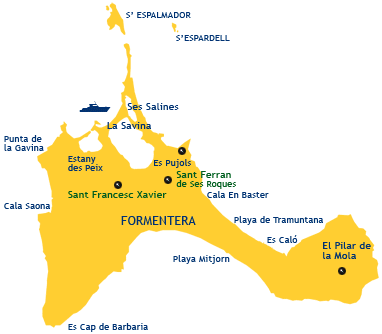
- Bicycle: Flat terrain and over 100 km of scenic routes make cycling the most popular, eco-friendly, and enjoyable way to explore. Rentals are available at the port and in all main towns.
Summary Table

Formentera’s compact size and flat terrain make every corner accessible and the journey as enjoyable as the destination.
-
Tips:
-
Book vehicle rentals in advance, especially in July and August.
-
Consider electric vehicles or bikes for sustainability and easier access to protected areas.
-
Walking: With many “Green Routes,” hiking the island is also rewarding for those wanting to discover nature intimately.
-
How Long to Spend in Formentera?
It’s possible to visit Formentera as a day trip from Ibiza, but I recommend staying a while.
You can see the island in a few days but a week would allow for an even more relaxed experience.
With two weeks to play with you’ll know the island like the back of your hand. Since it is well connected with the other islands, you could also mix it with a trip to Ibiza and/or Malliorca.
Top 5 Must-Visit Places
-
La Mola Lighthouse: Breathtaking, panoramic island views and clifftop photo ops. El Pilar de La Mola is the easternmost village on the island and is famous for its lighthouse, built in 1861, which offers spectacular views of the Mediterranean Sea. It also has a hippie market every Wednesday and Sunday.
-
Cap de Barbaria: Dramatic cliffs and lighthouse, top sunset spot.
-
Sant Francesc Xavier:
Formentera’s charming capital with lively cafés and boutiques.and has a historic center full of pedestrian streets and white houses. In it stands the church of Sant Francesc, built in the 18th century, and the Plaza de la Constitución, where several events are held throughout the year.
-
S’Espalmador: Pristine, car-free islet accessible by boat, perfect for beach lovers.
-
Es Caló:
Traditional fishing village known for authentic seafood and relaxed vibe.A small village that has grown in a very contained way around the fishing huts in the area, and it is located on the north coast of the island. Surrounded by crystal clear waters, the village’s life always revolves around the sea.
Hidden Gems
-
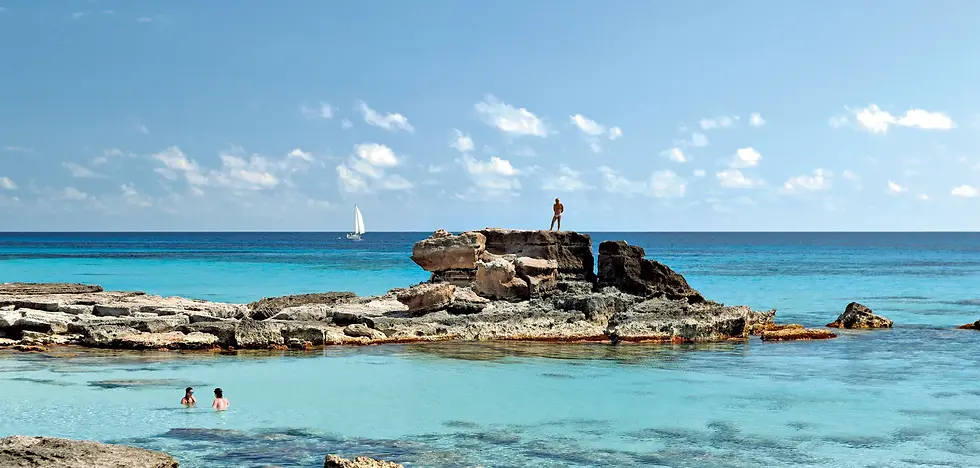
Cala en Baster: Rocky, secluded cove—perfect for snorkeling and privacy.
-
San Valero’s Cave: Secret cave near Cala Saona for adventurous explorers.
-
Punta de Sa Pedrera (“Roman Quarry”): Unique rock formations and panoramic views of Ibiza.
-
Ses Platgetes: Small, uncrowded beaches near Es Caló; great for escaping the crowds.
-
Sa Punta Prima Tower: Historic defense tower and scenic viewpoint.
-
Can Marroig: Nature reserve with walking trails and birdwatching, ideal for those seeking tranquility and nature immersion.


Best Beaches in Formentera


Top 5 Beaches:
Ses Illetes
Crystal-clear Caribbean-like waters, iconic beauty.
Declared one of the most beautiful beaches in the world, it is also located within the Ses Salines Natural Park. It has more than 450 metres of beach divided in two by a rocky area. Its name refers to several islets: Illa de Tramuntana, Illa des Forn, Escull des Pou, Illa Redona and Escull d’en Palla. It stands out for its white sand, calm, shallow and turquoise water.
Llevant
Quieter twin to Illetes, spacious and serene.
The ideal beach to disconnect, it is located in the opposite area to the two previous ones, facing east. It has 1,450 metres of coastline, crystal clear water and white sand, reflecting the island’s own turquoise tones. It is an incredible natural environment with great ecological value, it has an extensive dune system and a small forest that separates the beach and the salt lakes.
Cala Saona
Cliff-framed bay,calm waters, best sunset views.
With the breathtaking contrast of its reddish earth with the turquoise of the waters. The only sandy beach in the southwest of the island, hidden in a small bay between cliffs, it is nearly 140metres long and quite wide.
The boathouses with the traditional boats give her a special charm. It is the perfect place to watch the sunset and a mandatory stop.
Migjorn
Long, wild beach — great for walking, relaxing.
On the southern coast of the island you find 5 heavenly km of beach. The most extensive beach area in Formentera, formed by several coves divided by rock formations and with different accesses: Mal Pas beach, Es Ca Marí, Es Racó Fondo, Es Codol Foradat, Playa des Valencians, Es Arenals and Es Copy; each with different characteristics and possibilities. Nearby there is a neighboring cove that does not belong to the complex, Caló des Morts, a small sandy area with fisherman’s huts that offers what might be one of the world’s best sea-themed postcards.
Es Pujols
Resort beach with amenities, lively atmosphere.
its wonderful beach with crystal clear waters and beautiful turquoise tones with areas for swimming, diving or snorkelling.
Different bars and restaurants are lined up along its promenade, so you can spend a perfect day at the beach without having to take anything with you. The Bocasalina, the Tahiti Beach or the Sa Palmera restaurant are good options to enjoy a good meal with family or friends on the seashore.
And on the sand, there is only one “chiringuito”, People, with good views, a very quiet atmosphere and delicious dishes.


Local Food Highlights
Formentera’s cuisine is deeply rooted in its fishing and farming heritage and offers simple yet flavorful Mediterranean dishes. We must not forget that the ancient name of Formentera was Frumentaria, that is, the island of wheat.
Must-try local specialities include:
-
Ensalada Payesa:
A rustic salad of tomatoes, onion, roasted red pepper, boiled potatoes, dried bread (“bescuit”), and sun-dried fish (“peix sec”).
-
Bullit de Peix:
Traditional fish stew is simmered with potatoes and often served with arroz a banda (fish rice).
-
Frita de Pulpo:
Fried tender octopus with potatoes and peppers.
-
Sofrit Pagès:
A farmhouse-style stew blending meat (pork, chicken, lamb), potatoes, and local vegetables.
-
Squid “a la bruta”:
Squid cooked in its ink, yielding a rich, savoury main dish.
However, Formentera also offers other native products to try or purchase to bring a taste of the island to your tables:
Goat’s cheese, a widespread product with a strong taste, you can also find it flavoured with different herbs; or honey, which owes its excellent quality to the dry climate and the absence of chemicals (depending on the season, you can find it flavoured with thyme or rosemary, aromatic plants that grow wild on the island); or even dried figs, which for a long time were an ubiquitous food in every islander’s pantry.

Where to Eat in Formentera
Eating in beach restaurants in Formentera and sampling the traditional specialities is another of the activities you cannot miss on a day trip to the island. Some of the best restaurants and refreshment stalls where you can eat by the sea are:
Es Caló
Located on the shore, it is known as one of the best restaurants in Formentera. The rice dishes, salt prawns and lobster stew are outstanding. It also has amazing sea views.
Vogamarí
This traditional restaurant located on de Migjorn Beach is another favourite spot of the island’s inhabitants. The fried lobster with eggs and potatoes is one of its specialities, as is its brothy rice with lobster.
Beso Beach
This is one of Formentera’s most fashionable restaurants and an interesting option if you want to eat in Illetes, since it is located in the neighbouring d’en Borrás Beach. You will find beautiful people, a young casual atmosphere, and Mediterranean and Basque food.
Pinatar restaurant
Located in the tourist hub of Es Pujols, it’s an excellent option for lunch or dinner. You can choose between an extensive menu of seafood, meat and vegetable tapas or its menu of Mediterranean dishes, with lobster being one of its specialities.
restaurantpinatar.com
El Mirador
Although it is open all day, you might prefer to book for dinner, so that you can enjoy its stunning views of the sunset and the island of Formentera. The staff are friendly and the menu is based around traditional Mediterranean cuisine.
Sol Post
Fine dining is the star of this romantic restaurant located in Cala Saona. With two tasting menus to choose from, one with 19 courses and the other with 22, you’re sure to be amazed by their exquisite preparation that merges Mediterranean and Latin cuisines.


Where toStay in Formentera
Some Recommended accomodation in Formentera


-
A refined, upscale hotel directly on Migjorn beach, Gecko Beach House receives excellent scores (4.5/5 from 740 reviews) for its stylish design, gourmet restaurant, and pool. It is a standout choice for beach lovers and those seeking peaceful luxury.


