

El Plomo Beach A Pristine Desert Cove for Campervan Tranquility

Some beaches feel designed for arrival. El Plomo feels discovered. The road bends through dry hills, the land turns sparse and mineral, and then the sea appears, bright and calm at the edge of a little cove with almost nothing built around it.
Cala del Plomo, often called El Plomo Beach, sits within the wild coastal world of Cabo de Gata in Almería. It is not the place for beach clubs, promenades, or rows of sun loungers. Its appeal comes from the opposite feeling: a cove shaped by desert, stone, silence, and clear water.
For campervan travellers, that makes it especially memorable. The setting invites slow mornings, simple meals beside the van, swims in turquoise water, and long stretches of doing very little. Yet its fragile character also asks for care. The same qualities that make El Plomo feel free and remote depend on visitors treating it with restraint.

El Plomo feels like a beach at the edge of the desert
The first thing that sets El Plomo apart is the approach. Many Mediterranean beaches reveal themselves after passing restaurants, hotels, car parks, and beach shops. El Plomo asks for a slower arrival through a bare, arid setting where the journey is part of the place.
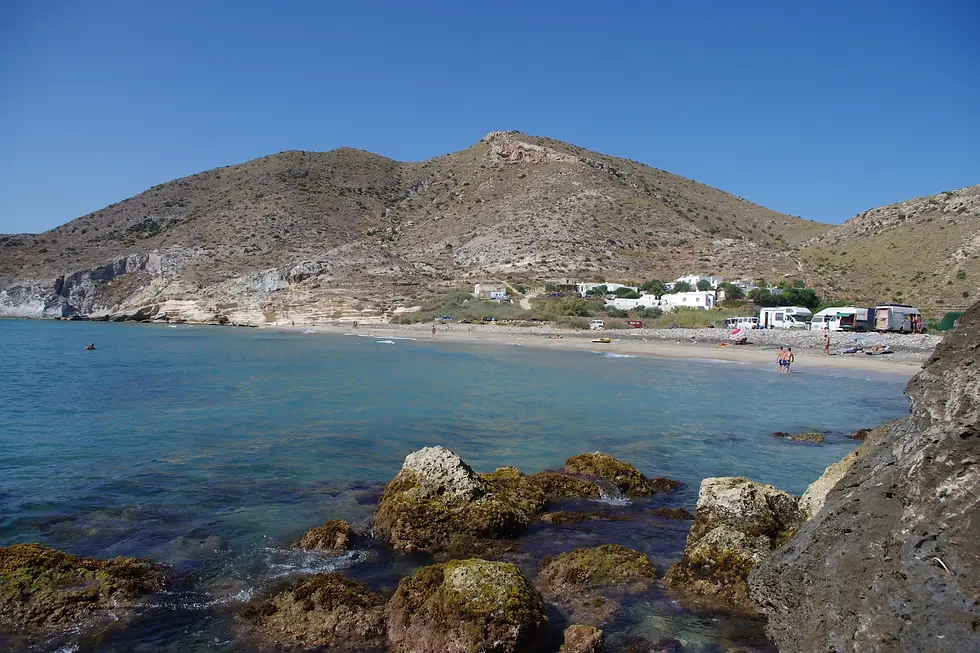
The surrounding hills are dry and ochre-toned. Vegetation is low and tough. A dry riverbed adds to the feeling of entering a natural basin where water appears only as memory until the cove opens in front of you. This contrast gives the beach its power. The land feels sun-baked and severe, then the sea softens everything.
That sense of remoteness shapes how people remember it. Even when other vehicles are present, the absence of beachfront buildings makes the cove feel unusually untouched. There is no hard line between resort and nature because there is no resort. The beach rests in its own space, with the desert behind it and the Mediterranean ahead.
Some travellers describe the area as having an old countercultural spirit. Stories of hippie pilgrims and long, improvised stays still cling to the place. Whether that memory is literal or romantic, it fits the mood. El Plomo feels less like a planned destination and more like a refuge people have passed through, respected, and spoken about quietly afterwards.
The effect is strongest outside high season. When the heat eases and the crowds thin, the cove’s shape becomes easier to read. The hills, the empty land, the stones, and the water all feel more present. In those quieter periods, El Plomo can seem almost isolated, not in a dramatic way, but in the calm way of a place left mostly to itself.
The beach is a mix of sand, stones, and calm clear water
El Plomo is not a flawless ribbon of powdery sand. That is part of its charm. The shore has a natural, uneven texture, with areas of sand mixed with stones and pebbles. It feels like a real cove, not a manicured bathing platform.
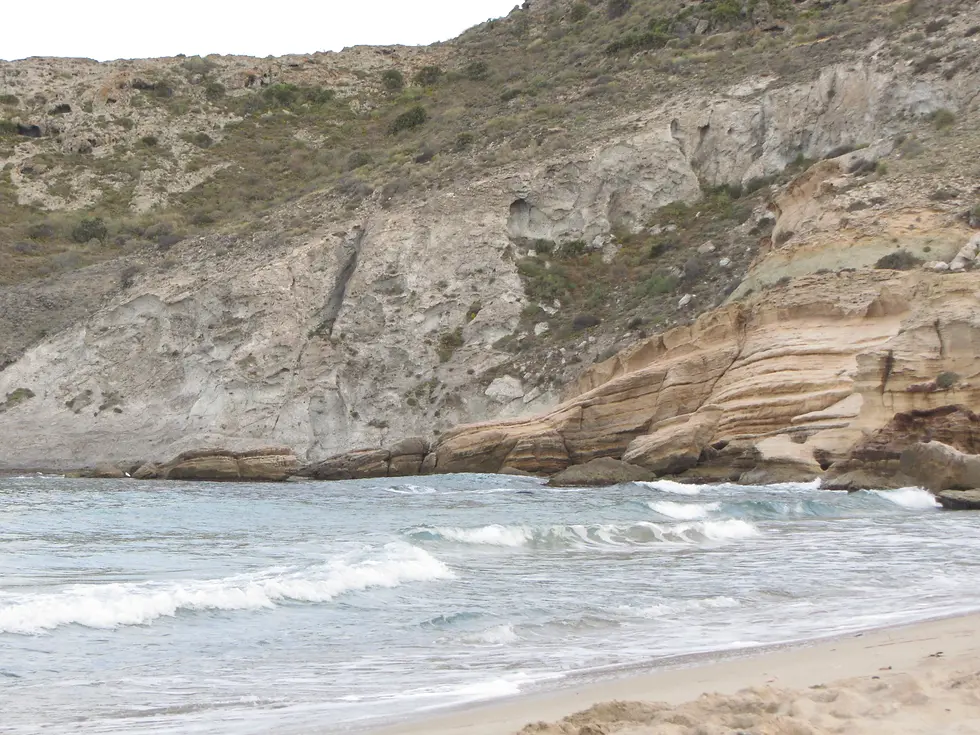
Footwear can make the visit more comfortable, especially when crossing stony patches or walking down to the water. Once at the edge, the sea is the reward. The water is often described as calm, clear, and turquoise, especially when the wind is low. On settled days, the cove can feel like a natural pool held between the desert slopes.
The seabed and shoreline can vary, so it pays to enter the water slowly. Families and relaxed swimmers often appreciate the sheltered feel, while people who enjoy floating, snorkelling, or simply cooling off between long spells in the sun tend to find the beach especially satisfying.
The beauty here is subtle rather than polished. A typical day might include:
A quiet swim before the wind picks up
Reading in the shade of a van or simple awning
Watching the colour of the water shift through the afternoon
Walking along the dry, stony edges of the cove
Sitting out after sunset as the heat leaves the rocks
There are few distractions. That makes small details stand out. The crunch of stones underfoot. The line where the dry riverbed meets the beach. The way the sea changes from pale green to blue. The feeling that the horizon belongs to the place, not to a built-up strip behind it.
Campervans suit the rhythm of Cala del Plomo
Cala del Plomo has become a quiet favourite on campervan routes through Cabo de Gata. It suits travellers who want to pause rather than tick off another stop. The appeal is simple: park near the sea, open the doors, and let the day slow down.
The campervan and caravan atmosphere is noticeable, but it does not usually feel like a large campsite. The mood tends to be low-key. People cook, swim, read, and rest. Many keep to themselves. The best versions of the scene feel respectful and discreet, with a shared understanding that the cove only works if nobody tries to dominate it.
That matters because El Plomo’s magic depends on lightness. Loud music, waste, spreading gear across large areas, and treating the beach like a private living room quickly change the tone. A van can bring comfort into a wild place, but it can also bring clutter. The difference comes down to behaviour.
For a campervan visit, the most useful mindset is simple: arrive self-sufficient and leave no trace. Bring what you need, take everything back with you, and keep the footprint small.
A sensible van setup for El Plomo includes:
Drinking water for the full stay
Food that does not require complex cooking
A rubbish bag that seals well
A portable toilet plan that follows local rules
Shade that can handle wind
Sandals or water shoes for stony ground
Warm layers for cooler evenings outside summer
Local rules for parking and overnight stays can change, especially in protected coastal areas. Signs, seasonal restrictions, police checks, and park regulations should always take priority over old travel reports. If overnight staying is not allowed, El Plomo is still a wonderful daytime stop.
The cove rewards restraint. A van parked neatly, with minimal equipment outside, feels in tune with the place. A full camp spread across the ground does not.
The best time to visit is when the coast feels quiet
El Plomo’s character changes with the season. In the busiest summer weeks, any beautiful cove in Cabo de Gata can attract more people, especially during hot days and holiday periods. The beach may still feel natural, but the sense of isolation becomes harder to find.
Spring, early summer, and autumn often suit the cove better. The light is softer, the air can be easier to handle, and the surrounding desert colours feel richer. Outside peak season, the short journey through the arid hills carries more weight because the arrival feels less crowded.
Winter can also be striking for travellers who enjoy solitude, though weather and road conditions need more attention. The beach may be too cool for long swims, but the scenery can be powerful. The sea, the empty shore, and the dry land create a clean, almost austere beauty.
Time of day matters too. Morning often brings the calmest mood. The water can look clearer, and the cove has a fresh stillness before the heat grows. Late afternoon offers warmer colours on the hills and a slower, more reflective atmosphere.
Midday is harsher. Shade is limited, and the brightness can flatten the scenery. If visiting during hotter months, it is wise to plan around sun exposure rather than assuming the beach will provide comfort on its own.
Best for | When it tends to work well | What to keep in mind |
Quiet scenery | Outside peak holiday periods | Services are limited or absent near the cove |
Swimming | Calm, low-wind days | Enter slowly because the shore can be stony |
Campervan breaks | Shoulder seasons | Always check current parking and overnight rules |
Photography | Early morning or late afternoon | The desert light is often strongest at the edges of the day |
The road in is part of the experience
El Plomo is not just a beach at the end of a route. The route itself sets the tone. The approach through the dry interior gives the cove its sense of arrival. By the time the sea appears, it feels earned.
Road conditions can vary, and rural access roads in this part of Andalusia may be narrow, dusty, or uneven. Larger vans should take extra care, especially after rain or during busy periods when passing other vehicles can become awkward. It is better to drive slowly and arrive relaxed than rush towards a place built for calm.
Navigation apps can help, but they do not always tell the whole story. Local signs, road surfaces, and common sense matter more when the landscape gets sparse. If a track looks unsuitable for a vehicle, forcing it is rarely worth the risk.
This is also where the beach begins to separate itself from more developed coastal stops. There is no sense of being funnelled into a commercial area. The desert road makes the transition clear. You leave behind the easier comforts of towns and enter a more exposed, elemental part of the coast.
That exposure is beautiful, but it also means planning matters. Fuel, water, food, and waste disposal should be sorted before arrival. El Plomo is at its best when visitors do not need the place to provide anything beyond space, sea, and silence.
Respect keeps the cove wild
Places like El Plomo can be loved too much. The more travellers share them, the more important small decisions become. A pristine cove does not stay pristine by accident. It stays that way because people resist the urge to take more space than they need.
Respect here is practical, not performative. It means leaving no litter, keeping noise low, avoiding damage to fragile vegetation, and not treating dry riverbeds or hidden corners as toilets. It also means accepting limits. If parking areas are full, the best choice may be to move on rather than squeeze into a sensitive spot.
The same applies to campervans. A respectful van scene can add warmth to a place. A careless one can quickly become the reason restrictions tighten. Anyone who values the freedom of travelling this coast has a stake in protecting its quiet order.
Good habits are straightforward:
Pack out all rubbish, including food scraps
Use proper waste and toilet facilities away from the beach
Keep music low or use headphones
Avoid driving or parking on fragile ground
Do not build fires
Give other visitors space
Follow signs and local instructions without argument
The reward is not only environmental. Respect makes the experience better. A quiet cove stays quiet. Clear water stays clear. The next traveller arrives to the same feeling of discovery rather than the leftovers of someone else’s stay.
El Plomo is for travellers who value stillness
El Plomo Beach A Pristine Desert Cove for Campervan Tranquility is more than a scenic phrase. It captures the reason people make the journey. The beach is not dramatic because of facilities or spectacle. It is memorable because it feels reduced to essentials: arid hills, a stony shore, clear water, and the calm presence of vans parked with care.
It will not suit everyone. Anyone looking for restaurants, easy shade, organised activities, or a polished resort experience should choose another part of the coast. El Plomo asks visitors to bring patience, supplies, and respect.
For those who enjoy simple travel, it can become one of the most satisfying stops in Cabo de Gata. Swim when the water is calm. Sit quietly when the heat softens. Watch the desert meet the sea. Keep the place clean, keep the footprint small, and let the cove remain what makes it special: wild, bare, peaceful, and beautifully unbuilt.

Comments