
_edited.png)
How to Choose the Right Travel Backpack for Comfort, Size, and Style

A travel backpack can make a trip feel easy, or it can become the thing you complain about every day. The wrong one digs into your shoulders, swallows your passport, fails airline size checks, and looks out of place the moment you leave the airport.
The right one feels balanced, keeps your essentials close, and suits the way you actually travel. That might mean a compact carry-on backpack for city breaks, a larger pack for long journeys, or a smart hybrid that works for both trains and trails.
This guide covers three big decisions:
What to look for in a good backpack
Whether size really matters
Whether a backpack or suitcase is the better choice

What to look for in a good backpack
A good travel backpack is not just a large school bag. It needs to carry weight well, protect your belongings, and help you move without constantly unpacking everything to find one small item.
Start with comfort, then move on to access, durability, security, and style.
Choose a backpack that fits your body
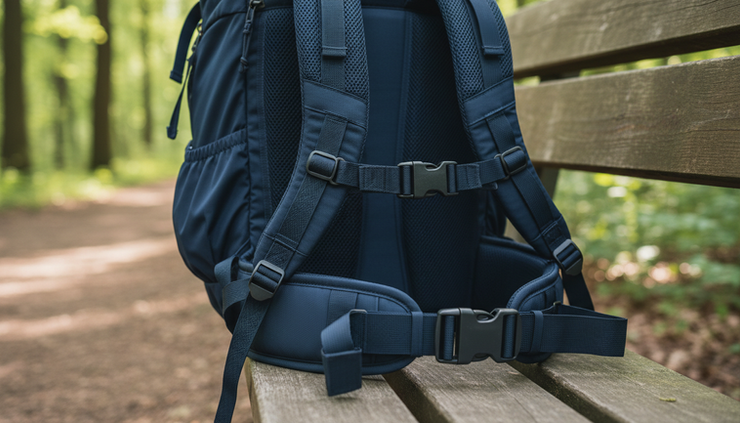
Comfort starts with fit. A backpack can have excellent reviews and still feel wrong if the back length, straps, or hip belt do not suit your body.
Look for these features:
Adjustable shoulder straps
They should sit flat without cutting into your neck or sliding off your shoulders.
A padded hip belt
This matters most on larger packs. A good hip belt moves some of the weight from your shoulders to your hips.
A sternum strap
This small chest strap stops the shoulder straps from drifting outwards and helps the pack feel more stable.
A supportive back panel
Padding and airflow channels can make a big difference on warm travel days.
Adjustable torso length
Some travel backpacks let you change the back system to match your height. This is useful if you often find bags sit too high or too low.
Try the backpack with weight inside it if you can. A bag that feels fine empty can feel very different with clothes, shoes, toiletries, and a laptop packed inside.
Pick the right opening style
Many travellers regret buying a top-loading backpack for general travel. Top-loaders work well for hiking, but they can be awkward in hostels, hotels, and airports because you often need to dig from the top to reach something at the bottom.
For most trips, a front-opening or clamshell backpack is easier. It opens like a suitcase, so you can see your clothes at once. This makes packing, unpacking, and airport security less frustrating.
Common opening styles include:
Opening style | Best for | Watch out for |
Top-loading | Hiking and outdoor trips | Harder to organise for city travel |
Front-opening | Most holidays and longer trips | Check that the zips are strong |
Clamshell | Carry-on travel and tidy packing | Can be bulky if overpacked |
Roll-top | Minimalist trips and wet weather | Less convenient for quick access |
If you like order, a clamshell design with packing cubes is one of the easiest setups.
Check the pockets and organisation
Too many pockets can be as annoying as too few. The goal is simple organisation, not a maze of hidden compartments.
Useful features include:
A padded laptop sleeve if you travel with a laptop or tablet
A quick-access top pocket for sunglasses, earphones, and lip balm
An internal mesh pocket for cables or small items
A water bottle pocket that fits a real bottle securely
A hidden or rear pocket for passport and spare bank card
Compression straps to stop your packing from shifting
Avoid bags where the main compartment becomes smaller because there are too many outer pockets. Storage should help the space, not steal it.
Look for durable materials and strong zips
A travel backpack gets dragged through train stations, shoved into overhead lockers, placed on wet pavements, and squeezed under seats. Durability matters.
Look for tough fabric, reinforced stitching, and quality zips. You do not need the thickest material available, but the bag should feel firm rather than floppy. Zips should run smoothly and not catch on fabric.
Water resistance is useful, especially in the UK and across Europe where rain can arrive without much warning. A fully waterproof backpack is rarely necessary for general travel, but a water-resistant finish or included rain cover can save your clothes from a soaking.
Think about security without overdoing it
No backpack can make travel risk-free, but good design can reduce easy theft.
Useful security features include:
Lockable zip pulls on the main compartment
A pocket that sits against your back
Tough fabric that is harder to slash
Minimal dangling straps in crowded places
Zips that are not exposed when you wear the pack
Do not rely only on locks. Keep valuables close, stay aware in busy transport hubs, and avoid leaving your bag unattended.
Does size matter when choosing a travel backpack
Yes, size matters, but bigger is not always better. A larger backpack lets you carry more, which sounds useful until you have to lift it into an overhead locker or walk across a city with it on your back.
The best size depends on trip length, airline limits, climate, and your packing style.
Understand backpack capacity in litres
Backpack size is usually measured in litres. This tells you the internal volume, not the physical dimensions. Two 40-litre bags can feel different because of shape, pockets, frame design, and padding.
Here is a practical guide:
Backpack size | Best use | Typical packing style |
20 to 30 litres | Day trips, overnight stays, light weekend breaks | Minimal clothing and small essentials |
30 to 40 litres | Weekend trips and short carry-on travel | A few outfits, toiletries, small tech |
40 to 45 litres | One-bag travel and longer carry-on trips | Careful packing with cubes |
50 to 65 litres | Long trips, colder climates, outdoor travel | More clothing, layers, extra gear |
Over 65 litres | Trekking, camping, specialist trips | Bulky kit, not ideal for casual travel |
For many travellers, 35 to 45 litres is the sweet spot. It is large enough for a week or more if you pack well, yet still manageable for trains, buses, stairs, and airport queues.
Check airline carry-on rules
Carry-on rules vary by airline, ticket type, and route. Budget airlines can be especially strict about size and weight. A backpack sold as “carry-on size” might still be too large for some fares.
Before buying, check:
Maximum height, width, and depth
Weight limits
Whether your ticket includes a cabin bag or only a small personal item
Whether the backpack has a removable daypack or bulky outer pockets
Soft backpacks can sometimes compress better than hard suitcases, but overpacking can make them too deep. Measure the bag when packed, not when empty.
Match size to your travel style
If you move often, choose smaller. Every extra litre becomes noticeable when you walk between accommodation, climb stairs, or stand on a packed train.
If you stay in one place for longer, a bigger bag may be fine. The pack only needs to get you from home to transport, then to your accommodation.
Weather also changes what you need. Summer trips require less bulk. Winter travel often means jumpers, jackets, and heavier shoes. If you travel across mixed climates, choose a size that can handle layers without forcing you to strap half your wardrobe to the outside.
Leave spare room
A backpack packed to its limit is harder to use. Zips strain, clothes crease, and small items disappear. Leave a little empty space for snacks, souvenirs, a wet coat, or anything you need to move quickly.
A good rule is to pack the bag, then remove one or two items. If you cannot carry it comfortably for 20 minutes, it is probably too heavy for a smooth trip.

Backpack or suitcase
The backpack versus suitcase question depends on where you are going and how you like to move. Neither is always better. A suitcase is brilliant in the right setting. A backpack wins when the ground gets uneven, stairs appear, or you need both hands free.
Choose a backpack when movement matters
A backpack is often the better choice for:
Train travel with platform changes
European city breaks with cobbled streets
Hostels, guesthouses, and accommodation without lifts
Multi-stop trips
Walking between transport and accommodation
Outdoor or adventure trips
Travelling with children, when free hands help
A backpack also works well when you want to move quickly. There are no wheels to catch, no handle to jam, and no need to search for smooth pavement.
The trade-off is weight on your body. If you pack too much or choose a poor fit, a backpack becomes uncomfortable fast.
Choose a suitcase when smooth travel matters
A suitcase is often better for:
Business trips
Resorts or single-destination holidays
Trips where you take taxis or private transfers
Heavier packing
Formal clothing that needs to stay neat
Travellers who struggle to carry weight on their back
A suitcase keeps weight off your shoulders, and hard-shell models can protect fragile items better. They are also easy to organise if you like folding clothes flat.
The downside is poor handling on stairs, gravel, snow, cobbles, and crowded public transport. In those moments, wheels feel less convenient than they did at home.
Consider a hybrid bag
A wheeled backpack sounds like the best of both options. Sometimes it is. It can work well for travellers who mostly roll their bag but want straps for short awkward sections.
Still, hybrids have compromises. Wheels and handles add weight. The backpack straps are often less comfortable than those on a proper travel pack. The wheels also take up internal space.
Choose a hybrid only if you will use both features often. If you would carry it most of the time, buy a proper backpack. If you would roll it most of the time, buy a suitcase.
How to buy the right backpack with confidence
Once you know the size and style, focus on the buying process. A backpack is worth choosing carefully because small annoyances become big ones on the road.
Make a simple trip profile
Before comparing bags, write down your common travel pattern. This keeps you from buying for an imaginary trip you may never take.
Ask yourself:
Do I usually travel for weekends, one week, or longer?
Do I fly with budget airlines?
Do I take a laptop?
Do I need space for hiking shoes or bulky layers?
Do I prefer neat compartments or one open space?
Will I carry the bag for long walks?
Do I need it to look smart in cities?
Your answers will narrow the choice quickly.
Try before you commit
If buying in a shop, ask to add weight to the bag. Walk around for a few minutes. Adjust the shoulder straps, hip belt, and sternum strap. The bag should feel stable, not like it is pulling you backwards.
If buying online, check the returns policy before ordering. Keep tags on and test the bag at home with realistic weight. Walk up and down stairs. Lift it overhead. Pack it as if you were leaving tomorrow.
Look past the product photos
Product photos often show a perfectly shaped empty bag. Real use is messier.
Read reviews for comments about:
Comfort when fully packed
Zip quality
Whether it fits under seats or in overhead lockers
Laptop sleeve padding
Water bottle pocket size
Strap comfort
Actual weight
Durability after several trips
Pay attention to reviews from people who travel like you. A long-term backpacker and a weekend city traveller need different things.
Do not forget weight
The backpack itself has weight before you add anything. A heavily padded bag with thick materials, wheels, or a complex frame may feel sturdy, but it reduces what you can carry comfortably.
For carry-on travel, a lighter bag gives you more flexibility. For outdoor use, a stronger frame may be worth the extra weight. Choose based on the job, not the biggest feature list.

Style still matters
Style is not shallow when it affects where and how you use the bag. A bright trekking pack may be perfect in the mountains but feel awkward in a city hotel or restaurant. A sleek urban backpack may look smart but fail on rougher trips if it lacks support.
Choose a colour and shape you will be happy carrying often. Neutral colours such as black, navy, grey, olive, and dark green tend to work across more settings. They also show dirt less than pale shades.
Think about the bag’s profile too. A slim, rectangular backpack looks tidier and packs well in overhead lockers. A tall, rounded hiking pack can carry comfortably but may be less convenient on public transport.
If you want one bag for many types of travel, aim for a clean design with strong straps, useful pockets, and minimal loose webbing. It should look calm, but still work hard.
The final checklist before you buy
Before paying, run through this quick checklist:
The size matches your usual trip length
The dimensions work for the airlines you use most
The backpack feels comfortable with weight inside
The hip belt and sternum strap fit properly
The main compartment is easy to access
The zips feel strong and smooth
There is a safe place for passport and valuables
The laptop sleeve suits your device, if needed
The material is water-resistant enough for your trips
The design matches your travel style and clothing
The empty bag is not too heavy
The returns policy gives you time to test it at home
The best travel backpack is the one you stop thinking about once the trip begins. It carries what you need, fits your body, suits your route, and does not slow you down.
If you take one lesson from this guide, make it this: buy for your real travel habits. A comfortable 40-litre backpack you use every month is better than a huge feature-packed bag that only works for a trip you might take one day.


Comments