

Art Encounters in Genalguacil: Spain’s Open-Air Village Museum

This small town in the province of Málaga, in southern Spain, has become known for a rare cultural project that joins contemporary art with rural life. Every two years, during the first fortnight of August, creators from Spain and beyond arrive for Art Encounters in Genalguacil, a gathering where artists live, work, share ideas, and leave part of their work to the village.
Some villages keep their art behind museum doors. Genalguacil does something far more memorable: it lets art spill into the streets, lean against whitewashed walls, rise from quiet corners, and sit among chestnut trees, cork oaks, pines, and olive groves.
The result is not a temporary festival that disappears when the banners come down. It is a growing open-air museum, built slowly over decades, piece by piece, street by street.

A village where art becomes part of daily life
Genalguacil sits in the mountains of Málaga, away from the better-known coastal resorts and city museums. Its setting already feels made for slow looking. Narrow streets climb and curve between white houses. The surrounding countryside brings in deep greens, earthy browns, and the changing light of inland Andalusia.
Then the artworks appear.
A colourful weather vane. An Indian totem. A wooden elephant. Sculptures in stone, wood, ceramic, iron, and cork. Murals on walls. Collages, paintings, photographs, and mixed works in squares, corners, streets, and avenues.
This is what makes Genalguacil so different. The art is not arranged in a single building with signs asking for silence. It lives beside doorways, fountains, balconies, and plants in clay pots. A visitor can turn a corner and meet a sculpture without warning. A resident can pass a mural on the way to buy bread. Children grow up with public art as part of their everyday geography.
That changes how the work feels.
In a traditional gallery, art is separated from normal life. In Genalguacil, it is woven into the route to a viewpoint, a shaded bench, or a small square. The village becomes both the frame and the subject. Each piece takes on something from its surroundings, the texture of the wall behind it, the shadow of a tree, the sound of footsteps on stone.
How the Art Encounters began
The idea behind the project was born in 1994. Since then, Art Encounters in Genalguacil and Genalguacil has continued to host this biennial gathering, turning a cultural experiment into a defining feature of the town.
The format is simple and generous. During the event, artists are invited to live and work in the village. The Town Council provides accommodation, food, materials, tools, and equipment for their creations. It also supports the publication of a summary catalogue for the edition.
In return, the pieces made during the encounter become part of the town’s heritage.
That exchange gives the project its strength. The artists do not arrive only to exhibit finished work. They create in place. They spend time with one another. They share methods, questions, and experience. They respond to Genalguacil as a living village, not just as a venue.

For the town, the reward grows over time. Each edition leaves new traces. The collection expands. The streets change. Visitors get another reason to come, and residents gain public works that belong to the place.
It is a cultural model rooted in coexistence, creativity, and long-term care. The event is not only about what happens during those August days. It is about what remains after the artists leave.
What happens during the first fortnight of August
Every two years, the first half of August brings a special rhythm to Genalguacil. In the edition described here, the gathering takes place from August 1st to August 15th.
During that period, artists from different parts of Spain and the world come together in the village. They work on new pieces, exchange ideas, and live alongside other creators. For visitors, this can be a rare chance to see art while it is still becoming art.
That matters. Many travellers only see the finished object: the sculpture on its base, the mural after the final layer of paint, the photograph already framed. During the encounters, there is a different kind of energy. Materials are still being shaped. Conversations are still happening. The village is not only displaying art, it is producing it.
A visit during these dates may offer glimpses of works in progress, artists moving materials, or spaces being prepared. The atmosphere is less like a formal exhibition opening and more like a shared creative season. People come to look, to ask, to wander, and to be surprised.
For anyone travelling through Andalusia in early August, Genalguacil offers a strong reason to leave the main tourist routes. It is a cultural visit, but also a mountain village experience. The journey itself becomes part of the appeal, especially for those who enjoy slow travel, rural settings, and places with a distinct identity.
The open-air museum experience
The best way to understand Genalguacil is to walk without rushing.
A route through the village might begin with a striking object near the entrance, then continue into small streets where the next piece appears almost casually. This is not a museum that demands a single direction. It invites wandering.
Look up at walls and balconies. Check corners where stone meets shade. Pause in squares. Some works stand out at once because of their scale or colour. Others are quieter. A piece in cork or wood may blend with the tones of the surrounding hills. A ceramic work may echo traditional building materials while still feeling contemporary.
The variety of materials gives the town much of its character:
Stone adds weight and permanence.
Wood connects the works to the forests nearby.
Ceramic feels close to Andalusian craft traditions.
Iron brings strong lines and shadows.
Cork links art directly to the local natural environment.
Murals and paintings turn blank walls into part of the collection.
Photographs and collages add another layer to the story of the place.
Because the works are spread through streets and public spaces, the experience shifts with the weather and the time of day. Morning light can soften a sculpture. Late afternoon can make ironwork cast long shadows. A mural that feels bold at noon may look completely different under the warm tones of evening.
This is one of the pleasures of an open-air museum. It never stays exactly the same.

The municipal museum keeps the full story together
Not every piece in Genalguacil sits outdoors. The village also has a municipal museum that holds works from different editions of the encounters.
This indoor space plays an important role. The street collection gives the town its open-air identity, but the museum helps preserve the memory of the project as a whole. It gathers pieces that may need protection from weather, works that suit an interior setting, and material connected with past editions.
For visitors, the museum adds context. After walking through the streets, it can be rewarding to see how the collection has grown over the years. The museum helps show that the project is not a one-off curiosity. It is a continuing cultural archive.
It also makes the visit more complete. Outdoors, the art is tied to chance and discovery. Indoors, it becomes easier to compare works, notice themes, and sense the passing of time from one edition to another.
Together, the streets and the museum form a wider experience. One offers surprise. The other offers continuity.
Why Genalguacil feels different from a typical art destination
Spain has major art museums with world-famous collections. Málaga itself has become a strong museum city, with galleries and cultural spaces that attract visitors year-round. Genalguacil offers something else.
Its appeal is not scale. It is intimacy.
The village does not ask art to compete with grand architecture or crowded halls. It places works into a rural environment where every piece must live with walls, slopes, trees, weather, and neighbours. That gives the collection a grounded quality.
There is also a social side to the project. The artists do not simply send works from afar. They spend time in the village, live together, and exchange experience. The Town Council supports the practical needs of creation, from food and accommodation to materials and equipment. In turn, the artists contribute to the shared patrimony of Genalguacil.
That balance makes the project feel sincere. It is not art as decoration added after the fact. It is art as a relationship between guest and host, creator and place, temporary event and lasting memory.
For travellers, this means the visit is about more than taking photos of unusual sculptures. It is a chance to see how a small community can use culture to define itself without losing its rural character.
Nature is part of the gallery
The phrase “art and nature come together” can sound overused, but in Genalguacil it is literal.
The village sits among trees and mountain scenery that shape the entire visit. Chestnuts, cork oaks, pines, and olive trees form the wider background. These are not decorative extras. They are part of the way the art is seen.
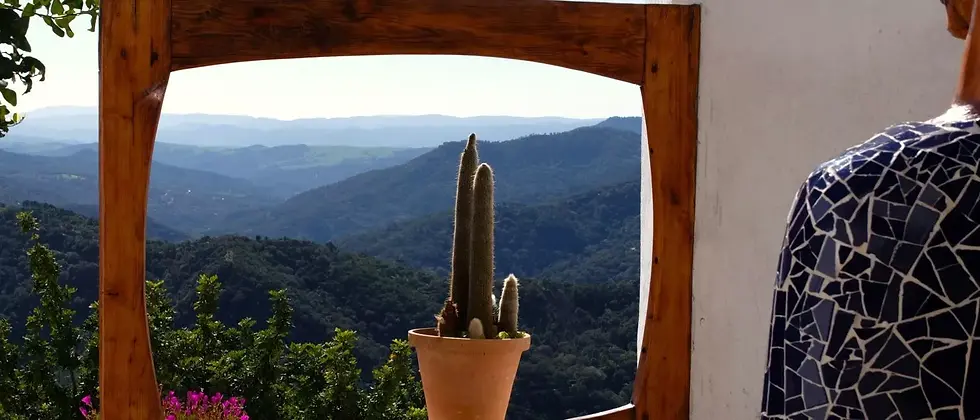
A work made from cork carries a different meaning when cork oaks grow nearby. A wooden sculpture feels connected to the surrounding woodland. Stone pieces echo the land. Iron and ceramic contrast with the natural setting, yet they also gain warmth from it.
This relationship between material and place is one reason the open-air museum works so well. The setting does not overwhelm the art. The art does not erase the village. Each supports the other.
A walk through Genalguacil can move from a narrow street to a view of the hills, then back to a square where a sculpture waits in the shade. The rhythm feels unforced. Art becomes one stop in a larger sensory experience: heat, light, stone, leaves, silence, conversation, and the smell of summer in the mountains.
Tips for visiting Genalguacil during the encounters
A visit to Genalguacil is best approached slowly, especially in August. The event takes place during the hottest part of the Andalusian summer, so comfort matters.
A few simple choices can make the day easier:
Wear comfortable shoes for sloped and cobbled streets.
Bring water, especially if visiting during midday.
Allow time to wander rather than rushing through a fixed route.
Visit the municipal museum as well as the outdoor works.
Look for pieces above eye level, in corners, and along side streets.
Be respectful if artists are working, watching is welcome, interrupting is not always possible.
Stay into the late afternoon if you can, when the light becomes softer.
The town rewards curiosity. Some of the most memorable pieces may not be the largest ones. A small work tucked into a wall can be just as powerful as a sculpture in a square.
If visiting during the August encounters, leave space in your plan for the unexpected. A conversation, a half-finished artwork, or a quiet street may become the part of the day you remember most.
A small village with a lasting cultural idea
Genalguacil shows that a museum does not need to begin with a monumental building. It can begin with a village willing to host artists, support their work, and keep the results in public view.

Since 1994, the Art Encounters have turned this mountain town in Málaga into one of Andalusia’s most unusual cultural destinations. The project brings together local heritage, contemporary creation, and the surrounding natural world in a way that feels direct and human.
Visit for the sculptures, murals, photographs, and unexpected objects. Stay for the feeling that art here has found a natural home, not apart from daily life, but right in the middle of it.


Comments