

Zuheros A Timeless White Village in the Heart of Olive Country

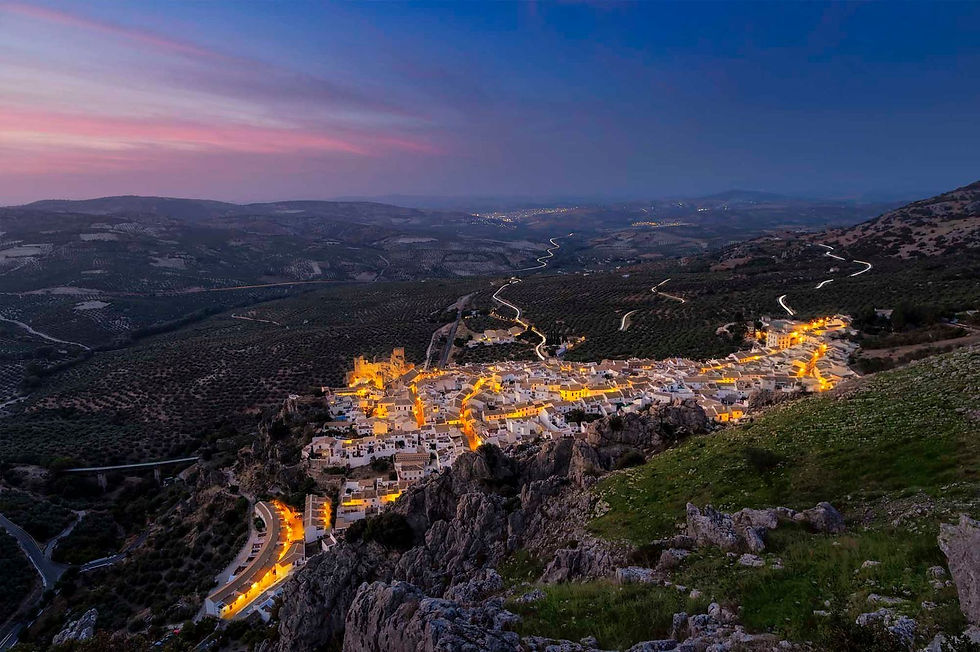
Zuheros does not announce itself with noise. It appears above the olive groves like a white ship caught on a hillside, its castle looking out over the Subbética countryside and its streets falling away in bright, narrow lines.
This is one of those Andalusian villages that seems small at first glance, then grows richer with every turn. A doorway framed with flowers. A glimpse of rock beyond a whitewashed wall. A small square where the air smells of sun-warmed stone, countryside, and olive trees.
Set in the Subbética region of Córdoba, Zuheros has earned its reputation as one of Spain’s most beautiful villages. A plaque in the centre marks the recognition it received in 2016 from the Federation of the Most Beautiful Villages in the World. Yet the charm of the place is not only in awards or views. It is in the way history, nature, and daily life still sit close together.

Zuheros sits where history and countryside meet
Zuheros lies in the province of Córdoba, in inland Andalusia, surrounded by the rolling land of the Sierras Subbéticas. This is olive country, but not in a flat or monotonous sense. The groves rise and fall with the terrain. Hills fold into ravines. Limestone cliffs break through the green.
The village itself clings to the edge of this landscape. Its white houses sit below the remains of a castle, with the mountains behind and olive trees ahead. From certain viewpoints, the whole scene feels almost theatrical, as if someone arranged the village, cliffs, and groves to catch the light at just the right angle.
Its history adds another layer. Zuheros has passed through different hands and identities over the centuries. Its position between territories gave it strategic value, and its roots include Muslim, Christian, and rural Andalusian influences. The brief may describe it as having once belonged to Granada before becoming part of Córdoba, a reminder that borders in this part of Spain have shifted with time, conquest, and administration.
Walking through Zuheros today, that past does not feel locked away in a museum. It lives in the shape of the streets. It appears in the castle walls, the compact layout, and the sense that the village grew from necessity as much as beauty.
The best way to see Zuheros is slowly
There are villages that reward a checklist approach. Zuheros is not one of them. Yes, there are clear sights to visit, but the real pleasure is in moving without hurry.
Start in the centre and let the streets guide you. They narrow, bend, and dip in the way old villages do, creating small surprises every few steps. One lane may frame the castle. Another may open onto a view of olive groves stretching towards the horizon. A third may end in a quiet corner where potted plants bring colour to the white walls.
The village is compact, but it is not flat. Wear comfortable shoes, especially if visiting in warmer months. The charm comes partly from its slopes and stone-paved lanes, and they ask for a slower pace.
Look for these small details as you walk:
Whitewashed façades that reflect the Andalusian sun and keep interiors cooler.
Iron balconies with plants, often geraniums or other hardy flowers.
Stone corners and archways that show the village’s older structure.
Viewpoints where the built village suddenly gives way to open countryside.
Small squares where local life still feels unforced and calm.
Zuheros is photogenic, but it is more than a photograph. Pause long enough to hear it. The wind moves through the streets. Footsteps echo against the walls. Birds cross the gorge. Now and then, voices drift from an open window or a shaded bar.
The castle watches over the village

The castle is one of Zuheros’ defining features. Set on the rocky high point, it gives the village its unmistakable silhouette. The remaining walls and towers speak of the village’s defensive past, when this hilltop position mattered for more than the view.
You do not need to be a history specialist to appreciate it. The castle works on a simpler level too. It helps explain why Zuheros is where it is. From above, the surrounding land opens out in every direction. The olive groves look vast, almost like a green sea, while the village appears tightly gathered below.
The contrast is striking. On one side, the ordered fields. On another, the rugged edge of the natural park. Between them, a white village built to endure.
This is also one of the best places to understand the scale of the Subbética. The region is not the postcard coast many travellers first associate with Andalusia. It is inland, quieter, and shaped by agriculture, geology, and old routes between towns. Zuheros sits at the heart of that identity.
The Cueva de los Murciélagos adds a deeper story
A short distance from the village is the Cueva de los Murciélagos, or Cave of the Bats. It is one of the area’s most important natural and archaeological sites, known for its limestone formations and prehistoric remains.

The cave changes the rhythm of a visit. After bright white lanes and open views, you enter a cooler, darker world. Stalactites, stalagmites, and underground chambers reveal a landscape formed over immense stretches of time. Human traces found in the cave point to a much older story than the village streets can tell.
Visits are usually guided, and access can depend on opening times, season, and local arrangements. It is sensible to check ahead before planning the day around it. The route may include steps and uneven surfaces, so practical footwear matters here too.
The name may suggest bats, and the cave has long been associated with them, but the most memorable part for many visitors is the feeling of depth. Zuheros is beautiful above ground, but the cave reminds you that the Subbética’s beauty also lies beneath the surface.

Olive trees shape the rhythm of life
To understand Zuheros, you have to look beyond the village walls. Olive trees are everywhere. They pattern the hillsides and define the wider countryside. Their presence is economic, cultural, and visual.
This is why the image of Zuheros sailing on a sea of olive trees feels so fitting. The village appears to rise above them, but it is also deeply tied to them. Olive oil is part of the daily table, the working calendar, and the identity of the Subbética.
In late autumn and winter, the olive harvest brings activity to the countryside. In spring, the groves soften under fresh growth and wildflowers. In summer, the land turns drier and brighter, and shade becomes precious. Each season changes the mood without changing the essence of the place.
Food in and around Zuheros reflects this rural setting. Expect simple pleasures done well: local olive oil, bread, stews, cured meats, seasonal vegetables, and cheeses from the surrounding area. The village and nearby towns are also known for dairy traditions, especially goat’s cheese, which suits the mountain landscape.
A good meal here does not need to be elaborate. A plate of local cheese, bread with olive oil, and a glass of wine can say as much about the region as a long menu.
Nature is close enough to reach on foot
Zuheros sits beside the Sierras Subbéticas Natural Park, which makes it a strong base for travellers who like slow outdoor time. The nearby gorge, cliffs, and paths give the village a dramatic natural setting.
One of the best-known routes in the wider area is the Vía Verde del Aceite, a greenway that follows a former railway line through olive country. Sections near Zuheros are popular with walkers and cyclists. The route offers a gentler way to experience the countryside, with open views and the steady rhythm of a path designed for movement rather than traffic.
There are also local walking routes around the village and towards the surrounding hills. Some are easy and scenic. Others require more effort, especially in heat. As with much of rural Andalusia, timing matters. Early morning and late afternoon are often the most pleasant times for walking, particularly outside winter.
Bring water, sun protection, and shoes with grip. The landscape may look soft from a distance, but limestone paths and village stones can be uneven underfoot.
A village made for staying longer
Many visitors come to Zuheros for a day and leave wishing they had stayed overnight. The village has a different feel after the day-trippers move on. Light fades across the olive groves. The white walls turn warmer. The castle becomes a darker outline against the sky.
This slower rhythm helps explain why places like Zuheros appeal to people imagining a quieter life in Andalusia. The village has beauty, but also proportion. It is not a large town with endless distractions. Nor is it isolated from the wider region. Córdoba, Lucena, Priego de Córdoba, Cabra, and other towns of the Subbética can be reached by road, making Zuheros feel peaceful without feeling cut off.
For retirement, long stays, or simply a restorative break, the appeal is clear:
What draws people in
Quiet streets, clean air, village scale, and wide countryside views.
What to think about
Hills, limited services, summer heat, and the need for a car for many journeys.
That balance matters. Zuheros is idyllic, but it is still a real village. Daily life follows local rhythms. Shops, restaurants, and cultural sites may keep seasonal hours. Some services sit in nearby towns. For many, that is part of the charm. For others, it is a practical point to weigh carefully.
When to visit Zuheros
Zuheros can be visited at any time of year, but each season brings a different experience.
Spring is one of the most rewarding times. The countryside feels fresh, temperatures are comfortable, and the surrounding hills often show more colour. It is ideal for walking, photography, and unhurried meals outdoors.
Autumn is another excellent choice. The heat softens, the light becomes golden, and the olive landscape begins moving towards harvest season. It is a good time for those who want fewer crowds and a strong sense of rural life.
Winter can be quiet and atmospheric. Days may be crisp, and the village feels especially still. Opening hours can be shorter, so planning matters.
Summer brings intense Andalusian heat. The white streets shine under the sun, but walking in the middle of the day can be tiring. If visiting then, follow the local rhythm: early starts, long shaded lunches, and gentle evenings.
How to make the most of a day in Zuheros
A simple day plan works best.
Arrive in the morning, when the light is kind and the village is waking slowly. Start with a walk through the centre, then climb towards the castle area for views over the olive groves. Take time for the small streets rather than rushing from point to point.
If the cave is open and you have booked or checked access, visit the Cueva de los Murciélagos before or after lunch, depending on available times. Leave space in the day for a local meal, preferably something rooted in the region’s produce.
In the afternoon, walk a short section of a nearby path or simply return to the village viewpoints as the light changes. Zuheros rewards repetition. The same street can look different in the morning, noon, and evening.
If staying overnight, do not overfill the itinerary. Sit in a square. Watch the olive groves darken. Let the place do what it does best.
A small village with a long memory
Zuheros is beautiful in the obvious ways: white houses, castle walls, mountain air, and olive groves stretching across the Subbética. Yet its deeper appeal comes from how naturally these things belong together.
The village does not feel staged. It feels lived in, shaped by history and still tied to the land around it. Its recognition as one of the world’s beautiful villages may bring people to the map, but the memory they carry home is quieter: the sound of wind in narrow streets, the view from a stone corner, the sense of a place sailing calmly above a sea of olive trees.
Go slowly. Breathe deeply. Let Zuheros reveal itself one turn at a time.


Comments