
_edited.png)
Camper Route Planner: 3 Autumn Slow Travel Escapes to Hidden Gems and White Villages

Autumn is the season when camper travel starts to feel unhurried again. The summer queues thin out, the light turns softer, and a two-hour drive can become a whole day if the road keeps offering excuses to stop. This guide gives you three ready-made autumn slow travel ideas for a camper trip, from the white villages of Andalusia to hidden gems much closer to home.
A good autumn route does not need heroic mileage. It needs a rhythm: a market town in the morning, a short walk after lunch, a quiet pitch before dark, and enough space in the plan for weather, appetite and curiosity.
Each route is designed as a starting point rather than a strict itinerary. Take the lanes slowly, book ahead where needed, and let the season do the rest.

How to plan an autumn camper route that actually feels slow
The biggest mistake with autumn touring is treating it like a summer road trip with fewer people. The days are shorter, some campsites reduce their opening dates, mountain weather can change fast, and rural restaurants may keep limited hours outside the main season.
A useful Camper Route Planner mindset starts with time, not distance. For a relaxed autumn trip, aim for one main move per day and keep most driving days under three hours. If a place deserves two nights, give it two nights.
Before setting off, check:
Campsite and aire opening dates
Local overnight parking rules
Low-emission zones near cities
Road access for larger vans
Weather on higher passes or exposed coasts
Market days and seasonal festivals
Daylight hours for walks and arrivals
Slow travel also benefits from small rituals. Buy bread locally. Walk before you drive. Choose a viewpoint for lunch rather than eating in a car park. Keep a flask ready. The route becomes more memorable when the stops are not just practical.
1. Follow the white villages of Andalusia at the gentlest pace
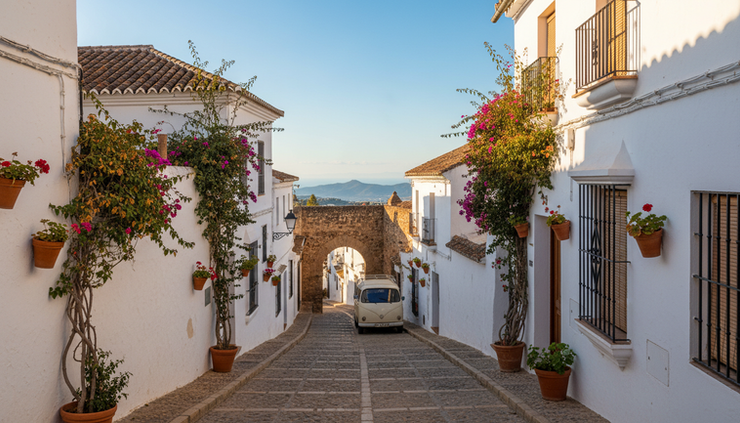
Andalusia in autumn is made for slower camper travel. The fierce heat of summer eases, the hills look softer, and the famous pueblos blancos glow in the low sun. This route suits travellers who want whitewashed lanes, Moorish history, olive groves, tapas, and scenic drives without rushing between big cities.
The classic white villages sit across inland Cádiz and Málaga provinces. Many cling to hillsides, so the best approach is to park outside the old centre, walk in, and avoid threading a camper through narrow streets.
A seven-day route through hill towns and olive country
Day | Base or stop | Slow travel focus |
1 | Ronda | Arrive, walk the gorge viewpoints, settle in |
2 | Ronda | Explore the old town early, then take an afternoon loop walk |
3 | Grazalema | Drive through mountain roads and pause for short viewpoints |
4 | Zahara de la Sierra | Visit the reservoir, castle viewpoints, and quiet lanes |
5 | Olvera or Setenil de las Bodegas | See cave-like streets and white village architecture |
6 | Arcos de la Frontera | Park carefully outside the centre and wander on foot |
7 | Jerez or the coast | Finish with sherry country or a slower coastal night |
Ronda deserves more than a quick photo stop. The gorge is dramatic, but the quieter reward is walking early before day visitors arrive, then returning at dusk when the stone turns warm.
Grazalema offers a different mood. It sits among limestone peaks and is known for dramatic weather compared with the drier plains nearby. Autumn can bring clear walking days, but also sudden rain, so keep waterproofs handy and avoid ambitious mountain plans if the forecast looks unsettled.
Zahara de la Sierra is one of the loveliest slow stops on the route. The village rises above a reservoir, with steep streets, broad views and a pace that invites a long coffee rather than a checklist.
Camper notes for Andalusia
Many Andalusian hill towns were not built with vans in mind. That does not make them unsuitable, but it changes how to travel.
Best approach
Stay on the edge of villages, use official parking where available, and walk in.
Driving style
Avoid arriving after dark. Tight bends, steep gradients and narrow lanes are much easier in daylight.
Seasonal tip
Autumn is a good time for inland Andalusia, but nights can cool quickly in the hills. Pack layers even if the afternoon feels warm.
This route is best for a campervan rather than a large motorhome. If travelling in a bigger vehicle, base yourself near larger towns and visit the smallest villages by bus, taxi or bicycle where practical.
2. Drift through the Wye Valley and Shropshire Hills close to home
For a hidden-gem autumn trip without a long ferry crossing or flight south, the border country between England and Wales is hard to beat. The Wye Valley and Shropshire Hills offer wooded valleys, book towns, ruined abbeys, market squares, ridge walks and quiet back roads.
This is a route for travellers who like cosy pubs, second-hand bookshops, misty river mornings and modest driving days. It also works well as a long weekend if a full week is not possible.
A five-day route through border country
Day | Base or stop | Slow travel focus |
1 | Ross-on-Wye or Symonds Yat | River views and a gentle first night |
2 | Tintern and the lower Wye | Abbey ruins, woodland paths, and riverside stops |
3 | Hay-on-Wye | Bookshops, cafés, and a slow afternoon wander |
4 | Church Stretton | Walk the Long Mynd if the weather allows |
5 | Ludlow | Food shops, castle views, and a relaxed final stop |
The Wye Valley has a special autumn quality. The river moves quietly below steep wooded slopes, and the trees turn bronze and copper without needing to shout for attention. Symonds Yat is a fine place to start, with viewpoints, riverside walks and easy access to the valley.
Tintern works well as a day of short stops. The abbey ruins are the obvious draw, but the pleasure of this stretch is in moving slowly between viewpoints, footpaths and small places to eat.
Hay-on-Wye changes the tempo again. It is not hidden, but it still feels personal if you arrive outside the busiest weekends. Give yourself time to browse without a plan. A camper trip is one of the few travel styles where buying an extra book does not feel impractical.
Church Stretton and the Long Mynd bring a more open, upland feel. On clear days, the walking is superb. On wet or windy days, stay low, visit nearby villages, and let the weather decide.
Ludlow makes an excellent final night. It has enough food shops and historic streets to feel like a proper finish, but it does not need a packed schedule.
Camper notes for the Wye Valley and Shropshire
This route works well for first-time autumn camper travellers because it feels adventurous without being remote. Roads can still be narrow, especially around villages and hills, but distances stay manageable.
Best approach
Choose campsites within walking or cycling distance of towns where possible. It keeps evenings simple.
Driving style
Watch for muddy lanes, low branches and farm traffic after rain.
Seasonal tip
Autumn weekends can still be busy in popular walking areas. Book pitches ahead if travelling during school holidays.
This route also suits dogs, walkers, readers and anyone who prefers a slow morning to an early motorway start.

3. Wander between Alsace villages and the Vosges foothills
Alsace is a strong choice for an autumn camper escape if you want fairytale villages, vineyards, forests and food without the long drive to southern Spain. It is especially appealing after peak summer, when the half-timbered streets feel calmer and the hills turn gold.
The route sits in eastern France, close to the German border. It pairs beautifully with a slow crossing from the UK through northern France, or as part of a longer European tour. The distances between villages are short, which makes it ideal for low-mileage days.
A six-day route through wine villages and forest edges
Day | Base or stop | Slow travel focus |
1 | Colmar outskirts | Arrive, stock up, and take a gentle evening walk |
2 | Eguisheim | Circular lanes, wine village charm, and local food |
3 | Riquewihr or Ribeauvillé | Half-timbered streets and vineyard views |
4 | Kaysersberg | River walks, bakeries, and castle viewpoints |
5 | Munster Valley | Forest air, cheese country, and hill walks |
6 | Vosges foothills | A slow scenic drive before heading home or onward |
Colmar is a practical gateway, but the smaller villages are where this route slows down. Eguisheim is built in rings, which makes wandering feel easy and natural. Riquewihr and Ribeauvillé are more famous, so arrive early or stay nearby to enjoy them outside the busiest hours.
Kaysersberg is a good place to pause for longer. It has a river running through it, colourful houses, and access to gentle walks. In autumn, it feels made for window shopping, bakery stops and unplanned detours.
The Munster Valley adds contrast. After several village days, the open air and forested slopes feel refreshing. It is also a good reminder that slow travel should vary texture, not just scenery. A route made only of pretty towns can blur together, but a valley walk between them resets the senses.
Camper notes for Alsace
Alsace is generally camper-friendly if you plan carefully and respect local signs. Many French towns provide designated motorhome areas, but availability and rules vary. Always check before relying on a stop.
Best approach
Base outside the most popular villages and visit on foot, by bike, or by local transport where possible.
Driving style
Village centres can be tight, and some car parks have height barriers. Read signs before committing to a turn.
Seasonal tip
Autumn is linked with harvest and wine tourism in the region. That brings atmosphere, but also local events and busy weekends.
This route is a good match for travellers who enjoy food, gentle walking and photography. It also suits anyone who wants a European feel without covering huge distances every day.

A simple autumn packing and planning checklist
Autumn camper trips reward small preparations. You do not need to overpack, but comfort matters more when the evenings draw in and wet weather lingers.
Bring the basics that keep slow travel pleasant:
Warm layers for evenings and early starts
Waterproof jacket and shoes for muddy paths
Head torch or lantern for darker campsites
Levelling ramps for rural pitches
Flask for viewpoint stops
Printed or downloaded maps for weak-signal areas
A small doormat for wet leaves and mud
Cash or cards suitable for rural parking and local markets
A flexible food plan for quiet villages with limited opening hours
A good rule is to plan each day around one anchor. That might be a walk, a village, a market, a viewpoint or a meal. Anything else becomes a bonus. This keeps the route calm and helps avoid the feeling of missing out.
Also think about arrival times. In autumn, reaching a campsite at 16:00 can feel relaxed. Arriving at 19:00 in rain, darkness and an unfamiliar lane can sour an otherwise lovely day.

Which autumn camper escape should you choose?
Each route has a different kind of reward.
Choose Andalusia if you want warmth, drama, white villages and a sense of travelling far from home. Give yourself enough time for the journey there and back, and keep the hill-town driving sensible.
Choose the Wye Valley and Shropshire Hills if you want a beautiful autumn break closer to home, with rivers, books, walks and market towns. It is the easiest option for a long weekend or a low-stress first autumn trip.
Choose Alsace and the Vosges foothills if you want compact European charm, short driving days and a mix of villages, vineyards and forest. It works especially well for travellers who enjoy food and gentle wandering.
The best autumn camper route is rarely the one with the most pins on the map. It is the one that leaves room for weather, local bread, a second coffee, and the small road you nearly drove past. Pick a region, slow the pace, and let the season fill in the gaps.

Comments