
_edited.png)
Costa de la Luz Road Trip Golden Beaches and Natural Wonders

The Costa de la Luz feels different from the Mediterranean side of Spain. The light is softer, the Atlantic air is fresher, and the beaches seem to run on for ever. This stretch of Andalusian coast, spread across the provinces of Huelva and Cadiz, is made for slow travel: long swims, whitewashed hill towns, pine forests, seafood lunches, sunsets over dunes, and mornings where the only plan is to follow the road a little farther south.
For a motorhome trip, it has the right mix of freedom and variety. One day can bring wide golden beaches near Chiclana de la Frontera. The next can lead to the wind-swept shores of Tarifa, the protected spaces of Estrecho Natural Park, or the quiet charm of Vejer de la Frontera. Add Doñana National Park, Breña Natural Park, and the Barbate Marshes, and this becomes much more than a beach break.
This is a road trip for travellers who want nature, food, small towns, and a slower rhythm, without losing the sense of discovery.
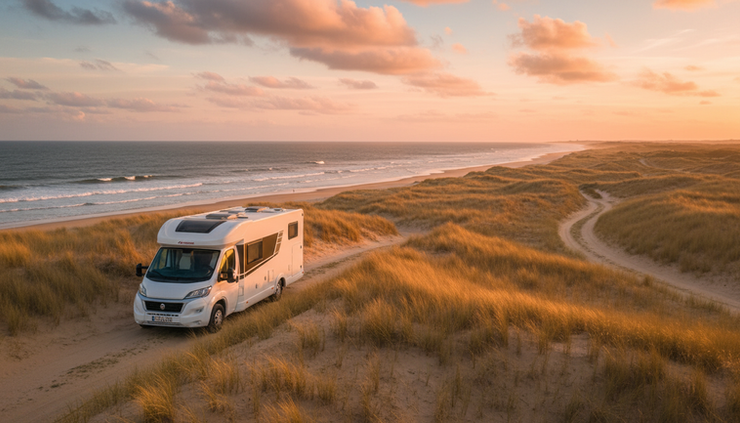
Why the Costa de la Luz is perfect for a motorhome trip
The Costa de la Luz is not a single resort strip. It is a chain of beaches, fishing towns, natural parks, marshes, pine-covered cliffs, river mouths, and historic villages. That variety makes the driving feel rewarding rather than repetitive.
The name means “Coast of Light”, and it earns it. The Atlantic reflects the sun in a way that gives the beaches a pale gold glow, especially in the early morning and late afternoon. The sea can feel wilder than the Mediterranean, with Atlantic breezes that keep the air fresh even in warm weather.
A motorhome suits this region because distances are manageable and the route can flex around the weather. If the wind is high in Tarifa, head inland to Vejer. If a beach feels busy, carry on to the next stretch of sand. If the day calls for nature, point the wheels towards marshes, forests, or protected coast.
A good road trip here balances three things:
Beach time
Long walks, swims, dunes, and sunsets.
Nature stops
Parks, wetlands, cliffs, pine woods, and birdlife.
Small-town wandering
Whitewashed streets, viewpoints, markets, and local food.
The reward is a trip that feels restorative rather than rushed.
Start with La Barrosa and the wide beaches of Cadiz
La Barrosa beach in Chiclana de la Frontera makes a strong first stop. It stretches for around eight kilometres, with fine golden sand, dunes, and broad sea views. It is the kind of beach where a short walk becomes a long one without effort.
The beach is also known for its view towards Sancti Petri Castle, which stands on a small island offshore. From the sand, the castle adds a pleasing sense of history to the scene. At low light, it can look almost unreal, set against the Atlantic horizon.
La Barrosa works well at the start of a route because it is easy to enjoy. There is space to walk, places to eat nearby, and enough length to find a quieter patch. It also gives a first taste of what makes this coast so appealing: open sky, soft sand, and a feeling of room to breathe.
If travelling by motorhome, arrive early in the day if you want a calmer parking experience, especially in busy months. Check local signs carefully, as rules can change by season and municipality. Use official parking areas or campsites where required, and avoid overnight stops in protected dune areas.
Good ways to enjoy La Barrosa include:
A morning walk along the waterline
A relaxed lunch of fried fish or rice dishes nearby
Sunset views towards Sancti Petri
A cycle ride if your motorhome setup includes bikes
This is not a place to tick off quickly. It pays to slow down.

Follow the wind to Tarifa and Los Lances beach
Tarifa sits at the southern tip of Spain, where the Atlantic and Mediterranean meet. The air feels charged here. Wind shapes the trip, the beaches, and the local culture. For kite surfers and windsurfers, Los Lances beach is one of the great names on the Andalusian coast.
Even if you do not practise water sports, Los Lances is worth the detour. The beach feels open and elemental, with big sky, long sand, and constant movement. Watching colourful kites arc above the sea can be as memorable as getting into the water yourself.
Tarifa also gives access to Estrecho Natural Park, a protected area where cliffs, beaches, sea views, and migratory bird routes meet. On clear days, the view across the Strait of Gibraltar towards North Africa adds a powerful sense of place. Few European road trips offer that kind of horizon.
When planning this part of the route, allow flexibility. Wind conditions can change the mood of the day. Strong winds can thrill experienced riders but may make the beach less comfortable for a long sunbathe. That is the beauty of having your home on wheels: you can stay, move, or return when the conditions suit.
A simple Tarifa day might look like this:
Morning | Afternoon | Evening |
Walk Los Lances before the wind builds | Visit Estrecho Natural Park or watch kite surfers | Explore Tarifa’s old streets and eat close to the harbour |
Tarifa can feel busier than smaller coastal stops, especially in peak season. Book campsites ahead when travelling in summer, and give yourself time to navigate narrow streets if heading into town.
Slow down in Caños de Meca and Barbate
North-west of Tarifa, the coast shifts again. Around Barbate, the mood softens into pine forests, fishing traditions, cliffs, and relaxed beach days. Caños de Meca has long carried a bohemian spirit, with a laid-back rhythm and a sense of being slightly apart from everywhere else.
The beach here suits travellers who like a simple day: swim, read, walk, eat, repeat. It also places you close to Breña Natural Park, where pine woods meet cliffs above the sea. Trails in the area can offer shade, sea views, and a break from driving.
Barbate itself brings a stronger fishing-town feel. This part of the coast is closely linked with tuna, and local cooking reflects that. Menus often feature tuna prepared in different ways, along with seafood, rice dishes, and simple grilled fish. Eating here is part of the journey, not a side detail.
The Barbate Marshes add another natural stop. Wetlands can seem quiet at first, but they reward patience. Look for birds, changing light, and the contrast between marsh, river, sea, and town. Bring binoculars if you have them.
For a motorhome route, this area works well as a two-night pause. It gives enough time to visit the beach, walk in the park, eat properly, and avoid the feeling that you are only passing through.

Seek out Los Alemanes and Cape Trafalgar
Los Alemanes beach, near Zahara de los Atunes and the Cabo de Gracia area, has a quieter, more exclusive feel than some of the broader town beaches. It is a place for clear water, pale sand, and unhurried swimming when conditions allow.
The surrounding area includes coves, viewpoints, and low development by comparison with many European coasts. That relative restraint is part of the appeal. The beach does not need much from you. Bring water, sun protection, and time.
A little further along the coast, Cape Trafalgar near Caños de Meca offers one of the most atmospheric coastal scenes in Cadiz province. The lighthouse, dunes, and open sea make it a strong sunset stop. The name carries historic weight, but the experience is simple: wind, waves, sand, and the last light of the day.
This stretch invites a gentle pace. It is tempting to pack in every beach, but the region works best when you choose fewer stops and stay longer. A motorhome brings freedom, but it can also tempt you to keep moving. Resist that urge now and then.
Fall for Vejer de la Frontera
No Costa de la Luz journey should stay only at sea level. Vejer de la Frontera sits inland on a hilltop, a whitewashed town with walls, arches, patios, and views over the surrounding countryside. It is often described as one of Andalusia’s most beautiful towns, and a slow walk through its lanes explains why.
The pleasure of Vejer lies in small details: a shadowed alley, a tiled doorway, a quiet square, a sudden lookout point. The town’s Moorish influence can be seen in its layout and architecture, while its food scene makes it an easy place to linger over lunch.
Motorhomes are better left in suitable parking outside the tightest historic areas. The streets can be narrow, steep, and busy with pedestrians. Once parked, explore on foot and let the town reveal itself at walking speed.
Look for:
Whitewashed lanes and flower-filled courtyards
Views from the old walls
Small independent shops and craft details
Restaurants serving Andalusian and Moroccan-influenced dishes
A cooler evening atmosphere after a hot day on the coast
Vejer also makes a useful base for nearby beaches. You can spend the morning by the Atlantic, then drive inland for dinner and a hilltop sunset.
Add Doñana and Huelva for wild nature
Many travellers focus on Cadiz, but the Huelva side of the Costa de la Luz adds another layer. Doñana National Park is one of Spain’s most important protected natural areas, known for wetlands, dunes, forests, and birdlife. Access to some parts is controlled to protect the environment, so plan ahead and use authorised visitor routes or guided options where required.
Doñana changes the tone of the trip. After beaches and towns, it brings a sense of scale and quiet. The mix of marsh, sand, and woodland supports a rich variety of wildlife, especially birds. Even if you only visit the accessible edges and visitor centres, it is worth making time for.
Huelva province also offers long beaches and a less crowded feel in many areas. The coastline can feel open and spacious, with broad sands and calmer development. It is a good choice if you want to extend the route and avoid turning the journey into a quick loop.
Responsible travel matters here. Protected areas along the Costa de la Luz are not just scenic backdrops. They are living habitats. Keep to marked routes, avoid driving on dunes or beaches, take rubbish away, and respect local overnight parking rules.

How to shape the route
A road trip along the Costa de la Luz can be as short as a long weekend or as generous as two weeks. For a balanced motorhome journey, allow at least a week if you want to include both Cadiz and Huelva without rushing.
Here is a simple route idea:
Stop | Best for | Suggested pace |
Chiclana de la Frontera and La Barrosa | Beach walks and Sancti Petri views | 1 to 2 nights |
Tarifa and Los Lances | Wind sports and Estrecho Natural Park | 1 to 2 nights |
Barbate and Caños de Meca | Pine woods, relaxed beaches, seafood | 2 nights |
Vejer de la Frontera | Whitewashed streets and hilltop views | 1 night |
Doñana and Huelva coast | Wildlife, dunes, quieter nature | 2 nights or more |
Spring and early autumn often suit road trips well. The weather is pleasant, beaches are easier to enjoy, and parking can be less stressful than in high summer. Summer brings heat, longer evenings, and a lively atmosphere, but it also needs more planning.
Pack for sun and wind. The Atlantic breeze can be fresh, and evenings may feel cooler than expected outside peak summer. A light jacket, beach layers, good sandals, walking shoes, and sun protection all earn their place.
Eat with the coast
Food is one of the quiet joys of this route. The Costa de la Luz is not a place to survive on snacks between viewpoints. It asks you to stop for proper meals.
Expect seafood, tuna, prawns, clams, fried fish, rice dishes, gazpacho in warm weather, local cheeses, and simple plates built around good produce. In Cadiz province, tuna is a highlight, especially around Barbate and Zahara de los Atunes. Inland towns bring stews, grilled meats, pastries, and Moorish-influenced flavours.
A few easy habits make meals better:
Eat lunch at local Spanish times if you want more choice
Try smaller family-run places away from the seafront when possible
Ask what is fresh that day
Keep a few picnic supplies in the motorhome for beach stops
Buy local bread, fruit, and olive oil for simple breakfasts
The best meals may not be the most polished ones. A plate of grilled fish after a swim can stay in the memory longer than a formal dinner.
Travel gently and leave space in the plan
The Costa de la Luz rewards travellers who do less, better. Build a route, but leave gaps. Wind, tides, heat, parking, and the simple desire to stay longer will all shape the best version of the trip.
Keep your motorhome routine respectful. Use official service points, follow local parking rules, and avoid treating natural spaces as campsites. The region’s beauty depends on dunes, marshes, pine woods, and beaches staying healthy.
Most of all, give the coast time to work on you. Walk La Barrosa with the castle in the distance. Watch kites rise over Los Lances. Sit under pines near Barbate. Lose track of turns in Vejer. Stand quietly at the edge of Doñana and listen.
A Costa de la Luz road trip is not about covering every kilometre. It is about finding the places where the Atlantic light, Andalusian food, and open road make you feel fully awake again.


Comments