
_edited.png)
Costa Verde Road Trip Discover Asturias Hidden Beaches and Fishing Villages

Asturias is the kind of place where the road keeps tempting you to pull over. One minute you are driving beside pine woods and green pastures, the next you are looking down at coves cut into limestone cliffs by the Cantabrian Sea.
This is the Costa Verde at its best: wild, green, salty and wonderfully unpolished. It is made for a slow road trip, with time for barefoot beach walks, seafood lunches, short hikes and villages where houses seem to tumble towards the harbour.
This route follows a rewarding stretch of the Asturian coast, taking in La Griega, La Espasa, Gulpiyuri, Torimbia and Cudillero. It is not a route to rush. The joy is in the stops.

Why the Costa Verde is perfect for a road trip
The name Costa Verde, or Green Coast, is not poetic exaggeration. Asturias gets the Atlantic weather that keeps its hills lush, its forests dense and its headlands intensely green. Even in summer, the scenery feels fresh rather than dry and sun-bleached.
A car gives you the freedom to link places that would feel awkward by public transport. Beaches sit below cliffs, villages hide around bends and many viewpoints are best reached when you can stop on a whim.
This journey suits travellers who prefer character over crowds. The beaches here are not all lined with beach clubs and sunbeds. Some have simple facilities, while others feel almost untouched. The sea can be powerful, the tides matter and the weather changes quickly. That is part of the appeal.
A few simple tips help the trip run smoothly:
Start early in summer
Beach car parks can fill up in July and August, especially near popular spots.
Check tide times
Some coves almost disappear at high tide, while others are much better for walking when the sand is exposed.
Pack layers
Sunshine can turn to mist along the Cantabrian coast, even on a warm day.
Use villages as pauses, not just photo stops
The food, harbours and small squares are as much a part of the route as the beaches.
Begin at La Griega beach
La Griega is a gentle place to start. Set near Colunga, it has a broad, open feel, with clear water, soft sand and a green backdrop that reminds you this is Asturias, not the Mediterranean.
It is a good first stop because it eases you into the rhythm of the coast. You can walk along the shore, watch the tide move across the sand and let the drive settle into a slower pace. The beach is also known for nearby fossilised dinosaur footprints, a reminder that this coastline has been shaped over deep time as well as by waves and weather.
La Griega works well for families and anyone who wants a beach with space. It is not the most hidden stop on the route, but it gives an immediate sense of what makes this coast special: cliffs, greenery, clean water and a feeling of openness.
If the tide is low, take time for a wander rather than treating it as a quick viewpoint. This road trip is better when the first stop does not feel rushed.
Continue to La Espasa between Caravia and Colunga
From La Griega, continue towards La Espasa, a long sandy beach between Caravia and Colunga. Where La Griega offers an easy beginning, La Espasa feels wider and more exposed, with a generous sweep of sand and views towards the surrounding hills.
This is a beach for stretching your legs. The open space makes it ideal for a proper walk, especially outside the busiest hours of the day. At low tide, the sand seems to expand, giving the beach a broad, airy quality.
La Espasa also captures one of the great pleasures of driving the Costa Verde: the contrast between sea and countryside. You do not leave the green interior behind when you reach the coast. It stays with you, rising behind the beaches and softening the line between farmland, forest and ocean.

For a relaxed stop, bring a simple picnic or plan a coffee break nearby. The point is not to tick off another beach. It is to let the scale of the coast sink in.
Find the inland beach at Gulpiyuri
Gulpiyuri is one of the strangest and most memorable stops on the Asturian coast. North of the village of Naves, it looks at first like a small patch of sand set inland among meadows. Then the water gives it away. The sea reaches the beach through underground channels in the limestone, creating a tiny tidal beach without an open view of the ocean.
It feels almost impossible the first time you see it. A beach with no visible coast. Grass around you. Salt water at your feet.
Because Gulpiyuri is small and fragile, it needs a different kind of visit. This is not the place to arrive expecting a full beach day with lots of space. It is better treated as a natural curiosity and a short, respectful stop.
Keep to marked paths where possible, avoid trampling the surrounding fields and do not leave anything behind. The charm of Gulpiyuri depends on its scale. Too many careless visitors can quickly make it feel less magical.
The best time to visit is when the tide brings enough water into the basin. At very low tide, the beach can look more like a sandy hollow. That is still interesting, but it does not have the same effect.
Slow down at Torimbia beach in Niembro
Torimbia is often the beach people remember most. Set near Niembro, it forms a near-perfect crescent of pale sand below green slopes and cliffs. It feels open, wild and balanced, as if the coastline briefly decided to draw a clean curve.
Part of Torimbia’s beauty comes from the approach. You do not simply step out of the car and onto the sand. You see it from above first, framed by land and sea. That first view is part of the experience.
The beach has a natural, unspoilt feel. It is the kind of place where you want to put your phone away after taking the first photograph. Walk down, listen to the waves and give yourself time to stay.

Torimbia is also a place to respect local signs and conditions. The Atlantic is not always gentle, and currents can be strong. Swim only when conditions are safe, and treat the cliff paths with care, especially after rain.
If you are planning a slower itinerary, Torimbia deserves more than a quick stop. Pair it with nearby Niembro, where the estuary, church and surrounding water create one of the most photogenic scenes on this part of the coast.
Rest in fishing villages along the way
The beaches may pull you along the route, but the fishing villages give the trip its human texture. They turn a scenic drive into a proper journey.
Asturian coastal villages often feel compact and practical. Houses cluster around harbours, boats sit close to the quayside and the smell of salt hangs in the air. Many have grown around fishing rather than tourism, which gives them a grounded charm.
This is where the road trip should slow down again. Choose a village for lunch, stay long enough for a harbour walk and give yourself permission to do very little for an hour.
Look for:
Small ports with working boats
Cider houses and simple seafood restaurants
Narrow lanes leading down towards the water
Viewpoints above the harbour
Shops selling local products rather than souvenirs alone
The best village stops are not always the most polished. A quiet quay, a plate of grilled fish or a glass of Asturian cider can stay in the memory longer than another viewpoint.
Make time for Cudillero
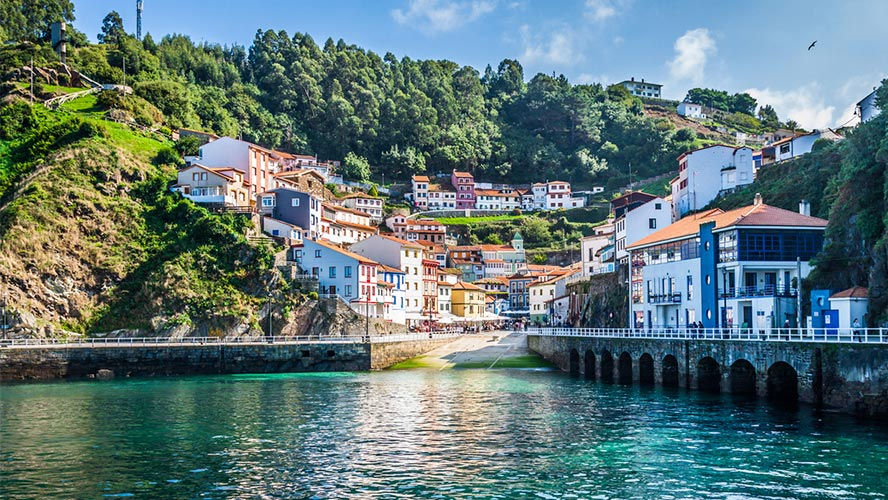
Cudillero is one of Asturias’s most recognisable fishing villages, and it earns its reputation. The village rises steeply from the harbour in layers of brightly coloured houses, with wide windows facing the sea. From below, it can look almost theatrical, as if the houses are watching the port.
Despite its popularity, Cudillero still feels rooted in the coast. Fishing culture shapes its identity, and food is a major reason to stop here. One local speciality is curadillo, a traditional fish preparation associated with the village. It is sundried and salt-cured, with a strong link to older ways of preserving seafood along the coast.
Curadillo is not a generic seaside dish, and that is what makes it interesting. It speaks of weather, work and necessity. Long before modern refrigeration, curing and drying fish helped coastal communities make the most of their catch.
Give Cudillero at least half a day if you can. Arrive before lunch, walk the harbour, climb to a viewpoint, then settle in for a meal. The village is steep, so comfortable shoes help.
If you visit in peak season, expect more people around the central harbour area. Step a few lanes away from the busiest spots and the village quickly becomes quieter.
How to shape the route over two or three days
You can technically cover these stops in a long day, but doing so would miss the point. The Costa Verde is best enjoyed with pauses, detours and weather gaps.
A two-day route works well if you want a compact trip:
Day | Best focus | Suggested stops |
Day 1 | Eastern beaches and natural sights | La Griega, La Espasa, Gulpiyuri |
Day 2 | Wild beach views and village life | Torimbia, Niembro, Cudillero |
A three-day route gives the coast more breathing room:
Day | Best focus | Suggested stops |
Day 1 | La Griega and the Colunga area | Beach walk, fossil footprints, relaxed dinner |
Day 2 | La Espasa, Gulpiyuri and Torimbia | Tides, viewpoints, slow beach time |
Day 3 | Fishing villages and Cudillero | Harbour walks, seafood, curadillo |
The three-day version is better if you like photography, walking or long lunches. It also gives you more flexibility if the weather turns misty or wet for part of the trip.
What to pack for the Asturian coast
Packing for Asturias is different from packing for a dry summer beach holiday. The weather is part of the place, and it can change several times in one day.
Bring:
A light waterproof jacket
Comfortable walking shoes or sandals with grip
Swimwear and a towel
A warm layer for windy viewpoints
Refillable water bottle
Sun cream, even on cloudy days
A small bag for taking rubbish away
Coins or a card for parking where needed
A paper map or downloaded offline map also helps. Mobile signal can be patchy in rural areas, and some of the best turns are easier to understand when you can see the whole coastline at once.
The best way to drive this coast
The best road trips on the Costa Verde follow a simple rule: plan lightly, then leave space.
Choose your main stops, but do not schedule every hour. If a viewpoint looks good, stop. If the weather clears over a beach, stay longer. If a restaurant in a village smells wonderful, change your lunch plan.
This coast rewards attention. Notice the shift from pine forest to pasture, from cliff to cove, from open beach to narrow harbour. Watch how the sea changes colour under cloud and sun. Listen to the cowbells inland and the gulls at the quay.

A Costa Verde road trip through Asturias is not about racing from one famous beach to the next. It is about letting the Cantabrian coast set the pace. Start with the clear waters of La Griega, breathe in the open space of La Espasa, stand puzzled and delighted at Gulpiyuri, linger over the crescent of Torimbia, then finish with colour, harbour air and curadillo in Cudillero.
Go slowly, and the road will do the rest.


Comments