
_edited.png)
Castilla-La Mancha Wines and Tempranillo Trails

Taste the sunset in a glass of deep Tempranillo, then feel the cool weight of a hand-forged Toledo blade. Castilla-La Mancha rewards that kind of travel, where flavour, craft, heat, history and open country all meet in one place.
This is one of Spain’s great wine regions, yet it still feels less crowded than many better-known wine routes. Its vineyards stretch across broad plains, dry hills and sun-baked villages, with wineries that range from old family bodegas to large co-operatives and ambitious estates. Spring and autumn are the best seasons to go. The air is softer, the vines look alive, and tastings can be paired with long lunches, village walks and visits to places where wine still belongs to daily life.

Castilla-La Mancha is a wine region built on scale and character
Castilla-La Mancha covers a vast part of central Spain. Its vineyards help make it one of the country’s major wine-producing regions, both by area and output. The scale can surprise first-time visitors. This is not a compact wine valley where every cellar door sits a few minutes from the next. Distances matter here, and that is part of the pleasure.
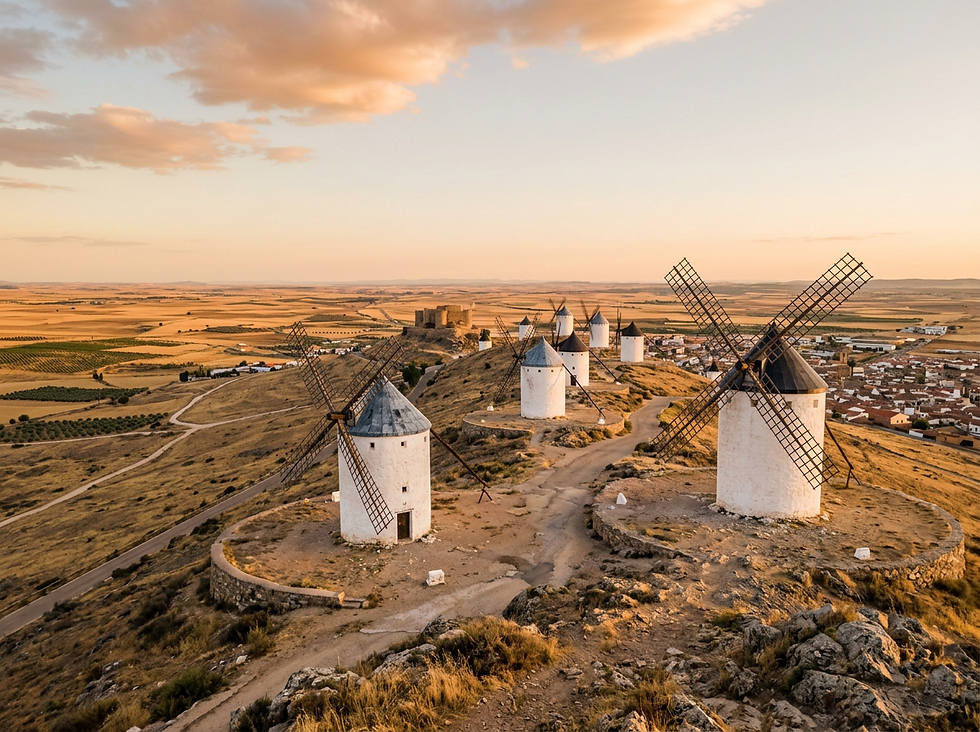
The land feels open and candid. You see long horizons, windmills, cereal fields, olive groves and vines that seem to keep going beyond the line of sight. Towns sit low against the plain. In summer, the heat can be severe. In spring, wildflowers soften the roadsides. In autumn, the harvest brings movement, scent and colour to the villages.
Wine has deep roots in this region because the conditions suit it. The climate is continental, with hot summers, cold winters and limited rainfall. Vines must work hard, and that stress can help concentrate flavour. Soils vary from limestone and clay to sandy and stony ground, which gives winemakers different tools depending on the area.
The result is a region that can produce generous everyday wines as well as more serious bottles with depth and structure. Castilla-La Mancha Wines and Tempranillo Trails are not only about tasting. They are about understanding how a large, historic wine culture adapts to modern curiosity without losing its plain-speaking soul.
Tempranillo is the red thread through the journey
Tempranillo is one of Spain’s defining red grapes. In parts of Castilla-La Mancha, especially around La Mancha and Valdepeñas, it is often known as Cencibel. That local name matters. It reminds you that grapes do not travel through history as abstract varieties. They take on accents, food pairings and customs.
A good Tempranillo from this region can show ripe red and black fruit, gentle spice, leather, tobacco or earthy notes, depending on age and winemaking. Young versions can be juicy and direct. Crianza and reserva styles, where permitted by each appellation’s rules, may bring oak, savoury depth and smoother tannins.
Tempranillo fits the region’s food particularly well. It has enough body for roast lamb, game, Manchego cheese and stews, but it does not need a grand meal to make sense. A simple plate of cured meats, local cheese, bread and olives can be enough.
When tasting Tempranillo here, pay attention to three things:
Ripeness
Warm days can bring full fruit and generous alcohol. Better examples keep freshness alongside that warmth.
Texture
The tannins should frame the wine rather than dry the mouth harshly.
Place
Compare a La Mancha bottle with one from Valdepeñas or Méntrida. The differences may be subtle, but they help turn tasting into travel.

La Mancha and Valdepeñas deserve the first tastings
The two names most visitors encounter first are La Mancha and Valdepeñas. Both are among the best-known wine areas in the region, and both offer accessible ways into the local style.
La Mancha is enormous. Its Denomination of Origin covers a wide area, and its wines can vary from fresh whites and rosés to full-bodied reds. It is also closely tied to the image of Don Quixote country, with windmills, inns and villages that seem made for slow touring.
Valdepeñas has a long wine history too. The town and its surroundings are known for red wines, including Tempranillo-based styles, and for a tradition that links local bottles to everyday meals. The name means “valley of stones”, a fitting phrase for a place where the ground itself seems to explain the wine.
A sensible wine route might begin with these two areas because they give a broad sense of the region. La Mancha shows scale. Valdepeñas shows identity. Together, they create a base before branching out to smaller or more specialised appellations.
Area | What to expect | Best travel rhythm |
La Mancha | Wide choice, large vineyards, classic central Spanish scenery | Combine winery visits with windmill towns and relaxed lunches |
Valdepeñas | Red wines with history and strong local recognition | Stay close to town and book tastings in advance |
Méntrida | Reds with personality, often linked to Garnacha as well as other grapes | Pair with a Toledo visit or a rural driving route |
Almansa | A south-eastern feel, bold reds and warm-climate styles | Fit into a longer journey towards Albacete |
Dominio de Valdepusa | A smaller, estate-led appellation with a quality focus | Plan as a dedicated tasting stop |
Finca Élez | High-altitude character and a more specific estate identity | Combine with countryside walks and quiet village stays |
Tomelloso shows the power of wine co-operatives
Any serious route through the region should consider Tomelloso. The town is closely associated with wine production, and it is known for having one of the largest wine co-operatives in Europe. That fact says a great deal about Castilla-La Mancha.
Wine here is not only a luxury product or a weekend hobby. It is agriculture, local employment, shared infrastructure and family memory. Co-operatives allowed many growers to bring grapes together, produce at scale and remain connected to the industry. They are part of why the region became so important to Spanish wine.
Tomelloso also has a distinctive wine culture below ground. The town is known for traditional caves, some with old clay jars that were used for fermentation and storage. Visiting this kind of space gives a different feeling from a polished tasting room. You understand wine as labour, storage, patience and necessity.
If you plan a stop in Tomelloso, leave time for more than one tasting. A large producer can show the scale of the region, while a smaller cellar or heritage visit can show its intimacy. Together, they make the town more rewarding than a quick pause on the map.

The other appellations add range to the route
La Mancha and Valdepeñas may be the famous names, but the region becomes more interesting when you add its other wine areas.
Méntrida, near Toledo, can work well for travellers who want wine with a strong cultural day out. It is a useful bridge between the historical drama of Toledo and the rural calm of vineyard country. While Tempranillo appears in the wider region, Méntrida is also associated with other red grapes, especially Garnacha, so tastings can broaden the palate.
Almansa sits further east in Albacete province. Its wines often feel warmer and bolder, shaped by climate and geography. The area can suit travellers driving between Castilla-La Mancha and Spain’s eastern regions.
Dominio de Valdepusa and Finca Élez are more recent, estate-focused Denominations of Origin compared with the older regional names. They show another side of Castilla-La Mancha: smaller scale, specific sites and careful positioning. These stops are useful if you want to compare mass vineyard country with more limited production.
The point is not to collect appellations like stamps. It is to use them as a map of difference. Each one changes the shape of the journey.
Toledo adds steel, history and contrast
A wine route through Castilla-La Mancha becomes richer when it includes Toledo. The city is famous for its layered history, but it is also linked to metalwork and sword-making. Toledo blades have long carried a reputation for skill and strength, rooted in craft traditions that still shape the city’s identity.
There is a pleasing contrast between a glass of Tempranillo and a Toledo blade. One is poured and shared. The other is forged and held. Both depend on heat, timing and human judgement. Both can become souvenirs, but they mean more when you understand the work behind them.
A day in Toledo can include the old city, views over the Tagus, workshops or shops specialising in metalwork, and a nearby wine tasting. Keep the schedule light. Toledo rewards slow walking, and wine rewards attention. Trying to fit too much into one day can flatten both experiences.
For a memorable route, consider this simple pattern:
Spend the morning in Toledo’s old streets.
Visit a craftsman, museum display or reputable shop connected to blades or metalwork.
Have lunch with local wine by the glass.
Drive or join a pre-arranged tasting in the surrounding wine country.
Return for sunset views, then keep the evening unhurried.
That rhythm lets the day breathe.
Spring and autumn are the best seasons for vineyard travel
The brief says it plainly, and the advice holds: spring and autumn are ideal for pairing tastings with vineyard visits.
Spring brings fresh growth. The vines wake up, the plains soften, and temperatures are easier for walking and driving. It is a good season for travellers who care about countryside, photography and quieter towns.
Autumn brings harvest energy. Depending on the year and grape variety, wineries may be busy, so booking matters. The reward is atmosphere. You may see tractors moving grapes, smell fermenting must near cellars and watch the vineyards shift colour.
Summer can still work, especially for travellers used to heat, but it demands care. Plan visits early or late. Drink water. Choose accommodation with shade or air conditioning. Winter has its own appeal, with fewer visitors and hearty food, though some vineyard experiences may be more limited.
Food makes the wine easier to understand
Castilla-La Mancha wines make the most sense beside food. The region is known for Manchego cheese, roast meats, stews, game dishes, aubergines from Almagro, saffron in traditional cooking and simple country fare that values flavour over display.
Try Tempranillo or Cencibel with:
Manchego cheese, especially semi-cured or cured styles
Lamb, whether roasted or grilled
Migas, the humble breadcrumb dish found across central Spain
Partridge or other game where available
Lentil or chickpea stews
Grilled vegetables with olive oil
White wines also matter. Airén, long associated with central Spain, has played a huge role in the region’s wine history. Modern winemaking has helped some examples become fresher and more appealing than old stereotypes suggest. Do not ignore the whites just because the trail has a Tempranillo heart.
A practical three-day Tempranillo trail
A short trip should avoid too much driving. Castilla-La Mancha is large, and the distances can wear you down if you chase every bottle.
Day one
Begin in Toledo. Spend the day with the city’s history and metalwork, then taste wines from nearby areas such as Méntrida if logistics allow. Stay overnight in Toledo or a nearby rural hotel.
Day two
Drive towards La Mancha wine country. Visit a winery by appointment, then plan a lunch built around local cheese, roast meat or seasonal dishes. Add a windmill town or a quiet village stop, rather than a second long drive.
Day three
Head towards Valdepeñas or Tomelloso. Choose one serious tasting and one cultural stop, such as a traditional cellar visit. If Tomelloso is on the route, use it to understand the co-operative side of regional wine.
A longer trip could add Almansa, Dominio de Valdepusa or Finca Élez. The best route depends on whether you care most about famous names, small estates, scenery, food or craft.

The legacy is in the pairing of place and patience
The best Castilla-La Mancha wine trip is not hurried. It gives time to the land between towns, the smell of a cellar, the first sip of a red that tastes of sun and dust, and the strange pleasure of holding a crafted object made to outlast its owner.
La Mancha and Valdepeñas give the route its most recognisable wine names. Tomelloso shows its scale and co-operative strength. Méntrida, Almansa, Dominio de Valdepusa and Finca Élez add variety. Toledo gives the journey an edge of steel and memory.
Go in spring for freshness. Go in autumn for harvest mood. Ask for Tempranillo, but listen for Cencibel. Then let the region do what it does best: turn a glass of wine into a sense of place.


Comments