
_edited.png)
Castilla La Mancha Cuisine Rustic Flavors of Don Quixote

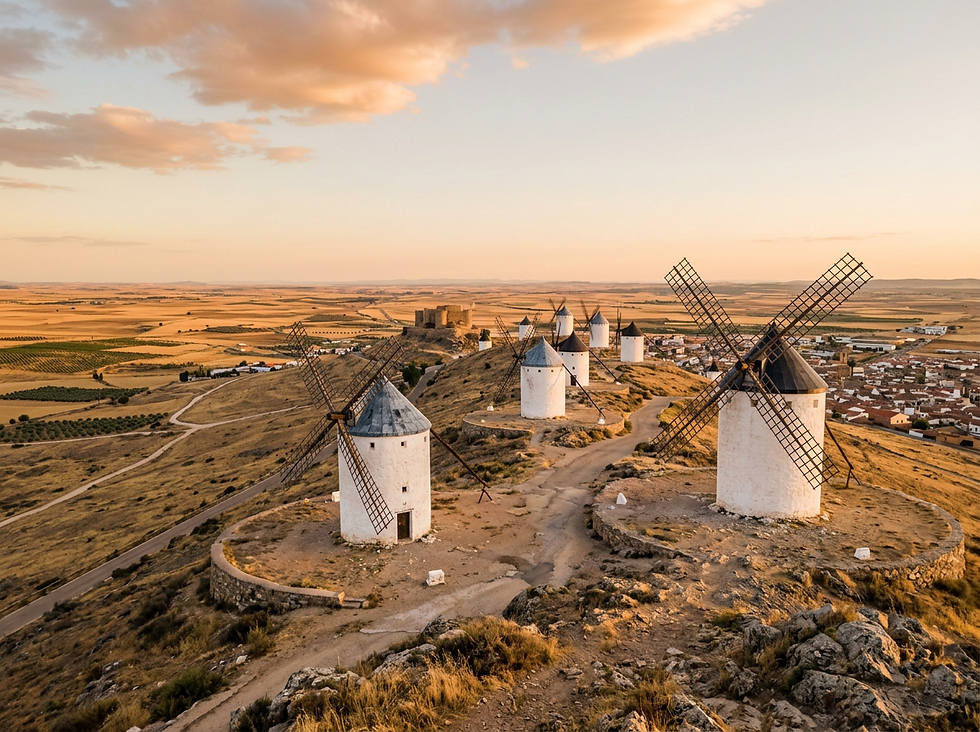
Castilla La Mancha Cuisine does not try to impress with fussy plates. Its food wins you over with bread, lamb, garlic, saffron, game, sheep’s cheese, and wine poured without drama. This is cooking shaped by dry plains, long winters, hard work, and the old rural world that gave Don Quixote his windmills.
Set almost in the centre of mainland Spain, the region feels both familiar and surprising. It is close enough to Madrid for an easy escape, yet its food belongs to a slower Spain of clay pots, wood smoke, stone villages, and recipes that still taste of the countryside.
The best way to understand it is to sit down hungry. Order what sounds simple. A stew. A wedge of Manchego. A plate of migas. A glass of red from La Mancha or Valdepeñas. Then let the region explain itself.

The soul of La Mancha is hearty, plain and deeply satisfying
The Castilla La Mancha Cuisine and food grew from necessity. Cooks used what the land gave them: grains, pulses, vegetables, olive oil, sheep’s milk, small game, poultry, pork, and wine. Nothing went to waste. Stale bread became a base for migas. Flour and garlic became gachas. Meat trimmings and bones coloured broths and stews.
That simplicity gives the cuisine its strength. These are not delicate tasting-menu dishes. They are meals made to feed shepherds, farmers, hunters, and families after long days outdoors.
Across the region, the flavours tend to be earthy and bold:
Garlic appears often, giving depth to soups, sauces, and stews.
Paprika brings warmth and colour.
Saffron adds fragrance, especially in rice, soups, and richer dishes.
Olive oil carries the flavour of vegetables, bread, and meat.
Wine belongs on the table and often in the pot.
This is also a cuisine with a literary shadow. Don Quixote and Sancho Panza wander through a world of inns, shepherds, wineskins, cheese, bread, and modest meals. Cervantes did not invent the appetite of La Mancha. He recorded a place where food was practical, social, and tied to the land.
Manchego cheese is the region’s quiet masterpiece
No food represents Castilla La Mancha more clearly than Manchego cheese. Made from the milk of Manchega sheep, it has a firm texture, a nutty flavour, and a clean, savoury finish. Younger wheels are milder and creamier. Older ones become sharper, drier, and more intense.
A proper plate of Manchego needs very little help. A few slices, some good bread, perhaps quince paste or a drizzle of honey, and a glass of local wine will do. It works as a tapa, a starter, a snack on the road, or the final bite of a meal.
The rind often carries the familiar zigzag pattern linked to traditional esparto grass moulds. Today, the design remains part of the cheese’s identity, even when modern methods are used.
When ordering, look for cheese made with Manchega sheep’s milk. If you see different ages on a menu, try more than one. The contrast between a semi-cured and a well-cured Manchego tells you a lot about the region’s patience with flavour.

Saffron gives humble dishes a golden lift
La Mancha saffron has a reputation far beyond Spain. Known for its colour, aroma, and careful production, it brings elegance to dishes that might otherwise seem plain. A small pinch can turn a broth, rice dish, or stew into something fragrant and memorable.
Saffron is precious because it takes so much labour to produce. The threads come from the crocus flower and must be gathered by hand. That effort explains why it is used with care rather than excess.
In Castilla La Mancha, saffron does not shout. It lifts a dish gently. It adds warmth, floral notes, and that golden hue linked to Spanish cooking. In the right hands, it makes rustic food feel almost noble.
Try it in rice dishes, soups, or meat stews where the spice has room to bloom. The best versions do not taste perfumed. They taste rounded, sunny, and complete.
The dishes to look for in taverns and village restaurants
Menus change by town, season, and house tradition, but several dishes help define the region. Some are easy to find. Others appear only in certain areas or at certain times of year.
Dish | What it is | Why it matters |
Pisto manchego | Slow-cooked vegetables, often tomato, pepper, courgette and onion | A humble, rich vegetable dish often served with egg |
Migas | Fried breadcrumbs with garlic, pork, peppers or grapes | A classic shepherd’s dish that turns old bread into comfort food |
Gachas manchegas | A thick flour-based dish flavoured with garlic, paprika and pork | Plain ingredients become deeply warming |
Atascaburras | Potato, cod, garlic, olive oil and sometimes walnuts | A cold-weather dish with a strong rural character |
Galianos or gazpachos de monte | Unleavened flatbread cooked with poultry, rabbit or game | One of the great countryside dishes of La Mancha |
Caldereta | A hearty lamb or kid stew | A celebration dish in many rural areas |
Galianos and gazpachos de monte are worth seeking out
One dish causes confusion for many visitors: gazpachos manchegos, also called galianos or gazpachos de monte in some contexts. This has little in common with the cold Andalusian tomato soup. In La Mancha, the word can refer to a hot, hearty dish made with pieces of unleavened bread and meat, often poultry, rabbit, hare, or game.
The bread is not a side. It is part of the dish. It soaks up the juices and becomes soft, savoury, and rich. Traditionally, cooks used what was available, especially in hunting country. That is why the dish can vary from place to place.
It is not always on offer year round. If a trusted restaurant recommends it, take the chance. It is one of those meals that makes sense of the region in a single bowl.
Pisto manchego shows how simple vegetables can carry a meal
Pisto manchego is often compared to ratatouille, but it has its own character. Tomato, pepper, onion, and courgette cook down slowly until sweet and soft. Many versions arrive with a fried egg on top, which turns it into a complete meal.
It is a good choice when you want something lighter than stew but still full of flavour. Order bread with it. Leaving the sauce behind would be a mistake.
Migas are humble food at its best
Migas began as a way to use bread that had gone stale. Cooks crumble or cut it, then fry it with olive oil, garlic, and whatever else the household has to hand. Pork, chorizo, peppers, and grapes all appear in different versions.
The pleasure comes from texture. Good migas are crisp in places, soft in others, and deeply savoury. They taste like a clever answer to scarcity.

Meat, game and stews anchor the table
Agriculture shapes the region, but meat plays a major role in its cooking. Lamb, pork, rabbit, partridge, and other game appear in many traditional dishes. The style is direct: grill it, roast it, stew it, or cook it with garlic, wine, herbs, and bread.
Lamb stews are especially comforting in colder months. Rabbit with garlic is a common rural favourite. Partridge may appear pickled, stewed, or served in rich sauces. Pork shows up in sausages, cured cuts, and dishes built for sharing.
The best restaurants do not overcomplicate this food. They trust the ingredient and the cooking time. A stew should taste settled, not rushed. A roast should have crisp edges and tender meat. A game dish should keep its wild character without becoming heavy.
If the menu mentions local hunting or seasonal game, ask what is available. Rural restaurants often know exactly when a dish is at its best.
Wine belongs to every meal
Castilla La Mancha is one of Spain’s major wine regions, and wine is woven into daily eating. The wide plains offer plenty of room for vines, and the styles range from easy young wines to more serious bottles with structure and age.
La Mancha, Valdepeñas, Manchuela, Méntrida, Almansa, and other areas all add to the region’s wine identity. Reds are common with meat and cheese, while whites and rosés suit lighter tapas, vegetables, and fish-based dishes such as atascaburras.
A simple approach works well:
Pair cured Manchego with a red that has enough body to match the cheese.
Try young reds with migas, sausages, and grilled meats.
Choose fuller reds for lamb, game, and stews.
Ask for a local white with cod, vegetables, or saffron dishes.
You do not need to chase expensive bottles. In Castilla La Mancha, many of the most enjoyable wine moments happen with a house recommendation, a clay plate of food, and no ceremony at all.
Talavera de la Reina adds craft to the meal
Talavera de la Reina, in the province of Toledo, gives travellers a fine way to connect food with local craft. The town is known for ceramics, especially hand-painted pieces with deep blues, yellows, greens, and traditional motifs.
A visit can pair naturally with lunch or tapas. Spend the morning looking at ceramics workshops or tilework, then sit down in a traditional restaurant or a bar where local dishes arrive on plates that echo the town’s craft heritage.
This changes the way a meal feels. Manchego on a ceramic plate, stew in earthenware, wine beside painted tiles, these details make the food feel rooted. The region’s cooking and pottery share the same values: utility, patience, and beauty without fuss.
For a relaxed food day in Talavera, plan around three simple pleasures:
Visit a ceramics workshop or shop.
Order regional tapas with local wine.
Stay for a proper meal if galianos, lamb, or game appears on the menu.

Desserts and sweet endings carry the same rural spirit
The region’s sweets often follow the same rule as its savoury cooking: simple ingredients, strong memory. Eggs, flour, honey, almonds, lard, sugar, and wine appear in many traditional desserts.
You may find mazapán from Toledo, one of the region’s best-known sweets, made with almonds and sugar. There are also fried pastries, honeyed treats, sponge cakes, and convent sweets sold in historic towns.
Dessert here is rarely showy. It is more likely to be a small sweet with coffee, a slice of almond pastry, or something made for a festival. After a heavy stew or meat dish, that is often enough.
How to eat well in Castilla La Mancha
The best meals in the region often happen when you follow local rhythm rather than a strict checklist. Lunch tends to matter. Rural restaurants may serve the most interesting dishes at midday. Seasonal dishes can disappear if ingredients are not available.
Keep these tips in mind:
Ask what is homemade. The best dish may not be the most famous one.
Order bread. It is part of the cuisine, not an extra.
Share starters. Cheese, pisto, migas, and cured meats work well in the centre of the table.
Trust seasonal game. If it is offered with confidence, it may be the meal to remember.
Leave room for wine. Local bottles often give excellent value.
Do not confuse gazpachos manchegos with cold gazpacho. They are completely different dishes.
A good Castilla La Mancha meal should feel generous, grounded, and unhurried. It should taste of garlic, smoke, sheep’s milk, ripe vegetables, saffron, clay, and wine.
The region does not need luxury to feel rich. Its greatness lies in how much it can do with bread, meat, vegetables, cheese, and patience. Pull up a chair, order the dish that sounds most rural, and let the flavours of Don Quixote’s country do the rest.


Comments