
_edited.png)
Chasing Velázquez Light: Best Seasons for Castilian Winter and Mediterranean Autumn

Light changes the way Spain feels. A Castilian winter strips the air clean until stone, sky and shadow look almost etched. And Mediterranean autumn softens the heat and turns the afternoons honey-coloured. Both seasons can be beautiful, but they suit different kinds of travel.
The phrase “Velázquez light” is part romance and part truth. Diego Velázquez was born in Seville, worked at the Spanish court in Madrid, and painted with a control of tone that still feels startling at the Prado. His Spain is not one simple glow. It has greys, silvers, ochres, black cloth, pale faces, hard daylight and quiet rooms. To chase that light, choose the season that matches the mood you want.
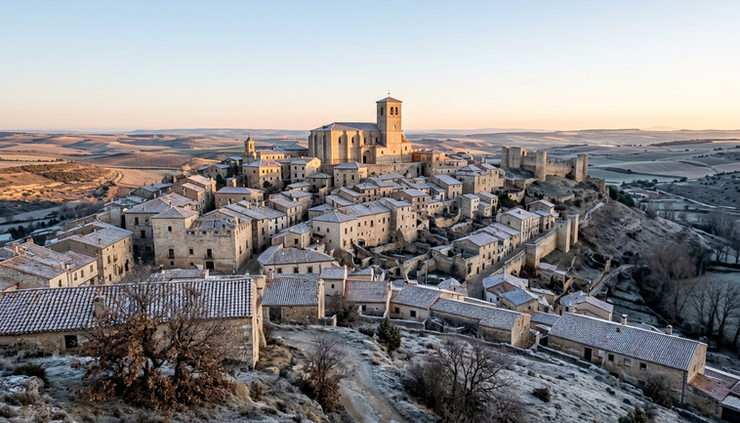
Castilian winter gives Spain its sharpest edges
Castile in winter is spare, bright and often cold. That is the point. The season suits travellers who want to see Spain without the heat haze, without the summer rush, and without the sense that every moment must happen outdoors.
Think of Madrid, Toledo, Segovia, Ávila, Salamanca, Burgos and Valladolid. These are cities of stone, squares, cathedrals, convent walls, old universities and stern horizons. In winter, the sun stays low for longer. Shadows stretch across plazas. The air can feel dry and clean. Facades show their texture, and the sky often holds a deep, hard blue.
This is the Spain of wool coats, café windows, museums, roast lamb, hot chocolate and late afternoon walks. It can be wonderfully atmospheric.
Winter also changes the rhythm of the day. Mornings may start cold, even icy. Midday can be bright enough for outdoor sightseeing. By late afternoon, the temperature drops quickly, and interiors become part of the pleasure. A good winter day in Castile might move from a cathedral to a long lunch, then to a gallery, then to a short walk at dusk.
The best months for this mood are usually December to February, with November and early March acting as soft edges. January often feels the most stripped back. December has lights, markets and holiday energy, especially in Madrid. February can bring a sharper, quieter charm, with longer days and fewer visitors.
Why the light feels different in Castile
Castile sits on a high central plateau. Madrid, for example, is much higher than many visitors expect. That elevation helps create a winter brightness that feels different from sea-level Spain. The air can be dry, the skies wide, and the light direct.
This matters if you care about painting, architecture or photography. Stone cities look different when the sun is low. Details stand out. The ribs of a cathedral vault, the carved doorway of a monastery, the pale wall of a museum courtyard, all become more legible.
For photographers, winter Castile is forgiving in one sense and demanding in another. You get dramatic angles and crisp contrast, but the day is shorter. Plan the best outdoor scenes around late morning and the hour before sunset. Keep museums and churches for the coldest parts of the day.
The best Castilian winter stops
Madrid works as the natural base. The Prado, the Royal Palace area, Retiro Park and the older streets around Austrias all carry winter well. The city also has the right balance of warmth and grandeur. When the cold bites, Madrid gives you cafés, galleries and taverns within easy reach.
Toledo is especially good in winter. Its lanes can be heavy with visitors in high season, but winter gives the city more breathing room. The views across the Tagus feel clearer, and the mix of Christian, Jewish and Muslim heritage is easier to take in slowly.
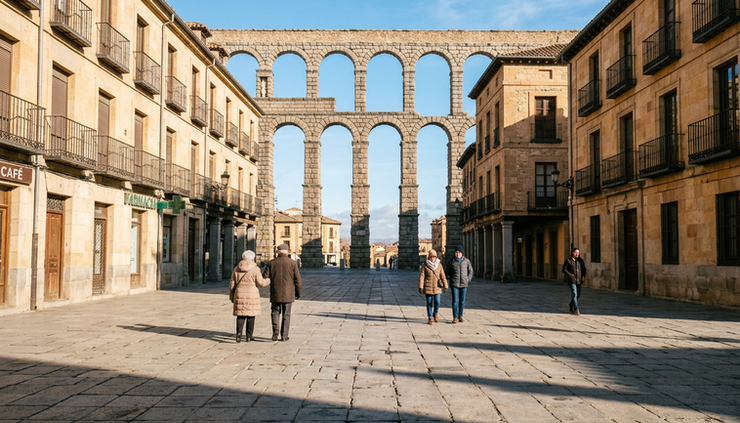
Segovia may be one of the best winter day trips in Spain. The Roman aqueduct looks severe and beautiful under a pale sky. The Alcázar rises above the confluence of rivers, and the old town suits a slow walk followed by a warming lunch.
Salamanca brings a warmer stone colour to the Castilian winter. Its university buildings and grand square catch the late sun well. Even in colder months, the city has youthful movement because of its student life, but it rarely feels overwhelming.
Mediterranean autumn offers warmth without the glare
Autumn on Spain’s Mediterranean coast has a different kind of grace. The hard heat of July and August fades. The sea often keeps some warmth. The sun lowers and turns gentler. Outdoor meals become easier. Cities feel more walkable. Beaches lose their peak-season intensity but do not become empty in a bleak way.
This season suits travellers who want food, sea air, old quarters, coastal walks and late afternoons outdoors. It is also a strong choice for anyone who loves colour. Not the theatrical colour of high summer, but softer shades: terracotta, cream, olive green, faded blue shutters, amber light on stone, silver water at sunset.
The best months are usually late September, October and early November. September can still feel summery, especially early in the month. October often gives the best balance of warmth, calmer streets and mellow light. November is more changeable, but it can still be rewarding, especially in southern Mediterranean areas.
Where Mediterranean autumn shines
Valencia is one of the great autumn cities. It has a historic centre, beaches, gardens, markets and a food culture that rewards unhurried travel. The heat can be punishing in summer, but autumn opens the city up. You can walk from the old centre through the Turia Gardens, eat rice dishes without rushing, and reach the sea without feeling scorched.
Catalonia’s coast gives variety. Barcelona remains busy, but autumn makes it easier to enjoy its neighbourhoods on foot. Smaller coastal towns along the Costa Brava can feel calmer once the summer crowds thin. Coastal paths suit October especially well, provided the weather holds.
Alicante and the Costa Blanca keep a mild feel deep into autumn. The light is clean but warmer than Castile. Hilltop castles, palm-lined streets, coves and inland villages all benefit from the season.
Murcia and the south-east can be excellent for travellers who want a drier, warmer autumn. The region’s cities and coast often suit late-season travel, with food markets, plazas and evening walks still central to the experience.
The Balearic Islands also shift beautifully in autumn. Mallorca, Menorca and Ibiza become less about peak beach life and more about villages, food, walking routes and small harbours. Ferry schedules and seasonal closures need attention, but the reward is a slower island mood.
Choose the season by the kind of trip you want
The best choice is less about “good weather” and more about atmosphere. Castilian winter and Mediterranean autumn both offer light, culture and strong place identity, but they ask for different habits.
If you want | Choose | Why it works |
Museums, old cities and clear skies | Castilian winter | The cold suits indoor culture, and the light sharpens architecture |
Coastal meals and warm walks | Mediterranean autumn | The heat drops, but outdoor life remains easy |
Fewer summer crowds | Both | Winter helps inland cities, autumn helps coastal areas |
Long beach days | Mediterranean autumn | Early autumn can still feel beach-friendly |
Dramatic photography | Castilian winter | Low sun and dry air create strong shadows |
Softer colour and sea views | Mediterranean autumn | Warm afternoon light flatters coastlines and old towns |
If this is a first visit to Spain, a winter trip to Madrid and nearby Castilian cities can feel rich and focused. You can build the journey around the Prado, Toledo, Segovia and Salamanca, with good rail links and manageable distances.
If the goal is rest, food and light activity, autumn by the Mediterranean may be the better choice. Base yourself in Valencia, Alicante, Barcelona, Girona, Palma or Málaga, then mix city days with smaller coastal or inland excursions.

Pack for contrast rather than averages
Seasonal averages can mislead. Spain does not behave as one climate zone. A January morning in Burgos can feel severe, while an October afternoon in Valencia may still call for short sleeves. The smartest packing strategy is to plan for shifts across the day.
For Castilian winter, pack:
A warm coat that handles wind
Layers, including a jumper or fleece
Comfortable closed shoes
A scarf and gloves, especially for early starts
Sunglasses, because winter sun can be bright
Smart casual clothes for restaurants, galleries and evening meals
For Mediterranean autumn, pack:
Light layers for warm days and cooler evenings
A thin waterproof jacket for occasional rain
Comfortable sandals or walking shoes
Swimwear if travelling in late September or early October
Sun protection, even outside summer
One warmer layer for breezy coastal nights
The key is mobility. In Castile, you may move between icy streets and heated museums. On the Mediterranean, you may start the day in a market, walk a coastal path after lunch, then sit outside for dinner with a jacket over your shoulders.
Time your days around light, not just opening hours
A common mistake is to plan Spanish trips only around museum times and restaurant reservations. Those matter, but the light may shape your memories more than the schedule.
In Castile, use the middle of the day for outdoor views and stone streets. Visit viewpoints when the air is clear. Save darker interiors, major museums and long meals for the colder hours. Winter evenings arrive early, so do not leave your main walk until too late.
In Mediterranean autumn, reverse that slightly. Mornings are good for markets, old quarters and uphill walks. Midday can still be warm, especially in early autumn. Late afternoon is the prize. That is when harbours, beaches, castle walls and seaside promenades often look their best.
For a simple rule, try this:
In Castile, chase the low winter sun across stone. On the Mediterranean, wait for autumn light to soften the sea.
This is also where the Velázquez comparison earns its keep. The painter’s work reminds us that Spanish light is not always blazing or decorative. Sometimes it is restrained. Sometimes it is grey. Sometimes a dark room tells you more than a bright square. A good trip leaves room for that range.
A sample route for each season
A well-shaped itinerary does not need to cover too much. These two routes keep the focus clear.
A Castilian winter route for seven days
Start in Madrid for three nights. Spend one full day with the Prado and nearby sights. Use another for Retiro, the Royal Palace area and old Madrid.
Take a day trip to Toledo, or stay overnight if you want quieter early and late hours. Then travel to Segovia for a day, with time for the aqueduct, cathedral area and Alcázar.
End with Salamanca or Ávila, depending on pace. Salamanca rewards a longer stay. Ávila works well as a shorter stop, especially for its walls and austere winter atmosphere.
A Mediterranean autumn route for seven days
Base yourself in Valencia for three or four nights. Walk the old centre, visit the central market, spend time in the Turia Gardens, and plan a rice meal without rushing.
Then move south towards Alicante or north towards Catalonia, depending on flight routes and interests. Alicante gives castles, beaches and easy warmth. Catalonia gives coastal paths, medieval towns and access to Barcelona or Girona.
If islands appeal, choose Mallorca for villages, coast roads and walking. In autumn, the island feels more balanced than in peak summer, though some seasonal services may slow down.

The best season is the one that matches your eye
Choose Castilian winter if you want clarity, silence, museums, stone cities and the drama of low sun. It is the better season for travellers drawn to Madrid, Toledo, Segovia and the interior. It asks for warm clothes and shorter days, but it gives back a kind of Spain that feels precise and memorable.
Choose Mediterranean autumn if you want warmth, sea air, food, walking and golden afternoons. It is the better season for Valencia, Alicante, Catalonia, Murcia and the islands. It keeps some of summer’s ease while removing much of its strain.
The richest answer may be to experience both at different times. Spain rewards repeat visits because its regions do not share one mood. Chase the crisp Castilian winter once. Return for the Mediterranean autumn later. Between the two, you begin to understand that the country’s light is not a single colour, but a season-by-season conversation.


Comments