
_edited.png)

Northern Europe travel Guide
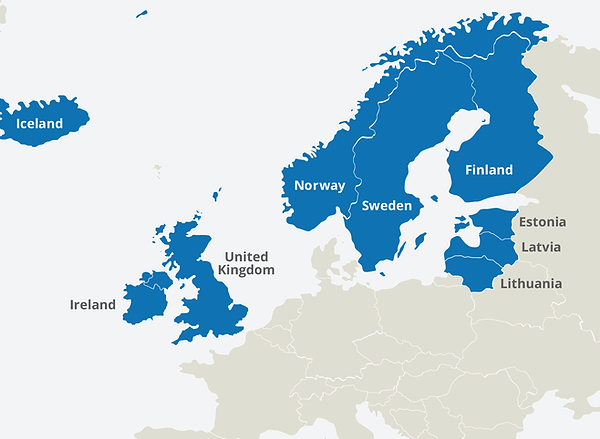
Northern Europe is ideal for dramatic nature, stylish cities, and unique Arctic experiences, especially across Norway, Sweden, Finland, Denmark, and Iceland.
Northern Europe usually refers to the Nordic countries: Norway, Sweden, Finland, Denmark, and Iceland, often plus the Arctic regions like Lapland and Northern Norway. The region mixes fjords, islands, forests, and modern capitals such as Copenhagen, Stockholm, Oslo, Helsinki, and Reykjavík. Travelers go for fjord scenery, Northern Lights, midnight sun, design and food culture, and outdoor activities like hiking, skiing, and sailing.
When to go
-
Late May to early September is best for mild weather, long days, hiking, island-hopping, and city breaks. June–July give the warmest conditions and the midnight sun in Arctic areas like Lofoten, Tromsø, and Finnish Lapland.
-
October to March is ideal for Northern Lights and winter activities such as dog sledding, snowmobiling, and ice hotels in Northern Norway and Lapland. Late November–December add Christmas markets and festive city atmospheres, especially in Copenhagen, Stockholm, Helsinki, and Rovaniemi.
How to get there
From the rest of Europe and the UK, the fastest way is usually direct flights into hubs such as Copenhagen, Stockholm, Oslo, Helsinki, and Reykjavík, which have extensive connections across Europe. Overland, you can use the Eurotunnel or ferries from the UK to mainland Europe, then drive through Germany and Denmark into Sweden and Norway, or connect via long-distance trains and buses. Car ferries also link Denmark, Germany, and the Netherlands with Norway, Sweden, and Finland, making road trips across several Nordic countries easy to combine.
Find Flights To European Destinations
Getting around
-
Within Northern Europe, domestic flights connect distant points quickly, for example between Oslo and Tromsø or Reykjavik and the Icelandic regions.
-
Rail networks are strong in Norway, Sweden, Denmark, and Finland, with scenic lines like Oslo–Bergen for fjords and long overnight routes into Lapland.
-
Buses, coastal ferries, and rental cars are essential for islands and remote fjord or Arctic areas, while cities are walkable and have efficient public transport and bike infrastructure.
-
Trains and ferries connect cities reliably—book ahead for scenic routes like Oslo to Bergen—and bikes thrive in places like Copenhagen. Public transport apps simplify local buses and trams; avoid driving in winter due to ice

Things to do
-
Nature and Arctic:
-
Cruise or kayak in Norwegian fjords, hike coastal and mountain trails, or join wildlife safaris in areas like Lofoten and Western Norway.
-
Hunt the Northern Lights in Northern Norway, Iceland, or Finnish Lapland, often combined with dog sledding, snowshoeing, or whale watching.
-
-
Culture and cities:
-
Explore museums, design districts, and historic quarters in capitals such as Copenhagen, Stockholm, Oslo, Helsinki, and Reykjavík.
-
Experience Sami culture in Northern Norway and Lapland, including traditional food, reindeer herding traditions, and stays in local-style accommodations.
-
-
Unique stays and experiences:
-
Sleep in an ice hotel or glass igloo in Arctic regions and enjoy Nordic spa culture with saunas and outdoor hot tubs.
-
Combine city breaks with island-hopping by ferry or boat in archipelagos around Stockholm, Helsinki, and the Danish coast
-
Must-see areas
Norwegian fjords (Bergen region, Western Norway)
Iconic dramatic fjords, waterfalls, and hiking routes like Trolltunga and Preikestolen, with Bergen as an easy base.
Lofoten Islands,Norway
Arctic archipelago of fishing villages, sharp peaks, beaches, and wildlife such as sea eagles and orcas.
Northern Norway (Tromsø, Alta)
Top Northern Lights region with fjords, winter activities, and unique Arctic culture.
Lapland, Finland (Rovaniemi and beyond)
Santa Claus Village, reindeer experiences, Aurora viewing, and wilderness national parks and ski resorts.
Copenhagen, Denmark
Design-focused, bike-friendly capital with canals, historic streets, and innovative food scene.
Stockholm & archipelago,Sweden
Stylish waterfront capital with islands, old town, and easy boat trips into the archipelago.
Reykjavík & Iceland’s nature
Compact capital combined with geysers, waterfalls, glaciers, and winter Northern Lights tours.

Essential Travel Tips
Northern Europe offers stunning natural beauty, efficient public transport, and high living costs, but smart planning makes it accessible for travelers. Essential tips focus on weather prep, mobility, and budget strategies to enjoy places like Scandinavia and the Baltics smoothly.
-
Packing essentials
-
Layer clothing with waterproof jackets, sturdy walking shoes, and thermals for unpredictable weather shifts. Include a power bank, reusable water bottle, and offline maps, as remote areas may lack signal.
-
Money and costs
-
Expect higher prices for meals and lodging, so use city passes for attractions and eat at markets or groceries to save. Cards work widely, but carry some cash for rural spots; sustainability-focused spots reward eco choices like walking.
-
Safety and culture
-
Areas are very safe, but watch belongings in tourist hubs and respect "alle manns rett" outdoor access rules in Norway. Try saunas, local festivals, and nature immersion for authentic experiences.