
_edited.png)
Spain The Eternal Heartland
"Beyond the Coast: A Journey into the Golden Heart of the Iberian Peninsula."

Spain
Beyond the postcards lies a rugged, golden empire of stone and spirit. From the imperial heights of the North to the silent cork forests of the West, rediscover the soul of the Iberian Peninsula.”
When to Visit: The Seasonal Shift
“Chasing the Velázquez light: whether you seek the crisp clarity of a Castilian winter or the golden embrace of a Mediterranean autumn.”
Visiting Spain involves navigating distinct regional climates and a crowded festival calendar. The "seasonal shift" divides the year into three main phases:
1. Peak Season: June – August
This period sees the highest temperatures, largest crowds, and premium pricing, especially in coastal and island destinations.
-
Weather: Southern regions like Andalusia (Seville, Córdoba) experience extreme heat, often exceeding 35–40°C. Northern Spain (Galicia, Basque Country) remains comfortably warm (21–25°C) and is the best retreat from the southern heat.
-
Key 2026 Events:
-
San Fermín (Pamplona): July 7–14.
-
Semana Grande (Bilbao): Mid-August.
-
La Tomatina (Buñol): Last Wednesday of August.
-
-
Strategy: Book accommodations 3–6 months in advance for beaches. Expect many local businesses in cities like Madrid to close in August as residents head to the coast.
2. Shoulder Season: April – May & September – October
Widely considered the best time to visit, offering a balance of mild weather and moderate prices (typically 15–30% lower than summer).
-
Spring Shift (April–May): Ideal for exploring the interior and south before the heat hits. In 2026, Semana Santa (Holy Week) falls from March 29 to April 4, bringing massive crowds to Seville and Málaga.
-
Fall Shift (Sept–Oct): The Vendimia (grape harvest) occurs in wine regions like La Rioja. Temperatures remain warm (18–25°C) and the Mediterranean stays swimmable until early October.
-
Events: Feria de Abril (Seville) begins April 21, 2026.
3. Off-Season: November – February
The cheapest time to travel, with hotel discounts of 20–40%.
-
Weather: Central and Northern Spain are cold and rainy (Madrid can drop below 5°C at night). Southern Spain and the
remain mild (15–20°C), making them the top choice for winter sun.
-
Events:
-
Three Kings Parade: January 5–6.
-
Carnival (Cádiz/Tenerife/Sitges): February 2026 is peak for these world-renowned festivals.
-
Spain: The Master Chronicles
“From the high-speed pulse of the AVE to the ancient silence of the Sierras: your definitive compass to navigating the soul of the Iberian Peninsula.”

Good to Know: Cultural Etiquette
“Mastering the art of the 'sobremesa' and the unspoken rhythm of the Spanish day—where life begins when the sun goes down.”
Spanish culture is famously warm and social, but it operates on distinct "unwritten rules" that can surprise first-time visitors. To navigate 2026 smoothly, keep these etiquette essentials in mind:
1. Greetings and Social Space
-
The Double Kiss (Dos Besos): In social settings, women greet everyone (men and women) with a light touch of the right cheek, then the left. Men usually shake hands with other men unless they are close friends or family.
-
Public Courtesy: It is standard to say "Hola" or "Buenos días/tardes" when entering a small shop, elevator, or cafe, and "Gracias/Adiós" when leaving.
-
Physical Distance: Spaniards generally stand closer during conversation than Americans or Northern Europeans. Personal space is smaller, and physical touch (a pat on the arm) is a sign of friendliness, not aggression.
2. Dining and Tipping
-
The Tipping Myth: Tipping is not mandatory or expected in the same way as in the US. Locals typically just round up the change at cafes or leave €1–€2 for a nice meal. A 5–10% tip is reserved for truly exceptional service.
-
The Bill (La Cuenta): Servers will rarely bring the bill to your table unprompted, as it is considered rude to rush guests. You must flag them down and ask: "La cuenta, por favor".
-
Lunch vs. Dinner Timing: Lunch is the main meal, usually eaten between 1:30 PM and 3:30 PM. Dinner starts late—most restaurants don't even open until 8:00 PM, and locals don't arrive until 9:00 PM or 10:00 PM.
-
La Sobremesa: This is the tradition of staying at the table long after the meal is finished to talk over coffee or drinks. Rushing out immediately after eating is considered unsociable.
3. Dress Code and Appearance
-
Urban Style: Spaniards take pride in a "neat and stylish" look. Avoid wearing gym clothes, tracksuits, or flip-flops in city centres unless you are actually exercising or at the beach.
-
Religious Sites: When visiting cathedrals like the Sagrada Família or Seville Cathedral, you must cover your shoulders and knees. Many major sites enforce this strictly at the entrance.
-
No Beachwear in Town: Walking through a city centre in a bikini or shirtless is considered improper and can even result in fines in cities like Barcelona.
4. Avoiding Offence
-
Regional Pride: Spain has multiple official languages (Catalan, Basque, Galician). Avoid assuming everyone is "just Spanish"—acknowledging regional identity and learning a few words in the local language (e.g., "Eskerrik asko" for thank you in Basque) is highly respected.
-
Sensitive Topics: Steer clear of debating regional independence, the Spanish Civil War, or making "lazy" stereotypes about the siesta. Most locals work long hours, and the siesta is often just a long lunch break for businesses to avoid the midday heat.
Getting Around: The Logistics of Discovery
“Shrinking the map: how high-speed rail and scenic backroads turn a vast kingdom into your personal playground.”
Getting around Spain is efficient and straightforward thanks to a modern and well-connected transport network of high-speed trains, extensive buses, and local urban systems.
1. Intercity Travel
Spain's cities are well-connected, primarily through an excellent rail network and a comprehensive bus system.
-
High-Speed Trains (AVE): The national rail company, Renfe, operates the high-speed AVE (Alta Velocidad Española) trains, which are the fastest way to travel long distances.
-
Speed & Comfort: These modern trains link major hubs like Madrid, Barcelona, Seville, and Valencia in just a few hours and offer spacious interiors, air-conditioning, power sockets, and free Wi-Fi.
-
Booking Tips: It is recommended to book tickets in advance through the Renfe website or apps like The Trainline or Rail Europe for potentially easier booking and e-tickets. Check-in closes two minutes before departure, but arriving earlier for luggage scanning is recommended.
-
-
Buses: Long-distance coaches, primarily run by companies like ALSA, are a cheaper, though slower, alternative to trains.
-
Coverage: Buses reach many smaller towns and off-the-beaten-path locations not accessible by train.
-
Amenities: Long-distance buses often have Wi-Fi and air conditioning.
-
2. Urban Mobility
Major cities like Madrid, Barcelona, Valencia, and Bilbao have excellent, integrated public transport systems that are easy for tourists to navigate.
-
Metro & Trams: The metro is typically the fastest way to travel within large cities, with frequent service and signs in Spanish and English. Trams and light rail options are also available in many locations.
-
Buses: Urban buses are widespread and a great way to reach areas not covered by the metro. You can usually buy a single ticket from the driver or use a reloadable travel card.
-
Payment: Cities offer various options, including single tickets, 10-trip cards (such as the T-Casual in Barcelona), and multi-day tourist passes, providing great value.
3. Driving and Car Rental
Renting a car offers flexibility for exploring rural Spain, but driving in city centres can be complex due to traffic and parking restrictions.
-
Requirements: You need a full, valid driving license. Non-EU citizens must carry an International Driving Permit (IDP) in addition to their national license. The minimum rental age is usually 21 (with an extra fee for those under 25).
-
Rules: Spain drives on the right side of the road.
-
Speed Limits: 120 km/h on motorways (Autopistas/Autovías), 90-100 km/h on conventional roads, and 30-50 km/h in urban areas.
-
Tolls: Autopistas (marked 'AP') are often toll roads, while Autovías (marked 'A') are free highways.
-
-
Tips: Carry essential equipment (reflective vest, warning triangles) in the car. Consider parking outside city centres and using public transport to navigate urban areas.
4. 2026 National Transport Pass
From the second half of January 2026, Spain will introduce a single national transport pass for €60 per month.
-
Coverage: This pass allows unlimited travel on Cercanías (suburban trains), Media Distancia (mid-distance regional trains), and state-run long-distance buses across the country.
-
Exclusions: This pass does not include the high-speed AVE or international train services.
-
Youth Discount: Travelers under 26 years old can get the pass for €30 per month.
International Gateways: Arrival in Style
“Your portal to the heartland: navigating Spain’s world-class hubs from the steel arches of Barajas to the Mediterranean breeze of El Prat.”
In 2026, arriving in Spain involves navigating high-traffic hubs that are increasingly digitized. Spain’s international gateways range from the architectural masterpieces in Madrid to coastal hubs currently undergoing significant investment.
1. Primary International Hubs
Adolfo Suárez Madrid-Barajas Airport
Spain’s largest hub, known for the visually striking
Terminal 4 It serves as the primary gateway for transatlantic flights and is a major European-Latin American bridge.
Josep Tarradellas Barcelona-El Prat AirportThe second-largest gateway, offering seamless connections to the city center in roughly 20 minutes.
The third busiest airport, handling massive international volumes, particularly during the peak summer shift.
Málaga-Costa del Sol AirportInternational airport
A rapidly growing gateway for southern Spain.
2. Arriving in Style: Premium & VIP Services
For those seeking a seamless arrival, Spanish airports offer specialised services to bypass standard crowds:
-
Meet & Assist: Available at major airports like Madrid and Barcelona, this service provides a personal escort from the aircraft door through passport control and luggage reclaim.
-
Premium Lounges: Madrid’s Terminal 4 features a Premium Lounge with private security and passport checkpoints, allowing for a completely separate arrival flow from other passengers.
-
Private Transfers: Pre-booked luxury transfers are widely available. Drivers typically wait in the arrivals hall with personalised signage and offer up to 60 minutes of complimentary wait time for flight delays.
3. The 2026 Arrival Process
-
Entry-Exit System (EES): By April 2026, the EU’s digital EES system is expected to be fully operational across all Spanish external borders. Non-EU travellers will need to provide facial biometrics and fingerprints at digital kiosks.
-
Automatic Border Control (ABC): EU, Icelandic, Norwegian, and Swiss citizens over 18 can use fast-track ABC gates with an electronic passport.
-
Financial Proof: Authorities may ask non-EU visitors to show proof of financial means for their stay, approximately €113 per day (adjusted for 2026).
4. Ground Connection Luxury
€85 – €130 (Luxury Car)20–30 minutes
€75 – €110 (Business Class)20–25 minutes
€60 – €95 (Private Van/Car)15–20 minutes
Arrival Tip: For a "style" arrival at Madrid T4, follow the signs to the Arrival Shop for immediate high-end shopping or utilize the Meet & Assist service to secure a porter for luggage management directly from the belt.
Useful Facts: The Essential Briefing
“The traveler’s toolkit: currency, connectivity, and the golden rules for a seamless Spanish odyssey.”
Capital
Madrid
Time Zone
GMT+1
Visa
No
Population
47.8 M
Currency
Euro
Int.Dial Code
+34
Languages
Spanish
Plug Type
Type F

Central Spain Travel Guide
Beyond the Windmills: Exploring the High Plains, Hidden Villages, and Historic Soul of Central Spain
Central Spain is vast, historic, and deeply authentic, offering a journey into the essence of Spanish identity. Anchored by the cosmopolitan capital, Madrid, this region features grand royal palaces, medieval hilltop towns, and golden plains, all woven together in a rich cultural tapestry.


Community of Madrid Travel Guide
The Community of Madrid is home to a diverse selection of cities and towns that range from monumental UNESCO World Heritage sites to hidden mountain gems. In 2026, the region continues to see record-breaking interest in its cultural and natural heritage.
Summary

Why visit the Community of Madrid?
“Beyond the bright lights of the Gran Vía lies a region of royal forests, mountain peaks, and sun-drenched plazas that prove Madrid is much more than just a capital—it’s a way of life.”
Madrid is synonymous with culture and street life. The capital city is home to some of the most frequently visited museums in Spain, and its surroundings offer the chance to visit several outstanding monumental sites.
But you’ll find the Madrid Region offers much, much more. For example, the cities of Aranjuez, Alcalá de Henares and San Lorenzo del Escorial, all of which have been declared World Heritage Sites. Or small picturesque towns such as Chinchón, and the charming villages in the mountains.
When to visit
-
Best Seasons: Spring (April–May) and fall (September–October) for mild weather and fewer crowds.
-
Summer: Hot (often above 30°C/86°F), busy, and lively—book accommodations and attractions in advance.
-
Winter: Cooler, quieter, and festive during the holiday season
Top Things to Do: Sightseeing & Landmarks
Stand at the center of the Spanish world in the Puerta del Sol, then lose yourself in the 'Golden Triangle of Art' where masterpieces by Goya and Picasso await.”
-
The largest royal palace in Europe, famed for its opulent interiors and beautiful gardens. Book tickets online to avoid queues. Admission: ~€20
-
It is one of the world’s premier art museums, home to masterpieces by Goya, Velázquez, El Greco, and more. Plan 3–4 hours to see the highlights. Admission: €15
-
Madrid’s green heart, perfect for strolling, boating on the lake, or visiting the Crystal Palace
-
The city’s historic main square, surrounded by cafes and filled with centuries of history. Hosts markets and events throughout the year
-
Madrid’s bustling shopping and entertainment street, lined with theaters, shops, and rooftop bars .
-
A lively indoor market near Plaza Mayor, ideal for sampling tapas, local wines, and Spanish delicacies
-
An ancient Egyptian temple gifted to Spain, set in a scenic park with panoramic sunset views. Free admission.
-
A striking cathedral next to the Royal Palace, with a rooftop dome offering city views.
-
Explore modern art at Reina Sofía (home to Picasso’s Guernica) and a diverse collection at the Thyssen


Local Experiences: The Madrid Soul
“Don’t just visit—belong. Swap the tourist trail for a morning at El Rastro flea market or a sunset picnic in the shadows of an ancient Egyptian temple.”
-
Rooftop Bars
-
Enjoy city views from rooftops like Círculo de Bellas Artes or Hotel Riu Plaza España.
-
-
Churros with Chocolate
-
Try this classic treat at Chocolatería San Ginés, a Madrid institution.
-
-
El Rastro Flea Market
-
Browse antiques and vintage finds every Sunday in the La Latina neighbourhood.
-
-
Neighborhood Wandering
-
Explore Malasaña for indie shops and nightlife, Chueca for LGBTQ+ culture and trendy bars, and Lavapiés for multicultural eats.
-


Gastronomy: A Feast for the Senses
From steaming bowls of Cocido Madrileño in a century-old tavern to cutting-edge Michelin stars, prepare for a culinary journey that never sleeps.
Central Spain’s cuisine is robust and flavorful. Specialities include:
-
Cocido madrileño (Madrid’s chickpea stew)
-
Roast suckling pig (Segovia)
-
Marzipan (Toledo)
-
Manchego cheese (La Mancha)
-
Serrano ham, grilled meats, and hearty stews
-
Wines from the Ribera del Duero and La Mancha regions
Shopping & Fashion
“Stroll the 'Golden Mile' of Salamanca for luxury labels or hunt for avant-garde boutiques in Malasaña; Madrid is where style meets the street.”
Salamanca the Golden Mile is comprised of two of Madrid‘s most upscale shopping destinations:
-
the Ortega y Gasset and Serrano streets. The giant shoe on the photo above is on Serrano Street, Salamanca district, Madrid, Spain.
Luxury Hubs & Services
For those seeking a more concentrated luxury experience or professional guidance:
-
: Located near Puerta del Sol, this high-end gallery houses brands like Saint Laurent, Valentino, and Rolex
in a single historic building.
-
Personal Shopper: For a tailored route through these districts, services like EDH Personal Shopper provide expert recommendations adapted to individual styles.
Nightlife & Culture
“As the sun sets, the city wakes up. Experience the 'Movida' spirit in rooftop bars that touch the clouds and flamenco tablaos that shake the earth.”
In 2026, the essence of the Movida Madrileña—the cultural revolution that reshaped Madrid after 1975—thrives in a nightlife scene that blends creative hedonism with deep-rooted tradition.
The 'Movida' Spirit in 2026
The contemporary "Movida" is less about the 1980s counterculture and more about a timeless attitude: "Madrid never sleeps".
-
Malasaña & Chueca
: These historic districts remain the epicenters of this spirit, where you can find direct links to the movement through specialized tours and bars that play the era's synth-pop and punk hits.
-
Candlelight Concerts: In early 2026, the city hosts specialized "Candlelight: La Movida Madrileña" events, honoring the music of the revolution in intimate, candlelit settings.
Sky-High Rooftops
Experience "touching the clouds" at Madrid’s premier azoteas (rooftops), which offer panoramic views and signature cocktails.
Where to Stay in Madrid
The Spanish capital buzzes with an energy that’s as invigorating by day as it is enchanting by night, offering lodgings that capture the city’s spirit. From luxurious havens in the bustling heart to peaceful retreats in the scenic outskirts, here’s our selection of five hotels that promise an unforgettable Madrid experience.
Nestled in a tranquil corner of Madrid's bustling streets, Hotel Orfila shines as a symbol of grace and tranquility. This 19th-century palace transformed into a hotel features a charming garden terrace perfect for fresco dining. With its luxurious decor and exceptional service, Hotel Orfila offers not just accommodation but an unforgettable experience.

Nestled in the chic Barrio de Salamanca, Ayala 63 beautifully blends modern elegance with classic allure. Encircled by upscale boutiques and trendy cafés, this hotel is a paradise for luxury enthusiasts. Its accommodations combine contemporary style with cosy comfort, and the rooftop terrace offers stunning city views creating the perfect urban retreat.

Experience a stay in a building rich with the city's history at Palacio Tirso de Molina. This hotel seamlessly combines historic architecture with contemporary amenities in the vibrant La Latina district. Located just a short walk from fantastic tapas bars and bustling markets it provides an authentic Madrid experience.

Experience a hidden gem at Box Art Hotel – La Torre.
Housed in a 19th-century mansion that boasts its own art gallery and outdoor swimming pool, Box Art Hotel - La Torre is situated in Collado Mediano within the Sierra de Guadarrama. Each room uniquely combines contemporary artistry with rustic charm. With amenities like a spa, outdoor pool, and lush gardens, this hotel provides a tranquil retreat for those looking to escape the hustle and bustle.

Eurostars Madrid Tower is a renowned, luxurious hotel designed for those who appreciate exclusivity. Standing tall, it occupies the first 31 floors of the striking 236-meter SyV Tower, setting it apart. Guests can indulge in breathtaking 360-degree views that stretch from the mountains to Plaza Mayor. Most of the hotel's spaces, including rooms, the Volvoreta restaurant, the Spa & Health Club, and various meeting rooms, serve as stunning vantage points overlooking the city.

Practical Tips for Travelers
Exploring Madrid is the adventure of a lifetime, but knowing a few practical tips can make your journey smoother and more enjoyable.
-
Language Tips
While many Madrileños speak English, learning a few basic Spanish phrases will enrich your experience. Simple greetings, “please” (por favor), and “thank you” (gracias) can go a long way.
Download a language translation app to help with menus, signs, and conversations.
-
Safety and Emergency Information
The Spanish capital is generally safe, but like any major city, it pays to be cautious of your belongings, especially in crowded areas.
In case of emergency, dial 112. It’s the universal number for police, fire, and medical emergencies in Spain.
-
Currency, Tipping, and Payment Options
Spain uses the Euro (€). ATMs are widely available, and credit cards are accepted in most places, though having some cash is advisable for smaller establishments.
Tipping is appreciated but not mandatory. In restaurants, rounding up the bill or leaving 5-10% is customary for good service.
Getting Around
“From the sleek efficiency of the Metro to high-speed rails that shrink the map, getting lost in Madrid is actually quite difficult—though highly recommended.”
Madrid, with its blend of historic charm and modern efficiency, offers a variety of options for getting around and exploring its many wonders. Whether you prefer the speed of public transport or the leisure of a scenic walk, here’s how to navigate Madrid with ease.
Public Transportation: Fast and Reliable
Arriving by Air:
Madrid Barajas Airport serves the community. The airport is a taxi ride away from any town within the metropolitan area. A ride to some towns close to the airport (for example, Alcobendas/San Sebastián de los Reyes) costs less than to the centre of Madrid. You can catch the metro to Madrid's city centre for just a couple of euros.
By train
Renfe trains can take you to Atocha or Chamartín station in Madrid from anywhere in Spain. From either station, you can transfer to Cercanías commuter trains.
Metro:
Madrid’s metro system is one of the most extensive and user-friendly in Europe. With clear maps and frequent services, it’s the quickest way to traverse the city’s many districts.
Buses:
Complementing the metro, Madrid’s buses offer comprehensive coverage across the city and its suburbs. It’s a great way to see the city’s sights from the comfort of your seat.
Taxis:
Readily available and reasonably priced, taxis in Madrid are a convenient option for direct routes or late-night journeys. Just look for the lit “libre” sign to hail a free cab.
On Two Wheels: Bike and Scooter Rentals
Consider renting a bike or an electric scooter for a more personal exploration of Madrid.
Many rental services offer hourly rates, providing a flexible and fun way to navigate the city’s bike-friendly lanes and parks.
Walking the City: Exploring Madrid’s Heart
Madrid is a walker’s delight, with many of its major attractions, within walking distance. Comfortable shoes and a city map are your best companions for discovering hidden gems and bustling local life on foot.
Tips for City Exploration:
-
Purchase a multi-day transport pass for unlimited rides on metro and buses.
-
Use Madrid’s official transportation app for real-time schedules and routes.
-
Explore neighbourhoods like Malasaña or La Latina
Day Trips from Madrid
“Epic escapes are just an hour away: traverse the pine forests of the Sierra de Guadarrama or the granite majesty of El Escorial.”
In addition to exploring Madrid, it's easy to take day trips to nearby towns that also have much to offer. Here are some suggestions for visiting four World Heritage Cities and other nearby destinations. You can choose to hire a car or take a train or bus for your journey.
-
Toledo: Medieval city with a stunning cathedral and winding streets.
-
Segovia: Famous for its Roman aqueduct and fairy-tale castle.
-
Ávila, Alcalá de Henares, Aranjuez, Cuenca, Salamanca, Córdoba: Each offers unique history, architecture, and local cuisine.
Key Cities: Urban Jewels & Royal Retreats
“Step out of the metropolitan buzz and into a golden age: from the scholarly cobblestones of Alcalá to the regal gardens of Aranjuez.”
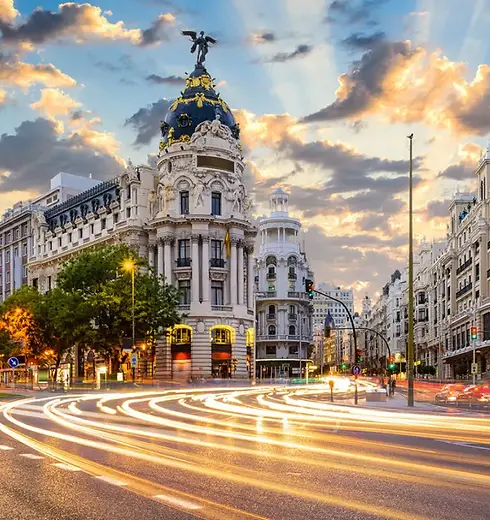


Most Charming Towns (villas de Madrid)
"Step out of the 21st century and into the heart of Castile—where medieval castles, sun-drenched vineyards, and hidden mountain villages prove there’s a whole other side to Madrid just an hour away."
Madrid that offer a perfect escape from the capital’s bustle. These "villas" are chosen for their superb heritage preservation, featuring everything from medieval fortress walls and slate-stone architecture to iconic Castilian squares. Each town serves as a living museum, blending centuries of history with local gastronomy and stunning natural landscapes.


Safety & Travel Essentials
“Navigating the capital with confidence: from pickpocket-proof tips to the secrets of the midnight Metro.”
-
Urban Awareness: Madrid is exceptionally safe, but be "street smart" in high-traffic areas like Puerta del Sol or El Rastro. Keep your bag in front of you in crowded Metro cars.
-
The Tapas Etiquette: In Madrid, a caña (small beer) often comes with a free tapa. If you want a full portion, order a ración.
-
2026 Connectivity: Madrid is a 5G leader. For seamless navigation through the Barrio de las Letras, use a Holafly eSIM for Spain.
-
Emergency: Dial 112 for all emergency services. Most operators in the city center speak English.
Ready to Book? Your Madrid Checklist
“The final curtain call: secure your front-row seat to the Spanish capital.”
-
[ ] Stay in Style:
Choose the Westin Palace for old-world glamour or explore boutique stays on Expedia. -
[ ] Cultural Access:
Buy your Prado Museum tickets in advance to skip the 2026 queues. -
[ ] High-Speed Ready:
Book your Renfe Tickets for day trips to Toledo or Segovia before you arrive. -
[ ] Gourmet Table:
Reserve a spot at DiverXO or a historic table at Sobrino de Botín at least 4 weeks out.
Packing List: Metropolitan Chic
“From the ‘Golden Mile’ boutiques to the mountain trails: how to dress for the Madrid lifestyle.”
-
Elevated Streetwear: Madrileños are stylish. Swap flip-flops for sleek leather sneakers or loafers to blend in at a rooftop bar.
-
The Evening Layer: Even in 2026, the Madrid breeze (the aire de Madrid) can be chilly at night. A tailored blazer or a light trench coat is the perfect "transition" piece.
-
Versatile Day Bag: A stylish cross-body bag with a zip is essential for long days of sightseeing and shopping.
-
Sun Protection: The Madrid sky is famous for its clarity, which means the sun is strong. High-quality sunglasses are a must.
Expert Q&A: The Madrid Insider
“When to eat, how to move, and where to find the quietest corner in the busiest city in Spain.”
-
When do people actually eat dinner?
In Madrid, 8:00 PM is early. For the real atmosphere, book your table for 9:30 PM or 10:00 PM. -
Is the tap water drinkable?
It’s more than drinkable—it’s famous! Madrid has the best tap water in Spain. Refill your bottle at any fountain to save money and plastic. -
What is the best way to get to the airport?
The Cercanías Train (C1) or the Metro (Line 8) are the fastest. For 2026 luxury, use a ride-share app like Bolt or Uber, which are very efficient in the city.

Castilla La Mancha Travel Guide
Chasing Windmills and Wandering the Land of Giants
Beyond the bustling streets of Madrid lies a golden horizon where time seems to stand still. Castilla-La Mancha is more than just the backdrop to Cervantes’ Don Quixote; it is the soul of the Southern Europe Branch. Imagine a landscape dotted with iconic white windmills, lavender fields that rival Provence, and medieval clifftop cities like Cuenca that defy gravity.
For the 2026 traveler, this region offers the ultimate Slow Travel escape. Whether you’re sipping deep-red Valdepeñas wine in a sun-drenched vineyard or prepping your camera for the Total Solar Eclipse that will sweep across these plains in August 2026, Castilla-La Mancha invites you to trade the tourist track for the traveler’s path.
In this guide, we’re diving into the "Quiet Luxury" of the Spanish heartland—from boutique paradores to the secret artisan shops of Toledo. Let’s explore the land of giants together.
Summary Castilla La Mancha
Hidden Gems & Local Experiences
Slow Travel & Day Trips
7-day Circuit
Packing List: Elevated Heritage
Key Cities The Jewels of the Kingdom
Ready to Book
FAQs
Related Blogs

Why Visit Castilla-La Mancha
Beyond the windmills of your imagination lies a rugged, golden heartland where legends come alive and history isn't just taught—it’s experienced.
-
For culture lovers: Toledo and Cuenca offer cathedrals, fortresses, Jewish and Muslim heritage, and museums, while smaller towns preserve Roman ruins and monasteries like Segóbriga and Uclés.
-
For nature and photography: highlights include Ruidera Lakes Natural Park with 16 linked lagoons and waterfalls, Tablas de Daimiel’s boardwalks through wetlands, and dramatic gorges such as Barranco del Río Dulce.
-
For themed trips: follow Don Quixote’s route to iconic windmills in Consuegra, Campo de Criptana, and Alcázar de San Juan, or design wine-focused itineraries around the region’s extensive vineyards and harvest events.

Things to Do: Must-Sees
"Walk the tightrope between the medieval and the modern among Cuenca’s hanging houses and Toledo’s labyrinthine alleys."
-
Cities and towns
-
Toledo: World Heritage city with cathedral, Alcázar, synagogues, and atmospheric streets overlooking the Tagus River.
-
Cuenca: famous for its Hanging Houses and medieval core perched over deep river gorges.
-
Almagro: known for its historic square and International Classical Theatre Festival.
-
-
windmills and Don Quixote sites
-
Windmill ridges at Consuegra, Campo de Criptana, and Alcázar de San Juan feature restored 16th‑century mills, some open with original machinery.
-
Don Quixote museums and themed routes interpret Cervantes’ novel and link villages across La Mancha.
-
The Architecture of the Black Villages in Guadalajara for a moody, atmospheric angle.
-
Hidden Gems & Local Experiences
Step off the Quixote trail and into a landscape of turquoise lagoons, lavender fields, and prehistoric caves where the real magic of the plateau hides.”
-
The Lagunas de Ruidera: Often called the "Mirrors of La Mancha," this chain of 15 turquoise lagoons and waterfalls is a desert oasis perfect for kayaking.
-
Brihuega’s Lavender Fields: In July, the Alcarria region rivals Provence as miles of purple blooms scent the air.
-
The Black Architecture of Guadalajara: Discover villages like Campillo de Ranas, built entirely from dark slate, offering a moody contrast to the golden plains.
-
Alcalá del Júcar: A stunning village carved into a limestone cliff, where houses are built into caves and the river wraps around the town like a ribbon.

Activities
From soaring over medieval skylines in a hot air balloon to trekking the 'Spanish Serengeti,' Castilla-La Mancha is an open-air playground for the bold.”
-
Outdoor activities: hiking, cycling, birdwatching, and stargazing in parks like Barranco del Río Dulce, Cabañeros, and Ruidera Lakes; summer adds kayaking, sailing, paddleboarding, swimming, and even scuba in certain lakes.
-
Cultural experiences: attend theatre in Almagro, explore archaeological parks such as Segóbriga, or tour monasteries like Uclés for quieter heritage days.
-
Guided excursions: popular day trips from Madrid include Toledo, Cuenca and the Enchanted City, and combined windmills‑plus‑Toledo routes with transport and guides included.
Dining and local Cuisine
Pull up a chair for a rustic feast where gold-medal saffron, world-class Manchego, and robust wines prove that the simplest ingredients create the most legendary flavors.”
-
The region leans towards hearty, rustic cuisine: stews, game, Manchego cheese, and dishes inspired by Don Quixote’s rural La Mancha.
-
In towns like Talavera de la Reina, visitors can pair local ceramics workshops with traditional restaurants and tapas bars
Located almost in the centre of mainland Spain, Castilla la Mancha and its cuisine is a very appreciated discovery for the traveller. The cuisine of this region is comprised of a great variety of traditional, hearty yet simple dishes which are prepared using elementary ingredients such as bread, meat, vegetables and accompanied by a wide range of wine, sheep's cheese and desserts, transporting the diner back to the era of Don Quixote and his faithful Sancho.Castilla la Mancha, Quixote cuisine
However, in addition to the agricultural products, another main ingredient of La Mancha gastronomy is meat. An example of this are the "galianos" or "gazpachos de monte" (which must not be confused with the Andalusian variation), prepared using unleavened cakes and any type of poultry (including game) which is at hand. This dish must be tried when the opportunity presents itself as it is not served throughout the year.

Wining
“Taste the sunset in a glass of deep Tempranillo and feel the weight of a hand-forged Toledo blade; these are the moments that turn a trip into a legacy.”
-
Extensive vineyards make Castilla-La Mancha one of Spain’s major wine producers, with spring and autumn ideal for pairing tastings with vineyard visits.
Special mention must be given to the grape from which the local wine is made. Wine is the most important drink of this region and in Tomelloso the largest co-operative in Europe is found. There are various Denominations of Origin: La Mancha, Valdepeñas, Méntrida, Almansa... and the recent Dominio de Valdepusa and Finca de Elez. The most famous wines are those of La Mancha and Valdepeñas,

Slow Travel & Day Trips
"Trade the frantic pace of the capital for a 'siesta-speed' odyssey through rolling vineyards and olive groves that stretch to infinity."
-
Landscapes and parks
-
Cabañeros National Park: often dubbed “the Spanish Serengeti” for its dehesa plains, holm oaks, and rich birdlife including Iberian imperial eagles.
-
Tablas de Daimiel National Park: wooden walkways across rare wetlands, superb for birdwatching near Almagro.
-
Ruidera Lakes Natural Park: chain of 16 turquoise lakes linked by cascades, great for walking and water sports.
-
Barranco del Río Mundo / Calares del Río Mundo: mountain park with caves, waterfalls, and over 85 explored caverns in Albacete.
-

7-Day Circuit: The Knight’s Journey
“From the imperial gates of Toledo to the stargazing peaks of the Serranía, follow the path of legends through the heart of Spain.”
-
Day 1-2: Toledo. The imperial capital. Spend 48 hours getting lost in the three cultures and watching the sunset from the Mirador del Valle.
-
Day 3: Consuegra & Puerto Lápice. The iconic windmill skyline followed by dinner in a traditional 16th-century travelers' inn (Venta).
-
Day 4: Almagro. Experience the Corral de Comedias and the volcanic landscapes of Campo de Calatrava.
-
Day 5: The Lagunas de Ruidera & Cave of Montesinos. Explore the natural park and the cave famously mentioned in Don Quixote.
-
Day 6-7: Cuenca & The Enchanted City. Marvel at the Hanging Houses and hike through the surreal limestone formations of the Ciudad Encantada.
Best Time to Visit
"From the violet-hued saffron harvests of autumn to the sun-drenched festivals of Corpus Christi: timing your escape to the plateau."
-
Climate is continental: summers are very hot and dry, winters cold, with around 2,900 hours of sun annually in cities like Toledo.
-
The most comfortable months for general sightseeing are May and mid‑September to mid‑October, with warm days and cooler nights; April and May are ideal for vineyards and wildflowers.
-
Summer works for lakes and water activities if you tolerate heat, while September–October is perfect for wine harvests and local festivals.
Getting There
Ditch the GPS for a sense of adventure, but keep our insider’s compass handy for navigating the Spanish Meseta like a local
-
By air: the closest major international airport is Madrid-Barajas; from there, high-speed trains and highways fan out to Toledo, Cuenca, Ciudad Real and Albacete in 30–90 minutes.
-
By train and bus: frequent AVE/AVLO trains run Madrid–Toledo and Madrid–Cuenca, while regional trains and buses connect cities and many larger towns, though rural areas still require a car.
-
By car (recommended): motorways make driving easy between provincial capitals, and a car gives access to windmill ridges, small villages, and national parks where public transport is sparse.
Accommodations
"Check into a converted castle or a boutique windmill: because in the land of Quixote, your accommodation should be as epic as your journey."
-
Cities such as Toledo, Cuenca, Ciudad Real, and Albacete offer a broad hotel mix, from budget hostales to boutique hotels housed in historic buildings.
-
In rural areas, expect casas rurales (country homes), small inns, and lodges near parks like Ruidera Lakes and Tablas de Daimiel, ideal for hikers and families.
-
Some windmill and vineyard areas are developing agro‑tourism stays and wine hotels, especially attractive in spring and harvest season.
Safety
-
Castilla-La Mancha is generally safe, with standard urban precautions in cities (watch valuables, avoid isolated areas at night) and common‑sense care when driving rural roads at dusk due to wildlife.
-
Summers can bring intense heat, so plan sightseeing early and late, use sun protection, and carry water; in winter, expect cold nights, especially at higher altitudes.
-
In parks and wetlands, stick to marked paths and respect conservation rules, particularly in bird reserves and sensitive lagoon areas.
Practical Tips
“Navigating the land of giants: essential wisdom for the modern explorer.”
-
The Saffron Secret: If visiting in October, look for the Saffron Rose Festival in Consuegra. It’s the best time to buy "Red Gold" directly from producers.
-
Driving is Key: While Toledo is an easy train ride from Madrid, the windmills and lagoons require a car. The roads are wide, quiet, and perfect for a road trip.
-
The 'Pisto' Protocol: When dining, order Pisto Manchego. It’s the region's soul on a plate, but always ask for it with a huevo frito (fried egg) on top.
Packing List: Elevated Heritage
“Curating your look for the high plateau: where rustic durability meets Spanish elegance.”
-
Breathable Linens: Essential for the midday heat of the plains.
-
The 'Castilian' Scarf: A light silk or cotton scarf to protect against the wind at the hilltop windmills.
-
Durable Footwear: You will be walking on medieval cobbles and dusty nature trails; opt for high-quality leather boots or stylish walking shoes.
-
Polarized Sunglasses: The light in La Mancha is famously intense (the same light that inspired painters for centuries).
Key Cities: The Land of Legends
“From the fortress-crowned heights of Toledo to the gravity-defying cliffs of Cuenca, discover the urban jewels where three cultures collided and modern art found its home.”


Ready to Book? Your Final Checklist
“From securing a room in a medieval castle to booking your high-speed seat—use our curated shortlist to finalize your journey.”
-
[ ] Claim Your Castle:
Book a night at the Parador de Sigüenza (a 12th-century fortress) or the Parador de Cuenca for the best views of the Hanging Houses.-
Check availability on Expedia or the Official Paradores site.
-
-
[ ] Grab Your Rail Pass:
Secure your seats for the Madrid-Toledo or Madrid-Cuenca routes on Renfe. These routes are popular and often sell out on weekends. -
[ ] Rent Your "Knight's Steed":
For the full windmill route and the lavender fields of Brihuega, book a rental car via Expedia Car Rentals starting from Madrid Barajas Airport. -
[ ] Pack Your Appetite:
Mark your map for a meal at Restaurante El Bohío in Illescas (run by MasterChef judge Pepe Rodríguez) for a modern twist on Manchego classics. -
[ ] Stay Connected:
Don't get lost in the labyrinth of Toledo. Ensure your GPS is ready with a Holafly eSIM for Spain.
Expert Q&A: Navigating the Land of Legends
“From chasing the ghost of Quixote to finding the perfect vintage—everything you need to know before you cross the plateau.”
-
Is it possible to see the windmills without a car?
Toledo is easy via the AVE High-Speed Train, but to see the iconic windmills of Consuegra or Campo de Criptana, a car is essential. Most windmills are located on ridges outside of town where public transport is limited. -
What is the best "foodie" souvenir to bring home?
Beyond a wedge of authentic D.O. Manchego Cheese, look for a small tin of Azafrán de la Mancha (Saffron). It is the highest quality in the world and significantly cheaper when bought locally in towns like Consuegra. -
Is Cuenca worth a day trip from Madrid?
Absolutely. Thanks to the high-speed train, you can reach the Hanging Houses of Cuenca in just 50 minutes. It is one of the most visually dramatic cities in Spain and a perfect contrast to the flat plains. -
How do I avoid the crowds in Toledo?
Toledo is a major day-trip destination. To experience its true magic, stay overnight. After 6:00 PM, the tour buses leave, the stone alleys quiet down, and the city takes on a mystical, medieval atmosphere.

Castilla Y Leon Travel Guide
The "Land of Castles" and the birthplace of the Spanish language.
"Step into a realm where the horizon is guarded by castles, the air is perfumed with roasting lamb and aged wine, and every stone tells the story of an empire that once spanned the globe."
Castilla y León is not just a destination; it is the soul of Spain. As Europe’s largest region, it offers a majestic tapestry of UNESCO World Heritage cities, soaring Gothic cathedrals, and rugged natural parks that have remained unchanged for centuries. Whether you are walking the medieval walls of Ávila, marveling at the sandstone glow of Salamanca, or following the legendary Camino de Santiago, you are treading on the very foundations of the Spanish spirit.
This is a land of contrasts—from the "Black Architecture" hidden in the mountains to the prestigious vineyards of the Ribera del Duero. Here, we invite you to slow down. Trade the frantic pace of modern life for a seat at a rustic table, a glass of deep Tempranillo, and the timeless beauty of the Spanish high plateau.
Welcome to the Kingdom
Summary
Regional Cities in Castilla Y León
Hidden Gems & Local Experiences
Dining, Wining and Local Cuisine
7-day Circuit
Packing List: Elevated Heritage
Key Cities The Jewels of the Kingdom
Ready to Book
FAQs
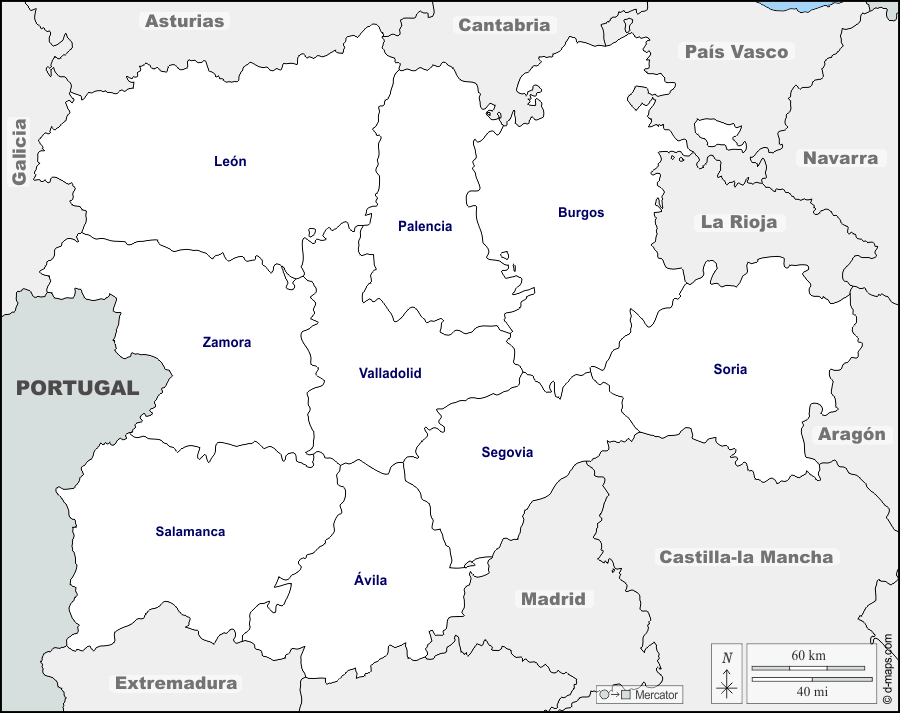
Why Visit Castilla y León
Step into Europe’s largest open-air museum—a majestic expanse where 11 UNESCO World Heritage sites meet the golden silence of the Spanish high plateau.”
Castilla y León is the cradle of Spain — birthplace of kings, ancient universities, and cultural milestones. The region is home to nine UNESCO World Heritage Sites, more than any other in the country. Travelers come to stroll the walled cities of Ávila and Segovia, taste bold Ribera del Duero wines, and hike through the Picos de Europa.
It’s a destination for dreamers and historians alike, offering monumental architecture, serene villages, and one of Europe’s most authentic gastronomic scenes.

Things to Do, Must Sees
Stand in the shadow of the Roman aqueducts and walk the medieval walls of Ávila; here, every monument is a time machine.”
Highlights:
-
Segovia: See the iconic Roman Aqueduct, fairy-tale Alcázar, and charming old town.
-
Salamanca: Explore Spain’s oldest university and golden sandstone squares.
-
Burgos: Visit the majestic Gothic Cathedral, a UNESCO treasure.
-
Ávila: Walk the best-preserved medieval walls in Spain and the world .
-
León: Discover Gaudí’s architectural gem Casa Botines and León Cathedral.
Recommended 5–7 Day Itinerary:
-
Day 1–2: Segovia → Ávila
-
Day 3: Salamanca
-
Day 4–5: Burgos & Ribera del Duero wine route
-
Day 6–7: León & Las Médulas (ancient Roman gold mines)
Hidden Gems & Local Experiences
“Escape to the ‘Cueva de Valporquero’ or wander the timber-framed streets of La Alberca—where the 21st century feels like a distant memory.”
Peñafiel: A medieval hilltop town famous for its wine museum inside a castle.
-
Frías: One of Spain’s smallest, most photogenic villages.
-
Covarrubias: A storybook town of timbered houses and peaceful plazas.
-
Sierra de Francia: Untouched mountain hamlets and micro wineries.
-
The Las Medulas gold mines offer a surreal, Martian landscape.

Dining, Wining & Local Cuisine
“The altar of the roast lamb and the cathedral of Ribera del Duero: prepare for a culinary pilgrimage through Spain’s most prestigious vineyards and rustic hearths.”
Castilla y León defines traditional Castilian cuisine — hearty, flavorful, and rooted in local produce.
Must-try dishes:
-
Lechazo asado (roast suckling lamb)
-
Cochinillo (roast suckling pig) of Segovia
-
Morcilla de Burgos (rice black pudding)
-
Hornazo (meat-stuffed pastry from Salamanca)
Pair these with robust reds from Ribera del Duero or Rueda’s crisp white wines. -
the Ribera del Duero Wine Route for world-class tastings.
-
Locals cherish tradition — festivals are colorful and proud, from Holy Week processions to medieval fairs. The rhythm of life here balances history with warm hospitality.

Activities
“Hike through the limestone peaks of Picos de Europa or follow the legendary Camino de Santiago—a path carved by millions of footsteps over a thousand years.”
-
Wine tasting in the Ribera del Duero and Toro regions.
-
Hiking in Sierra de Gredos or Picos de Europa.
-
Birdwatching in Lagunas de Villafáfila Nature Reserve.
-
Hot air ballooning over Segovia.
-
Visiting local markets and food festivals.
Slow Travel & Day Trips
“Let the rhythm of the Douro River set your pace as you explore sleepy 'Black Architecture' villages and monasteries hidden in the mist.”
In Castilla y León, the true magic happens when you step off the high-speed rail and into the "España Vaciada" (Empty Spain). This is a land designed for Slow Travel, where the journey between destinations is just as rewarding as the monuments themselves.
-
The Black Architecture Route: Head to the mountains of Guadalajara and Segovia to find villages like La Vereda or Patones de Arriba. Built entirely from dark slate, these hamlets blend seamlessly into the rugged landscape, offering a moody, atmospheric escape from the golden sandstone of the cities.
-
Monastic Retreats: Spend a morning at the Abadía de Santo Domingo de Silos, where the world-famous Gregorian chants echo through a Romanesque cloister. It is the ultimate "digital detox" experience.
-
The Duero River Cruise: For a different perspective, take a boat trip through the Arribes del Duero Natural Park. Here, the river carves deep canyons along the Portuguese border, home to rare black storks and ancient cliffside vineyards.
-
Day Trip Essential: If you are based in Madrid, a high-speed train can whisk you to Segovia in under 30 minutes, but for a "slow" experience, take the scenic mountain road through the Puerto de Navacerrada for breathtaking views of the Guadarrama range.
-
specific "Slow Travel" accommodations—like converted watermills or rural estates in Castilla y León
-
1. The Vineyard Sanctuary: Abadía Retuerta LeDomaine (Valladolid)
-
“A 12th-century Romanesque abbey transformed into a world-class wine estate where your private butler is just a whisper away.”
Located in the heart of the Ribera del Duero, this is the ultimate slow-travel splurge. You can cycle through the vineyards, enjoy a Michelin-starred meal in the former refectory, or indulge in the world’s first "Spa Sommelier" experience. -
A sunset picnic among the ancient vines with a bottle of their estate-grown Tempranillo
-
2. The Fortress Retreat: Castillo de Buen Amor (Salamanca)
-
“Live your own medieval fairytale in a 15th-century castle hidden among thousands of holm oaks.”
This "Castle of Good Love" was once a secret bishop’s palace. Today, it’s a boutique hotel where you can sleep under stone vaults and wander through formal French gardens. It is perfectly positioned for a slow drive between the UNESCO cities of Salamanca and Zamora. -
Reading a book by the massive stone fireplace in the library or wine tasting in the castle’s own cellar
-
3. The Riverside Mill: Hotel Molino de Alcuneza (Guadalajara/Sigüenza)
-
“A restored 15th-century flour mill where the sound of the Henares River is the only alarm clock you’ll need.”
Just outside the medieval town of Sigüenza, this Relais & Châteaux property is a masterclass in rustic elegance. It is a family-run retreat focused on "Slow Food," featuring an on-site bakery that uses ancient grains to create artisanal sourdoughs for guests. -
A "Slow Morning" breakfast on the terrace overlooking the lavender-scented gardens and the rolling Alcarria hills
"Check-In to the Slow Life"
Our Top 3 Retreats for 2026: The Abbey, The Castle, and The Mill.
The "Sandstone & Spires" Route
“From the Gothic giants of the north to the Romanesque heart of the Duero, this curated loop is the definitive journey through the soul of Old Castile.”
This 7-day circuit is perfect for travelers who want to experience the dramatic evolution of Spanish architecture and gastronomy without the rush.
-
Day 1-2: The Gothic Gateway (Burgos & León)
Start in Burgos to witness the pinnacle of Spanish Gothic design before heading west to León. Spend your evening in the Barrio Húmedo, where the tradition of "free tapas with every drink" is still a sacred local law. -
Day 3-4: The Golden University (Palencia & Salamanca)
Journey south through the rolling plains. Stop in Salamanca to watch the sunset turn the sandstone buildings into liquid gold at the Plaza Mayor. -
Day 5-6: The Medieval Frontier (Zamora & Ávila)
Follow the river to Zamora for a quiet morning of Romanesque art, then head to Ávila. Walk the Walls of Ávila at dusk—it is the closest you will ever get to stepping into a 12th-century dream. -
Day 7: The Fairytale Finale (Segovia)
Finish in Segovia. Stand beneath the Roman Aqueduct and celebrate your journey with a traditional feast of Cochinillo (suckling pig) at a historic tavern.
"Traveler’s Secret":
"Buy the 'Tarifa Plana' train pass from Renfe if you plan to hop between these cities; it saves time and keeps your schedule flexible."
Best Time to Visit
“Catch the dramatic devotion of Holy Week in Zamora or the crisp, golden light of October when the vineyards turn to fire.”
-
Spring (March–May): Ideal for sightseeing and wine tourism, with mild temperatures and colorful landscapes. Prices are moderate, and crowd levels are low except around Easter.
-
Summer (June–August): Warm and dry, especially in the plains. Festivals like Semana Grande in Burgos or the Fiestas de San Lorenzo bring vibrant atmosphere — but book early as prices rise.
-
Autumn (September–November): Grape harvest and food festivals make this a fantastic time for gastronomic travel. Expect golden foliage and quieter cities.
-
Winter (December–February): Cold but charming; ideal for ski trips in León’s mountains or Christmas markets. Hotel prices drop significantly.
For budget travelers, shoulder seasons (April–June, September–October) provide the best balance of affordability, weather, and authenticity.
Getting There and Around
“Whether by high-speed AVE train or a scenic road trip through the Meseta, all roads lead to the heart of the kingdom.”
By Air:
The main airports are Valladolid (VLL) and León (LEN), with regional connections. Nearby Madrid-Barajas (MAD) provides more international access — about 1–2 hours by train.
By Train:
Spain’s Renfe high-speed trains (AVE/ALVIA) connect Valladolid, Salamanca, Segovia, and León with Madrid in under 2 hours. Rail passes like the Renfe Spain Pass can be cost-effective for multi-city trips .https://www.renfe.com/es/en
By Car:
Driving is the best way to explore rural gems and hidden monasteries. Car rental starts around €35/day. Roads are well-maintained, and parking outside historic centers is usually free.
By Bus & Public Transport:
Regional buses link towns where trains are sparse. Local taxis and small urban buses operate in main cities.

Where to Stay
“Sleep like royalty in a fortified castle or find sanctuary in a converted 12th-century monastery; in Castilla, your bed is a piece of history.”
-
Budget:
-
Hostal Albany Ancha, León — Affordable comfort near the cathedral.
-
The Cathedral Hostel, Burgos — Central and social.
-
Midrange:
-
Hotel Regio Salamanca — Excellent value with pool and easy access to the city.
-
Sercotel Infantas de León — Charming stay near main sights.
-
-
High-End / Unique Stays:
-
Parador de Ávila — An elegant stay within ancient city walls.
-
Castilla Termal Monasterio de Valbuena — A luxury spa hotel in a restored monastery surrounded by vineyards.
-
Parador de Lerma, a stunning ducal palace.
-

Safety & Travel Essentials
“Navigating the vastness of the plateau: your essential guide to local etiquette, siesta hours, and staying safe in the Spanish wilderness.”
-
Castilla y León is very safe; standard travel awareness applies.
-
Carry a light jacket even in summer; evenings get cool.
-
Winters require layered clothing and warm footwear.
-
Credit cards are widely accepted, but small towns may prefer cash.
-
Tap water is safe to drink.
-
Most museums close during siesta (around 2–5 p.m.).
Navigating the Kingdom: Practical Tips
Master the art of the midday siesta and the high-speed rail with our expert’s compass to the Spanish heartland.”
-
The Golden Rule of Time (The Siesta):
In the smaller cities like Zamora or Ávila, shops and monuments often close between 2:00 PM and 5:00 PM. Use this time for a long, slow lunch—the true Spanish way—and save your sightseeing for the "Blue Hour" when the sandstone starts to glow. -
The "Renfe" Hack:
The AVE (High-Speed Train) is your best friend. You can reach Segovia from Madrid in 28 minutes or Valladolid in under an hour. Book at least 30 days in advance on the Renfe Official Site to snag the "Promo" fares. -
Dressing for the 'Meseta':
The high plateau has extreme temperatures. Even in June, a desert-like chill drops over the plains at night. Always pack a pashmina or a light jacket, even if the daytime forecast is scorching. -
Tipping & Etiquette:
Tipping isn't mandatory, but "rounding up" the bill is a sign of a gracious traveler. In traditional mesones (taverns), a few coins left on the wooden table are all the thanks needed for excellent service. -
Connectivity:
While most plazas have free Wi-Fi, the stone walls of medieval hotels are thick. Pick up a local eSIM or use a Holafly Regional Plan to stay connected while navigating the winding alleys of Toledo or León.
The 2026 Spain Packing List: Elevated Heritage
“From the wind-swept plains of La Mancha to the marble halls of the Prado, master the art of the 'Spanish Layer' with a wardrobe that transitions from medieval morning to metropolitan midnight.”
1. The Footwear: "Cobblestone-Ready"
-
For the Day: High-quality leather loafers or stylish white sneakers (like Veja or Hoff—a trendy Spanish brand). Avoid flip-flops; the stone streets of Toledo and Ávila require support.
-
For the Evening: A block heel or elegant Chelsea boot. Stilettos are the enemy of Spanish plazas.
2. The Attire: "The Meseta Chic"
-
The Power of Layers: The Spanish high plateau (the Meseta) has a saying: "Nueve meses de invierno y tres de infierno" (nine months of winter, three of hell). Even in 2026, spring and autumn mornings are crisp, while afternoons are baking. Pack a lightweight trench coat or a merino wool cardigan.
-
Fabrics: Lean into linen and organic cotton for the summer months. In 2026, earth tones (terracotta, olive, and ochre) are the colors of the season, blending perfectly with the sandstone of Salamanca.
3. The Accessories: "Functional Elegance"
-
The Scarf (The Mantón Vibe): A silk or light wool scarf is essential for entering cathedrals (covering shoulders) and protecting against the sudden evening breeze.
-
The Cross-Body Bag: A secure, stylish leather bag for the Rastro market in Madrid or the crowded streets of Segovia.
-
The Eyewear: High-UV protection sunglasses are non-negotiable under the intense Castilian sun.
4. Tech & Extras for 2026
-
Universal Power Adapter: Spain uses Type C and F plugs.
-
Portable Power Bank: Between GPS navigation through Toledo’s maze and 4K videos of the Roman Aqueduct, your battery will drain fast.
-
Reusable Water Bottle: Many Spanish cities, especially in Castilla y León, have historic stone fountains with pristine, drinkable mountain water.
Key Cities: The Jewels of the Kingdom
From the sandstone glow of Salamanca’s universities to the fairytale spires of Segovia’s Alcázar, these are the urban hearts that built an empire.”


León
Stained Glass and Gaudí
Marvel at the "House of Light" (the León Cathedral) with its 1,800 square meters of glowing stained glass, and visit the rare Casa Botines, one of the few buildings Gaudí designed outside of Barcelona.
Best for: Art aficionados and tapas lovers (the Barrio Húmedo is legendary).


Ready to Book
“Master the art of the midday siesta and the high-speed rail with our expert’s compass to the Spanish heartland.”
-
[ ] Secure Your Stay:
Experience the height of Spanish luxury at the Paradores of Spain or find boutique gems and historic villas on Expedia and Trip.com.-
Pro Tip: Book at least 3 months ahead for peak seasons like Holy Week.
-
-
[ ] Fast-Track Your Travel:
Don't wait until the station. Purchase your Renfe AVE Train Tickets early to save up to 60% on fares between Madrid, Segovia, and León. -
[ ] Reserve Your Table:
Castilla y León is a culinary pilgrimage. For legendary spots like Restaurante José María in Segovia, a reservation is essential weeks in advance. -
[ ] Pack Your Essentials:
Review our Elevated Heritage Packing List to ensure you’re prepared for the sandstone streets and the high plateau’s shifting temperatures. -
[ ] Stay Connected:
Ensure you have seamless data for GPS and translations. Order your Holafly eSIM for Spain before you fly.
FAQs
1. What is Castilla y León best known for?
Its UNESCO heritage cities, medieval architecture, and world-class wines.
2. How do I travel between cities in Castilla y León?
Fast trains and major highways connect all major cities, but driving gives the most flexibility.
3. What food is typical in the region?
Roasted meats, hearty stews, and premium wines from Ribera del Duero.
4. Is Castilla y León expensive?
No — it’s more affordable than Madrid or Barcelona, with great value dining and lodging.
5. Is English widely spoken?
Basic English is understood in tourist areas, but learning a few Spanish phrases goes a long way.

Extremadura Travel Guide
The Wild Heart of Old Spain with Roman stones, white villages, and dehesa sunsets
Where quiet roads lead to golden light and timeless towns
Extremadura is Spain’s great unsung region: a land of Roman theatres, walled medieval towns, whitewashed plazas, and endless holm‑oak dehesa where Iberian pigs roam. Here, the pace slows, prices stay gentle, and you share UNESCO‑listed cities, star‑filled skies, and national parks with more storks than tourists.
Summary
Regional Cities in Extremadura
Why Visit
Things to Do /Must Sees
Hidden Gems & Local Experiences
Activities
Dining, Wining and Local Cuisine
Slow Travel & Day Trips
7-day Circuit
Best time to visit
Getting There and Around
Where to Stay
Safety and Travel Essentials
key Cities
Ready to Book
Related Blogs
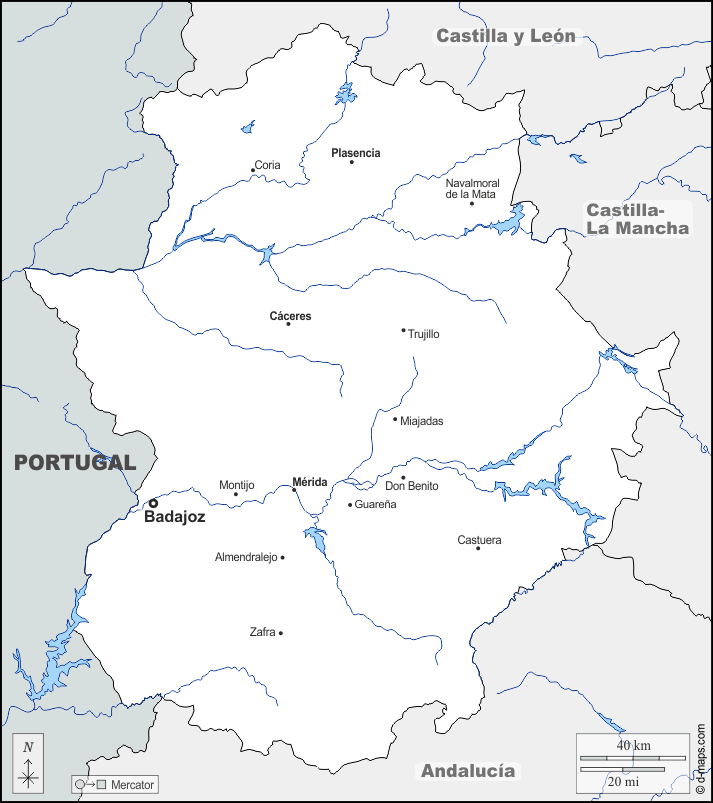
Why visit Extremadura
“Step into Spain’s best-kept secret—a land of conquistadors, dehesa forests, and Roman echoes where luxury is found in silence and the stars are the brightest in Europe.”
Extremadura is Spain’s final frontier. It is a region where time slows down, perfect for the traveler seeking authenticity away from the coastal crowds. Here, you will find three UNESCO World Heritage sites, the world’s finest ham, and a landscape that feels like a living oil painting.
Things to do, Must -Sees
“Step into Spain’s best-kept secret—a land of conquistadors, dehesa forests, and Roman echoes where luxury is found in silence and the stars are the brightest in Europe.”
Extremadura works beautifully as a 3–10 day loop combining heritage cities, national parks, and small towns.
Essential heritage stops
-
Mérida: Roman theatre and amphitheatre, aqueducts, bridges, and the excellent Museo Nacional de Arte Romano, forming one of the best Roman ensembles in Europe.
-
Cáceres: Stone‑built old town of towers, mansions, and quiet plazas, all UNESCO‑listed and especially atmospheric at dusk and during its medieval market.
-
Trujillo: Hilltop town with a castle, conquistador palaces, and a picture‑perfect main square overlooking the plains.
-
Guadalupe: Royal Monastery of Santa María de Guadalupe, a Mudéjar‑influenced pilgrimage site in a mountain setting.
Nature, stargazing & dehesa
-
Monfragüe National Park: One of Europe’s birding hotspots with vultures, eagles, and river gorges; excellent for hikes, viewpoints, and 4x4 nature tours.
-
Jerte & Ambroz valleys: Known for cherry blossom in spring and autumn colour, plus rural walking routes and scenic drives.
-
Dehesa landscapes: Oak‑dotted pastures in areas like La Siberia and Sierra de San Pedro offer classic Extremaduran scenery and dark skies for stargazing.
Suggested short itineraries
-
3 days: Base in Cáceres – one full day for the old town, one for Mérida’s Roman sites, one for Trujillo.
-
5–7 days: Add Monfragüe National Park and at least one valley (Jerte, La Vera, or Ambroz), plus Guadalupe.
-
10+ days: Slow road trip taking in Badajoz, Zafra, smaller villages, and multiple natural areas, with time for winery or ham‑producing finca visits.
Hidden Gems ^ local Experiences
Lose yourself in the 'Cherry Blossom' mist of the Jerte Valley or explore the Jewish Quarter of Hervás, where time has stood still since the 15th century.”
-
Lesser‑known towns like Zafra, Plasencia, and smaller dehesa villages reward unhurried wandering and café time away from any tourist trail.
-
Rural viewpoints and star‑watching spots around Monfragüe and the dehesa form part of the region’s certified stargazing
-
Visit Hervás, one of the best-preserved Jewish Quarters in Spain. For a spectacular natural view, drive to the Meandro del Melero, a massive river loop that creates a perfect circle in the landscape.
Activities
“Safari through cork forests or gaze at the galaxies in an International Starlight Reserve.”
Extremadura is an outdoor and culture‑lover’s playground, with experiences that remain largely uncrowded even in peak months.
-
Culture & history: Guided walking tours in Mérida and Cáceres, archaeology tours, museum visits, and historical festivals such as Cáceres’ medieval market.
-
Hiking & wildlife: Marked trails in Monfragüe, Jerte, La Vera, and Villuercas‑Ibores‑Jara; birdwatching from official viewpoints or 4x4 safaris in Monfragüe.
-
Food & wine experiences: Visits to Iberian ham producers, cheese dairies, and wineries, alongside cooking classes and tapas crawls in Cáceres and Mérida.
Gastronomy, Wining & Local Cuisine
“The sanctuary of Ibérico ham and the home of the world’s smokiest paprika: a rustic feast for the bold.”
Extremadura’s cuisine reflects its dehesa, small‑town markets, and centuries‑old rural traditions.
-
Hero products: Iberian ham and cured meats from Dehesa de Extremadura, plus regional sausages such as patatera, are among the region’s best‑known specialities.
-
Cheeses: Torta del Casar, a creamy, PDO‑protected sheep’s‑milk cheese eaten by cutting off the top and spooning out the centre, is an emblematic delicacy.
-
Traditional dishes: Migas (fried breadcrumbs with pork and peppers), stews, and simple grilled meats reflect hearty, rural cooking served in bars and family‑run restaurants.
-
Local rhythm: Life centres around plazas, with evening paseo, café terraces, and bar counters serving raciones and tapas that still feel strongly local rather than tourist‑driven.

Slow Travel & Day Trips
“Trade the highway for the 'Dehesa' trails and discover the crystal-clear natural pools of La Vera.”
-
Culture & history: Guided walking tours in Mérida and Cáceres, archaeology tours, museum visits, and historical festivals such as Cáceres’ medieval market.
-
Stargazing: Dark‑sky observatories and informal sky‑watching in rural areas, with advice to dress warmly even in summer nights.
-
Spend a day in Sierra de Gata, where traditional dialects still survive and "slow food" isn't a trend—it's a way of life
7-Day Circuit: The Conquistador Trail
-
Day 1-2: Madrid to Guadalupe and Trujillo.
-
Day 3-4: The Roman grandeur of Mérida and the Cornalvo Nature Park.
-
Day 5-6: The medieval nights of Cáceres and the cherry blossoms of Jerte.
-
Day 7: Birdwatching in Monfragüe before returning to Madrid.
Best Time to Visit
“March for the white blossoms, May for the festivals, and October for the golden cork harvest.”
Extremadura has an inland continental climate: very hot summers, mild to warm springs and autumns, and relatively cool winters, especially at night.
-
Spring (March–June): Widely considered the prime season, with wildflowers, cherry blossom in Jerte Valley, and pleasant temperatures for exploring Mérida and Cáceres; demand and prices rise slightly around Holy Week and major festivals such as Cáceres’ WOMAD.
-
Summer (July–August): Expect intense heat with daytime temperatures often exceeding 40°C, reducing daytime sightseeing but creating lively, late nights; accommodation can remain good value, but air‑conditioned stays are essential and outdoor activities shift to early morning and evening.
-
Autumn (September–November): A second sweet spot with cooler air, colourful foliage in northern valleys and Villuercas‑Ibores‑Jara, and a calendar of rural festivals like Otoño Mágico in Valle del Ambroz, usually with lower crowds than spring.
-
Winter (December–February): Quiet, budget‑friendly, and good for atmospheric town visits and birdwatching, though some rural accommodations may reduce services and nights can feel cold.


Getting there & getting around
The road less traveled: navigating the rugged plains by car or high-speed rail to reach Spain’s frontier of adventure.”
Extremadura sits west of Madrid and Castilla‑La Mancha, bordering Portugal, and is easiest to access via Madrid or Seville.
Airports
-
The main gateway is Madrid‑Barajas (MAD), with onward travel by train, coach, or car to Cáceres, Mérida, Badajoz, and Trujillo.
-
Badajoz Airport (BJZ) offers limited flights (mainly domestic), connecting via Madrid; flying can be the fastest but priciest option.
Trains & coaches
-
From Madrid, Renfe trains and long‑distance buses run to Badajoz, Cáceres, and Mérida, with typical rail costs around 35–60 € and coach fares roughly 30–60 € depending on route and time.
-
Regional coach networks (ALSA, Avanza, LEDA and others) link cities and many towns; for example, short hops like Cáceres–Trujillo can cost under 6 € one way.
Driving
-
Car rental (around 35–50 € per day) offers the most flexibility for exploring Monfragüe, Jerte, La Vera, La Siberia, and small villages, and for stringing together multiple heritage sites in one day.
-
Roads are generally quiet outside cities, and scenic routes in autumn through the northern valleys and Villuercas‑Ibores‑Jara are especially rewarding.
Getting around without a car
-
Basing in Cáceres or Mérida allows day trips by bus or organised tours to 8–10 major sites, including Trujillo, Guadalupe, and Monfragüe.
-
Regional buses are budget‑friendly (often 5–15 € per journey) but require attention to timetables, especially for rural routes.

Accommodation suggestions (by budget & type)
“Retreat to a Renaissance palace or sleep in a converted 15th-century convent.”
Budget
-
Hostales & simple hotels: Family‑run hostales and 1–2* hotels in places such as Mérida, Cáceres, and Trujillo provide basic en‑suite rooms, often from 30–50 € per night outside peak events.
-
Camping & bungalows: Rural campsites suit families and road‑trippers wanting low‑cost stays immersed in nature, sometimes with pools and simple cabins.
Midrange
-
Central 3–4 hotels:** Comfort‑focused hotels near historic centres (short walk to Mérida’s theatre or Cáceres’ old town) offer good value, easy parking or station access, and breakfast‑inclusive rates.
-
Self‑catering apartments: Ideal for longer stays or families; apartments in towns like Cáceres or Plasencia give you kitchens for local market produce.
High‑end & unique stays
-
Paradores & heritage hotels: Government‑run Paradores occupy converted castles, convents, and palaces in Zafra, Mérida, Cáceres, and Trujillo, blending character architecture with modern comfort.
-
Rural boutique stays: Country houses, farmhouses, vineyard lodges, and design‑forward rural hotels provide pools, gardens, and access to monasteries, valleys, and gorges, often with on‑site slow food.
Safety, travel essentials & what to wear
Extremadura is exceptionally safe. Focus on sun protection and staying hydrated. Ensure you have a local eSIM like Holafly as signal can be spotty in the mountains
Safety tips
-
Standard precautions (secure valuables, stay aware in stations and bus terminals, avoid isolated areas late at night) are generally sufficient for solo and family travellers.
-
EU visitors can use the European Health Insurance Card for public healthcare; others should ensure travel insurance covers medical care in Spain.
Travel essentials & packing
-
Climate prep: Summers can be extremely hot, so sun protection (high‑SPF sunscreen, hat, sunglasses) and a refillable water bottle are vital; winters and evenings, even in shoulder seasons, can feel surprisingly cool.
-
Layers: Nights in rural areas and during stargazing are often cool in spring, autumn, and even summer; packing light jackets, long sleeves, and extra layers is recommended.
-
Footwear: Comfortable, closed‑toe walking shoes are best for cobbled streets, fortress climbs, and countryside paths; reserve sandals or lighter shoes for evenings.
What to wear (by season)
-
Spring/autumn: Light layers, a mid‑weight jacket, and long trousers or skirts to adapt from cool mornings to warm afternoons, plus rain protection for occasional showers.
-
Summer: Breathable fabrics like cotton and linen, loose silhouettes, and very light layers, especially if you plan midday activities; more formal but still cool outfits work well for evening dining.
-
Winter: A warm coat, jumper, and scarf for town visits and rural nights, particularly in elevated areas and open landscapes.
Key Cities: "The Conquistador Heartland"
“From the sun-drenched Roman arenas of Mérida to the fortress-palaces of Cáceres, these are the legendary cradles of explorers where the Old World meets the New.”


Ready to book
-
Expedia for boutique rural estates.
-
Renfe for Madrid–Cáceres rail tickets.
-
Paradores Official Site for castle stays.
FAQs
-
Is Extremadura worth visiting?
Yes: Extremadura combines major UNESCO sites, outstanding Roman ruins, and dramatic natural parks with low prices, low crowds, and strong food traditions, making it one of Spain’s best under‑the‑radar regions.
-
Is Extremadura expensive? No, it is one of Spain’s most budget-friendly high-end regions.
How many days do you need in Extremadura?
Three days allows a “golden triangle” of Cáceres, Mérida, and Trujillo, while 5–7 days lets you add Monfragüe, Guadalupe, or a valley such as Jerte or La Vera; two weeks supports an in‑depth regional loop.
What is the best time of year to visit Extremadura?
Spring (April–June) and autumn (September–October) balance pleasant temperatures, active festivals, and manageable crowds; summers are very hot, and winters are quiet but good for budget trips and birding.
Can you visit Extremadura without a car?
Yes: regional bus networks link major destinations like Cáceres, Mérida, Trujillo, Badajoz, and Guadalupe, though a car offers more flexibility for natural parks and rural areas with limited services.
Is Extremadura safe for solo travellers?
Extremadura is considered one of Spain’s safest regions, with low crime and welcoming small cities; solo visitors, including women, usually feel comfortable when following standard travel precautions.

"30 Years of Sun, Siestas, and Secrets: My Andalusia"
Andalusia in Southern Spain is a region renowned for its rich Moorish history, the birth of flamenco, and sun-drenched landscapes ranging from Mediterranean beaches to the Sierra Nevada mountains. This guide covers the essential destinations, practical tips, and unique experiences for a comprehensive trip.
Browse by Regions of Andalucia


Summary
Regional Cities in Southern Spain
Why Visit
Things to Do /Must Sees
Hidden Gems & Local Experiences
Activities
Dining, Wining and Local Cuisine
Slow Travel & Day Trips
7-day Circuit
Best time to visit
Getting There and Around
Where to Stay
Safety and Travel Essentials
Practical tips
Packing List: Elevated Heritage
Key Cities The Jewels of the Kingdom
Ready to Book
FAQs
Related Blogs

Why Visit Andalucía ?
“Beyond the olive groves lies a timeless mosaic of Roman ruins, Islamic palaces, and Atlantic breezes that redefine the art of living.”
Andalusia is a sensory feast. In 2026, it remains a global sanctuary for wellness tourism and slow living, offering "panoramic doses of Vitamin D" and a deep connection to history. It is the home of flamenco, the world’s finest Sherry, and three of Spain’s most iconic urban treasures: Seville, Córdoba, and Granada.
Unique Towns and Villages
-
White Villages (Pueblos Blancos): Picturesque towns like Ronda, Arcos de la Frontera, and Grazalema, characterized by whitewashed houses and stunning hilltop views .
-
Jerez de la Frontera: Renowned for sherry wine production and equestrian traditions.
-
Baeza and Úbeda: UNESCO-listed Renaissance towns with well-preserved architecture
Natural Wonders
-
Sierra Nevada: A mountain range near Granada, popular for hiking, skiing, and its unique biodiversity
-
El Torcal National Park: Known for its striking limestone rock formations and scenic hiking trails near Antequera
-
Cabo de Gata-Níjar Natural Park: A coastal reserve with pristine beaches, volcanic landscapes, and rich biodiversity
-
Caves of Nerja: Impressive caves featuring large stalactites and prehistoric paintings, located near the seaside town of Nerja
-
Doñana National Park: One of Europe’s most important wetlands, home to diverse birdlife and endangered species.
Other Notable Destinations
-
Almería & Tabernas Desert: Offers a unique semi-arid landscape and historic fortress
-
Tarifa: The southernmost point of continental Europe, popular for wind sports and whale watching
-
Marbella: A glamorous resort town on the Costa del Sol, known for its beaches and nightlife
-
Carmona, Osuna, Aracena: Smaller towns with rich history, castles, and natural caves
Cultural Experiences
-
Flamenco: Andalucía is the birthplace of flamenco, with authentic performances in cities like Seville, Granada, and Córdoba .
-
Festivals: The region hosts famous events such as Semana Santa (Holy Week) and Feria de Abril in Seville .
-
Gastronomy: Renowned for tapas, sherry, olive oil, and seafood.
Hidden Gems &Local Experiences
Beyond the red arches of the Mezquita lies the ‘Andalucía Profunda’—a secret map of cliff-dwelling villages, sapphire pools, and forgotten Roman outposts.”
-
Setenil de las Bodegas: A town carved into the mountainside. Unlike the other white villages, the houses here are built under massive rock overhangs, where the cliffs serve as the ceilings of local tapas bars.
-
The Cave of Nerja: Often called the "Natural Cathedral," this underground marvel features the world's largest stalactite. In 2026, its Music and Dance Festival remains a bucket-list cultural event.
-
Sierra de Aracena: Located in Huelva, this is the birthplace of the world’s best Ibérico ham. Wander through chestnut forests and visit the Grotto of Marvels for a truly "slow" travel experience.
-
El Rocío: A town in the marshes of Doñana that looks exactly like a Wild West movie set—with sandy streets and hitching posts for horses instead of cars.
-
Iznájar: A white village floating above a massive turquoise reservoir, famous for its "Patio de las Comedias," a blue-potted floral paradise.
Slow Travel & Day Trips
“Trade the highway for a white-village road trip or a spiritual retreat in the rolling hills.”
-
White Village Route: Drive through Arcos de la Frontera, Grazalema, and Zahara de la Sierra for dramatic hilltop views and local crafts.
-
Ronda: Iconic for its Puente Nuevo bridge spanning a deep gorge; a perfect base for nature hikes.
-
7-Day Yoga Retreat: Immersive wellness experiences in exclusive retreat centers nestled in the Córdoba hills.
Activities: The Andalusian Stage
From the rhythmic thunder of a flamenco tablao to the adrenaline-fueled heights of the Gaitanes Gorge: Andalusia is an open-air theater for the bold.”
-
The Flamenco Immersion: Beyond the tourist shows, seek out a Peña Flamenca in the Triana district of Seville or the caves of Sacromonte in Granada for an authentic, soul-shaking performance.
-
The Caminito del Rey: Once the world’s most dangerous path, this now-safe but thrilling 7km walkway clings to the walls of a massive limestone gorge. Book tickets here at least 2 months in advance.
-
Canyoning & Kayaking: Explore the turquoise waters of the Maro-Cerro Gordo Cliffs near Nerja. Paddling into sea caves is the ultimate Mediterranean summer activity.
-
Astro-Tourism: Head to the Sierra Morena in Córdoba, a certified Starlight Reserve, where the absence of light pollution reveals the galaxy in high definition.
Gastronomy: The Art of the Feast
“Step into the 2026 Gastronomy Capital: a sensory odyssey of golden Sherry, ruby-red Ibérico ham, and the freshest tides of the Atlantic.”
-
The Sherry Ritual: In Jerez de la Frontera, visit a family-run bodega like Tio Pepe to learn why Sherry is the most sophisticated wine in the world.
-
Tapas Hopping: In Seville, it’s a lifestyle. Start at Mercado de Triana and work your way through Salmorejo (thick cold tomato soup) and Carrillada (braised pork cheeks).
-
Almadraba Tuna: If visiting the Cádiz coast in May, try the legendary bluefin tuna caught using an 3,000-year-old Phoenician netting technique.
-
Michelin Magic: Málaga and Marbella are the 2026 hubs for avant-garde dining, featuring stars like Dani García.
Suggested Itinerary in Andalucia
“From the cathedral spires of the Guadalquivir to the snow-capped peaks of the Sierra Nevada: a week-long immersion into the heart of Al-Andalus.”
7-day Southern Circuit" The Grand Andalusian Loop: A 7-Day Odyssey
Day 1-2: Seville | The Royal Pulse
“Where every morning starts with the scent of orange blossom and every night ends with the rhythmic thunder of a flamenco tablao.”
-
Experience: Bezoek de Kathedraal van Sevilla en het Giralda-terras voor het uitzicht. Verlies jezelf in de Joodse wijk (Santa Cruz) en dineer bij de historische El Rinconcillo (sinde 1670).
-
Stay: A boutique hotel in its central location.
Day 3: The White Village Drive | Arcos to Ronda
“Trade the highway for the high ridges: a scenic journey through sugar-cube villages perched on the edge of eternity.”
-
Experience: Drive from Seville to Arcos de la Frontera for a coffee on the clifftop. Continue to the spectacular Zahara de la Sierra and end the day in Ronda.
-
Highlight: Walk across the Puente Nuevo in Ronda during the "golden hour" for the perfect photo.
Day 4: Ronda to Granada | The Road of the Caliphs
“Leaving the cliffs behind to chase the snow-capped horizon of the Sierra Nevada and the red towers of the Alhambra.”
-
Experience: Take a morning stroll through Spain's oldest bullring in Ronda. Then, drive to Granada via the rocky village of Setenil de las Bodegas.
-
Accommodation: A hotel in the historic Albaicín district with views of the Alhambra.
Day 5: Granada | The Moorish Legacy
“A day inside a fairytale: where Islamic lace-work and Renaissance gold create a sanctuary for the senses.”
-
Experience: Book your tickets for the Alhambra & Generalife well in advance (we recommend three months for 2026). End the day with a sunset at Mirador de San Nicolás.
Day 6: The Tropical Coast & Málaga | Art & Azure
“From the shadow of the mountains to the glitter of the Mediterranean: descending into Picasso’s birthplace.”
-
Experience: Drive along the spectacular mountain roads to the coast. Stop in Frigiliana (the most beautiful white village by the sea) and finish in Málaga. Visit the Picasso Museum and the lively harbor pier (Muelle Uno).
Day 7: Costa del Sol Finale | Marbella & Beyond
“Checking out in style: a final toast on the Golden Mile where the Sierra Blanca meets the sea.”
-
Experience: Drive along the coast to Marbella. Stroll through the charming Casco Antiguo (Old Town) for a final tapas lunch at the Plaza de los Naranjos before flying back from Malaga Airport.
Major Cities and Highlights
-
Seville: The region’s capital, renowned for its majestic Real Alcázar (a royal palace with Moorish and Christian influences), the vast Seville Cathedral (housing the tomb of Christopher Columbus), the Giralda bell tower, and the picturesque Plaza de España. The Santa Cruz quarter and the city’s vibrant flamenco scene are also must-sees.
-
Granada: Famous for the Alhambra, a UNESCO World Heritage Site and masterpiece of Islamic architecture, as well as the labyrinthine Albaicín district and the historic Sacromonte caves known for flamenco performances.
-
Córdoba: Home to the Mezquita (Great Mosque), another UNESCO site that exemplifies the region’s Islamic heritage. The city’s old Jewish quarter and Roman bridge are also significant attractions.
-
Málaga: A lively port city and gateway to the Costa del Sol, known for its beaches, the Alcazaba fortress, Málaga Cathedral, the Picasso Museum, and a vibrant culinary scene.
-
Cádiz: One of Europe’s oldest cities, famous for its historic centre, cathedral, and lively atmosphere.
-
Ronda: Dramatically perched above a deep gorge, Ronda is known for the Puente Nuevo bridge, historic bullring, and whitewashed old town
-
The White Villages (Pueblos Blancos)
-
Highlights: Whitewashed villages built into steep hillsides, found primarily in the provinces of Cádiz and Málaga.
-
Experience: Visit Setenil de las Bodegas, famous for its houses built directly into rock overhangs, or the hilltop town of Vejer de la Frontera for spectacular views.
-
Best Time to Visit Andalucia
“Chasing the orange blossom in spring or the golden wine harvest in autumn: timing your southern escape.”
The best time to visit Andalusia is during the autumn months from September to November.
This is when the weather remains warm enough for swimming, but the summer crowds have dwindled. It’s also a period with minimal rainfall. Average temperatures for September range between 57-79°F (14-26°C), around 48-73°F (9-23°C) in October, and 39-62°F (4-17°C) for November.
Keep in mind though that these are average for the entire region. On the coast will be generally much warmer and you’ll be able to go for a dip in the sea, while higher altitude cities and towns will be slightly colder, but perfect conditions for hiking.
-
The Golden Windows: April, May, and June are the absolute peaks. The weather is mild, the flowers are in full bloom, and iconic festivals like Seville's Feria de Abril take place.
-
Autumn Magic: September and October are ideal for the wine harvests in Jerez and warm, uncrowded days on the Costa del Sol.
-
Summer Warning: In July and August, inland cities like Seville and Córdoba can exceed 45°C (113°F). Plan your activities before 11:00 AM or after 9:00 PM.
-
Winter in Andalusia is mild compared to much of Europe, and thanks to the low prices it’s a great time to explore the area. Crowds are at their lowest but note that not every destination in Andalusia is about that winter sun; some places like Granada and Ronda have temperatures much lower than surrounding cities due to their high altitude.
Christmas lights are strung up in the major cities, and the shopping streets are full of life
Getting There & Around
“Shrinking the map: from the lightning-fast AVE to the scenic ‘White Village’ road trips.”
-
High-Speed Rail (AVE): In 2026, the AVE connects Madrid to Seville in just 2.5 hours and Málaga in under 3 hours. It is the most sophisticated way to city-hop.
-
The Rental Car: For the White Villages (Pueblos Blancos) and the hidden coves of Maro, a car is essential. Book via Expedia from Málaga or Seville airports.
-
Airports: Málaga (AGP) is the primary international hub, while Seville (SVQ) is perfect for diving straight into the cultural heartland.
Accommodations: A Bed with a Story
“Sleep in a 15th-century convent or wake up in a boutique palace: because in the South, your hotel is a destination in itself.”
-
Paradores of the South: For unmatched history, stay at the Parador de Ronda (clinging to the cliffside) or the Parador de Carmona (a 14th-century Moorish fortress).
-
Palatial Boutique Hotels: In Seville’s Santa Cruz district, look for converted 18th-century mansions with hidden orange-tree courtyards and rooftop pools.
-
Cortijo Retreats: For a "Slow Travel" experience, book a Cortijo (country estate) in the Sierra de Grazalema where you can wake up to the sound of goat bells and silence.
Safety & Travel Essentials
“Urban smarts and mountain safety: navigating the bustling plazas and rugged sierras with confidence.”
-
Urban Awareness: Southern Spain is very safe. However, in crowded spots like the Seville Cathedral, watch out for pickpockets. Wear your bag in front in large crowds.
-
Hydration: The sun is powerful. Drink "Agua del grifo" (tap water) in the cities; it is high quality and free at many historic stone fountains.
-
Connectivity: For 2026, we recommend a Holafly eSIM for unlimited data—essential for GPS in the labyrinth alleys of Granada’s Albaicín.
Packing List: Southern Sophistication
“From the marble halls of the Alhambra to the high-glamour beach clubs of Marbella: how to dress for the light of the South.”
-
The 'Lightweight' Rule: Even in 2026, the Andalusian sun is intense. Pack linen shirts and cotton dresses. Avoid heavy synthetic fabrics; the goal is to look cool while staying cool.
-
Cobblestone-Ready Footwear: The streets of Granada and Seville are notoriously uneven. A pair of high-quality leather loafers or espadrilles (a Spanish classic) is better than flip-flops or heavy boots.
-
The 'Evening Layer': While the days are hot, the Atlantic breeze in Cádiz or the mountain air in Ronda can be crisp. A silk scarf or a tailored cotton blazer is the perfect "transition" piece for dinner.
-
Statement Eyewear: The light in the South is bright and white. Bring high-UV protection sunglasses to protect your eyes while looking "Metropolitan Chic."
-
Personal Water Bottle: Many Andalusian cities have historic stone fountains with potable spring water. Carry a stylish reusable bottle to stay hydrated during your 7-day circuit.
Ready to Book? Your Southern Checklist
“The final curtain call: secure your front-row seat to the most soulful region of Spain.”
-
[ ] Stay in a Castle: Book a night at the Parador de Ronda perched on the cliff edge for the ultimate view.
-
[ ] Reserve Your Rail: Purchase Renfe tickets online to bypass the 2026 station queues.
-
[ ] Taste the Tradition: Book a Sherry tasting at Bodegas Tio Pepe in Jerez, the 2026 Gastronomy Capital.
-
[ ] Secure the Icons: Download the official apps for the Alhambra and the Mezquita for interactive mobile guides.
Expert Q&A: Your Andalusian Briefing
“The insider’s guide to mastering the South: from beating the heat to navigating the local dialect.”
-
How do I handle the summer heat?
Follow the Siesta Protocol. From 2:00 PM to 6:00 PM, stay indoors or by the pool. The cities only truly wake up after sunset—expect to see families in the plazas at midnight! -
Do I need to tip at tapas bars?
Tipping isn't mandatory, but "rounding up" the bill or leaving 1 or 2 Euros for great service is always appreciated. -
What is the best way to get to the Alhambra?
The Alhambra is uphill from Granada. Take the C30 or C32 minibus from Plaza Isabel la Católica; it’s cheap, frequent, and saves your legs for the hours of walking inside the palaces. -
Can I drink the tap water?
Yes! The water in Seville, Granada, and Málaga is excellent. In Granada, look for the historic stone fountains (pila)—the water comes straight from the Sierra Nevada.

The Beautiful Authentic White Villages of Andalucia
Traveling along the Route of the White Villages offers an enchanting experience of Andalusia in two vibrant colors. The whitewashed homes beautifully contrast with the lush greenery of the stunning natural landscapes that envelop most of these villages. With a of 20 villages nestled in the inland regions of Málaga and Cádiz, this road trip is a must. Exploring by car is undoubtedly the best way to fully appreciate each. Immerse yourself in the captivating villages, complete with their churches palaces, and castles, as well as the breathtaking scenery and delicious local cuisine. Below, we’ll highlight some of the most remarkable towns along the Route of the White Villages.
Regions &Key Cities
1. The Golden Triangle (Inland Heritage)
“Where the history of Al-Andalus breathes in every stone and the scent of orange blossom lingers in the midnight air.”

Córdoba
The City of Caliphs.
Famous for the Mezquita-Catedral and its whitewashed patios filled with flowers.
Best for: Roman history and Moorish architecture.
Granada
The Last Moorish Frontier.
Situated at the foot of the Sierra Nevada, with the world-famous Alhambra as its crown jewel.
Best for: The Alhambra magic and the Sacromonte caves.


Sevilla
The Heart of the South
The royal capital boasts the world's largest Gothic cathedral and the enchanting Real Alcázar.
Best for: Flamenco, royal palaces, and the best tapas culture.

Córdoba, located in the heart of Andalusia, Spain, is a city of dazzling history, vibrant culture, and architectural wonders. Once the capital of Moorish Spain, Córdoba’s old quarter is a captivating blend of Islamic, Jewish, and Christian heritage, making it a must-visit destination for any traveler seeking an authentic Spanish experience
-
Spring (April–June) is ideal, especially during the Patios Festival in May, when Córdoba is at its most beautiful .The scent of orange blossom and jasmine fills the city air when spring arrives. It is the time of the year of greatest splendour, thanks to the succession of three authentically Cordoban celebrations: Easter Week, the Fair and the Festival of the Patios.
-
SUMMER The summer months are an ideal time to visit the Sierra de Córdoba mountains, discover their stunning nature and cool down. The nearest place to visit in these mountains is Santa María de Trassierra, about 30 minutes away by car.
-
Autumn (September–October) is also pleasant, with mild weather and fewer crowds.Cordoba has always been associated with horses. In the months of September, October and November, Otoño del Caballo (Horse Autumn) takes place, which is when the majority of activities, championships, events and shows associated with these beautiful animals are held.
-
WINTER Cordoba's Christmas programme holds many surprises, such as the Christmas choirs. This involves several choirs parading through the city centre's streets, creating an infectious atmosphere of joy. The other big event is Christmas of the Patios, which are decorated for the occasion with poinsettias. Many private and institutional patios in the city open their doors for you to visit.
Córdoba is well served in terms of transport compared to some other places in Andalucía. Although it doesn’t have its own international airport it has two very close. It also has a train station and buses coming in and out of everywhere.
-
Córdoba is easily accessible by high-speed train (AVE) from Madrid, Seville, or Málaga, making it a convenient stop on any Andalusian itinerary
-
The Renfe Spain Pass allows nonSpanish residents to travel by rail in Spain on all long distance and medium distance trains, including AVE and Avant. It is valid for one month starting from the first trip, and passes for 4, 6, 8 or 10 journeys are available. For more information go to www.renfe.com
-
AIRPORT To travel by plane, the nearest airports are Malaga and Seville, approximately an hour and a half away by car and less than an hour by AVE high-speed train
-
The city is compact and best explored on foot, especially the historic center, with its maze of narrow, whitewashed streets and flower-filled patios
Mezquita-Catedral (Great Mosque-Cathedral)
-
The city’s crown jewel and UNESCO World Heritage Site, the Mezquita is a breathtaking example of Islamic architecture, later transformed into a cathedral. Its iconic red-and-white arches and serene prayer hall are unforgettable.
-
Visit early in the morning to avoid crowds and appreciate its tranquil atmosphere.
Jewish Quarter (La Judería)
-
Wander through the picturesque Jewish Quarter, with its labyrinthine streets, whitewashed houses, and the beautifully preserved synagogue—one of the few remaining in Spain.
-
Don’t miss Calleja de las Flores, a flower-filled alleyway perfect for photos.
Alcázar de los Reyes Cristianos
-
This fortress-palace, once a residence of Christian monarchs, features lush gardens, towers with panoramic views, and fascinating Roman mosaics.
Roman Bridge and Calahorra Tower
-
Cross the ancient Roman Bridge over the Guadalquivir River for stunning views of the city and the Mezquita. The Calahorra Tower at its end houses a museum on Córdoba’s multicultural history.
Palacio de Viana
-
Explore this stately home with its twelve magnificent courtyards, each a showcase of Córdoba’s tradition of lush, flower-filled patios.
Fiesta de los Patios
-
If visiting in May, experience the UNESCO-listed Patios Festival, when residents open their beautifully decorated courtyards to the public, filling the city with color and the scent of jasmine


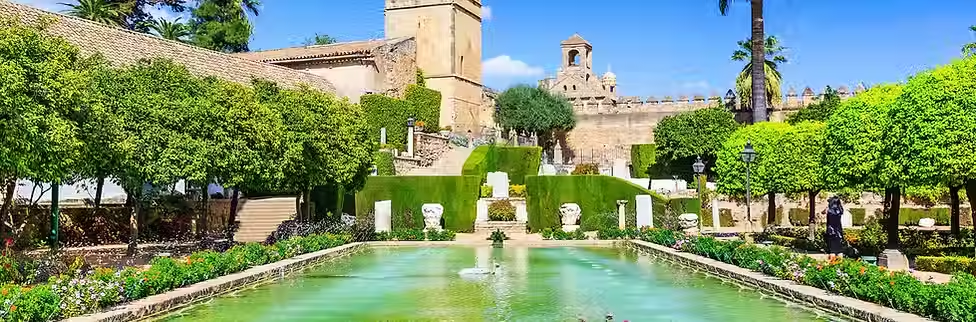


Insider Tips
-
Spend at least one night in Córdoba to experience the city’s ambience after day-trippers leave.
-
Book Mezquita tickets in advance and consider a guided tour for deeper insight into its history .
-
Explore beyond the main sights: Córdoba’s modern districts, museums, and lively nightlife offer a fuller picture of the city
When night falls, Cordoba becomes a party town. Tourists and visitors can join in events, and discover monuments and spaces specifically designed to enjoy after dark.
Take an Alma de Córdoba night tour to the Great Mosque-Cathedral to watch surprising projections and sound and light effects and learn about its history. Visit the Royal Stables and be amazed at the skills of the horses at the Pasión y Duende horse show. Savour a meal with a flamenco show in the establishments and tablaos of the Jewish Quarter. In June, you can join the Trotacalles night race; or, alternatively, you can shop until late at the Shopping Night Centro Córdoba. Go to museums, guided tours, cinema, gigs and outdoor activities in the summer... Cordoba offers these options and many more to enjoy under the stars.

-
Córdoba is a great base for exploring nearby Andalusian gems, such as the white villages (pueblos blancos), Medina Azahara (the ruins of a Moorish palace-city), or the natural beauty of the Sierra Morena mountains .
-
Taverns and their tapas are the quintessence of the city's philosophy and its cuisine.
There you can try delicious bites of cuisine in miniature, washed down with a glass of Montilla-Moriles wine. These taverns are scattered throughout the city, especially in the San Lorenzo, San Andrés and Santa Marina districts, and many of them have been in existence for more than a century. They are the soul of Cordoba, places where cuisine is an art form.
One of the best known dishes of Cordoba's traditional cuisine is salmorejo, a cold cream of tomato, garlic and bread crumbs, which is eaten especially in summer.
Other dishes to be seen in all restaurants in Cordoba include flamenquín (a roll of Iberian ham and pork loin, breaded and fried), oxtail, marinated fish and ajoblanco (a cold soup of bread, ground almonds, garlic, water, vinegar, salt and olive oil).
Complete your gastronomic route by exploring some of the city's urban markets. The most gourmet-oriented is La Victoria Market, with stalls offering fresh and prepared products. It also has an unbeatable location in La Victoria Gardens. Come to this unique spot to lunch or have tapas.


Where to stay in Cordoba
Tips for Choosing Accommodation
-
For the most atmospheric stay, choose a hotel in the Old Town or Jewish Quarter, close to the Mezquita and main sights.
-
Many hotels are housed in historic buildings with beautiful courtyards and terraces.
-
Book early, especially during festivals like the Patios Festival in May.
-
Whether you seek luxury, history, or boutique charm, Córdoba’s accommodations offer something for every traveler, all within easy reach of the city’s stunning monuments and vibrant culture123.
Some Recommended accomodation in Cordoba

-
Set in Plaza de las Tendillas, this hotel offers a garden, terrace, and convenient access to museums and restaurants

-
Centrally located with modern amenities and high guest satisfaction2.

-
A small, thoughtfully designed boutique hotel with a pool and exceptional breakfasts, ideal for couples

-
Known for its rooftop terrace with panoramic views of the Mezquita-Catedral, this boutique hotel also features unique historical details and artifacts throughout

-
This charming hotel is set within walking distance of Córdoba’s main historic sites, offering Andalusian patios and attentive service

-
A luxurious 5-star hotel set in a 16th-century palace, featuring Roman ruins, a thermal bath, and an outdoor pool in lush gardens. Guests praise its blend of history and modern luxury

Granada Travel Guide
Granada, nestled at the foot of the Sierra Nevada mountains in southern Spain, is a captivating city where centuries of Moorish history blend with lively Andalusian culture and stunning natural beauty. Whether you’re drawn by the iconic Alhambra, the winding streets of the Albaicín, or the city’s unique tapas tradition, Granada offers something for every traveler.
When to Visit Granada
Spring and autumn offer the best weather, with mild temperatures and fewer crowds. Summers can be hot, while winters are mild in the city but snowy in the Sierra Nevada
SUMMER In late June and early July, there's the International Festival of Music and Dance, one of the longest-standing events in Spain. It takes place in different theatres and special venues like the Alhambra gardens, the Monastery of San Jerónimo and the Corral del Carbón.
You can enjoy the Mediterranean in coastal towns not far from the city, like Salobreña, Almuñécar and Motril. The Granada coastline is known as the Costa Tropical, and there are beaches ideal for a day out with your family, like Punta del Río, in Salobreña. and Playa de Calahonda, in Motril. If you're looking for somewhere to go diving, the Playa del Cantarriján in Almuñécar is just the place for you.
AUTUMN After the intense summer heat, at the end of September you have two fantastic days to enjoy the Granada Sound pop rock festival which is now recognised as one of the country's foremost events.
WINTER Get your boots and your skis ready and head up into the slopes of the Sierra Nevada, one of the best places in Spain for winter sports. Apart from state-of-the-art facilities and excellent snow, you also have fantastic, sunny winter weather.
SPRING All over Spain, the transition from winter to spring is heralded by Easter Week, one of this country's most deeply-rooted festivities. The solemnity of the occasion blends with music, art, colourful, magical processions and solemn parades in which the people accompany their religious images.

Get Around Granada
-
TRAIN AND BUS: Granada is accessible via the High-Speed Train (AVE), and there are also bus services connecting to numerous cities across Spain and major European destinations.
-
AIRPORT Located 15 kilometres from the city centre, Federico García Lorca Airport offers domestic flights from cities like Madrid, Barcelona, Palma, Bilbao, Las Palmas de Gran Canaria, Oviedo, and Melilla, as well as international flights from Paris and London. Alternatively, travellers can utilise the Costa del Sol International Airport in Malaga.
-
Granada's compact size makes it easy to explore on foot, but various services are also available to take you wherever you need to go.
-
GRANADA CARD This card provides access to major attractions in Granada as well as public transport services. [Granada Card](https://entradas.granadatur.com/)
-
BUS: Public and tourist buses are available, along with taxis. City buses offer an efficient way to navigate the area, including minibuses that take you to the Alhambra and the Generalife
-
RENTING BICYCLES AND ELECTRIC VEHICLES: Reduce air pollution in Granada by renting bicycles, electric scooters, or Segways. This eco option allows you to explore the city at your own pace and easily navigate the hills of the Albaicín and Sacromonte.
Top Attractions in Granada
-
The Alhambra & Generalife
Granada’s crown jewel, the Alhambra, is a UNESCO World Heritage Site and one of Spain’s most visited monuments. This sprawling palace-fortress complex, with its exquisite Nasrid Palaces and lush Generalife gardens, offers a journey into Moorish art and history. Tickets sell out weeks in advance, so book early.
-
Granada Cathedral & Royal Chapel
The Renaissance-style cathedral and the adjoining Royal Chapel, where Catholic Monarchs Ferdinand and Isabella are buried, are must-sees for history and architecture lovers.
-
Sacromonte
Famous for its cave houses and vibrant flamenco scene, Sacromonte is the place to experience authentic Andalusian music and dance, often performed in atmospheric cave venues


-
Monasterio De San Jeronimo
Another often overlooked treasure is the Monasterio de San Jerónimo. This Renaissance monastery boasts a stunning church with a beautifully detailed interior and a tranquil cloister. It’s a perfect spot for those seeking peace away from the city’s busier tourist spots.
-
Romantic garden in Carmen de los Martires
for a unique blend of art and nature, the Carmen de los Mártires offers ornate gardens that mix French, English, and Spanish styles. This little-known garden provides a quiet retreat with picturesque ponds, peacocks wandering freely, and sweeping views over Granada, making it a perfect picnic spot for those in the know.


-
The Museum of Fine Arts in Granada
Art lovers will find a treasure trove at the Fine Arts Museum located within the Palacio de Carlos V in the Alhambra complex. This museum houses a fascinating collection of Spanish art from the Renaissance to the 20th century, offering another cultural insight into Granada’s artistic evolution.
Albaicin, the Mirador de San Nicolás
Beyond the well-trodden paths lie the city’s hidden gems, each inviting a deeper exploration of this enchanting city. In the historic Albaicín district, an ancient Moorish quarter, the winding cobbled streets tell stories of the past, leading adventurers to spectacular views from the Mirador de San Nicolás. This lookout offers the city’s best view of the Alhambra against the backdrop of the Sierra Nevada, which is exceptionally breathtaking at sunset.

-
Monasterio De San Jeronimo
Another often overlooked treasure is the Monasterio de San Jerónimo. This Renaissance monastery boasts a stunning church with a beautifully detailed interior and a tranquil cloister. It’s a perfect spot for those seeking peace away from the city’s busier tourist spots.
-
Romantic garden in Carmen de los Martires
for a unique blend of art and nature, the Carmen de los Mártires offers ornate gardens that mix French, English, and Spanish styles. This little-known garden provides a quiet retreat with picturesque ponds, peacocks wandering freely, and sweeping views over Granada, making it a perfect picnic spot for those in the know.
-
The Museum of Fine Arts in Granada
Art lovers will find a treasure trove at the Fine Arts Museum located within the Palacio de Carlos V in the Alhambra complex. This museum houses a fascinating collection of Spanish art from the Renaissance to the 20th century, offering another cultural insight into Granada’s artistic evolution.
Albaicin, the Mirador de San Nicolás
Beyond the well-trodden paths lie the city’s hidden gems, each inviting a deeper exploration of this enchanting city. In the historic Albaicín district, an ancient Moorish quarter, the winding cobbled streets tell stories of the past, leading adventurers to spectacular views from the Mirador de San Nicolás. This lookout offers the city’s best view of the Alhambra against the backdrop of the Sierra Nevada, which is exceptionally breathtaking at sunset.
Nightlife in Granada
The city's nightlife is vibrant, largely thanks to its status as a university town. As night falls, many students head out to enjoy drinks, concerts, or movies, all within a lively, cosmopolitan setting.
Younger crowds often flock to Pedro Antonio de Alarcón, known for its numerous pubs and live music venues. For a more upscale experience, Calle Elvira and its surroundings offer charming spots that attract a more mature clientele, especially between Plaza Nueva and Paseo de Tristes.
If dancing until dawn is your thing, check out the best clubs around the Bull Ring and the city's outskirts. The city has a rich history of producing talented musicians and bands, so don't miss the iconic venues and bars featured in the Granada City of Rock tour.

-
Cultural Experiences
-
Tapas Culture
Granada is renowned for its tradition of free tapas served with drinks. Visit local bars to sample a variety of small plates, each order of wine or beer brings a new culinary surprise. -
Flamenco Shows
Experience the passion of flamenco in the caves of Sacromonte or Albaicín, such as at El Templo del Flamenco, for an unforgettable night out . -
Festivals & Events
Granada hosts numerous festivals throughout the year, including Semana Santa (Holy Week), the International Festival of Music and Dance, and local fairs with lively processions and music .
-
Outdoor Activities
-
Sierra Nevada
Just outside the city, the Sierra Nevada mountains offer skiing in winter and hiking or mountain biking in warmer months. On the same day, it’s possible to ski in the morning and swim in the Mediterranean by afternoon . -
Day Trips
Explore the Costa Tropical beaches, the white villages of the Alpujarras, or take a day trip to nearby cities like Seville or Córdoba .
Tasting Granada

Granada’s Traditional Dishes for Every Palate.
To truly experience a city, sampling its cuisine is essential. The traditional flavours, unique creations, local ingredients, and beverages all contribute to a deeper connection with the places we explore. In Granada, the local tapas stand out for their variety and the numerous venues that serve them. The city is also renowned for its exceptional Andalusian dishes. The culinary scene here is a delightful blend of Middle Eastern and Andalusian influences, with roots reflected in the spices used, showcasing the region's rich array of local. Here are some must-try dishes during your visit:
Pionono
This delightful pastry embodies the traditional sweets of Andalusia. A small sponge cake is rolled to form a cylindrical base, soaked in a sweet nectar, and topped with flambéed cream for a refreshing treat. Named after Pope Pius IX (Pío IX piononos has inspired similar variations in Latin America.
Fried Aubergine with Honey
Granada is a prime location to savour this Andalusian favourite, featuring the delightful contrast of sweet honey and savoury aubergine. Often served as tapas, this dish has Moorish roots and is a popular choice in local bars.
Remojón Granadino
His refreshing salad often features a base of orange drizzled with olive oil. Simple versions consist of just orange and olive oil, while more elaborate recipes may include cod, onion, hard-boiled egg, and olives, making it an ideal summer starter.
Plato Alpujarreño
This hearty dish combines traditional local ingredients such as black pudding, chorizo, and preserved pork loin with potatoes, fried eggs, and serrano ham. While not the most traditional dish, it is among the most popular in local restaurants.
Olla de San Antón
Named after the San Antón festival, this warming rice casserole with black pudding and slow-cooked meat is a winter favourite. It combines broth with dried beans to create a special dish perfect for festive occasions.
Tortilla del Sacromonte
To fully experience the Sacromonte experience, indulge in this rich version of the Spanish omelette, featuring lamb offal alongside potatoes, eggs, and various vegetables. This dish has fascinating historical tales, adding to its charm. Don't miss out on these delights during your visit to Granada!
Where to stay in Granada
Granada offers a delightful mix of neighborhoods and accommodations, from historic quarters with breathtaking views to lively city center hotels and cozy hostels. Here are some standout places to stay that cater to different tastes and budgets, each offering a unique way to experience the city.
Some Recommended accomodation in Granada

-
Located within the Alhambra grounds, Parador de Granada offers a rare opportunity to sleep amid Spain's most iconic monument. Housed in a former convent, it features old-world rooms and refined dining. This is a top choice for history lovers and those wanting a truly unforgettable, luxurious experience right next to the city's main attraction.

-
This boutique hotel in the heart of Granada’s Centro district is praised for its stylish atmosphere and LGBTQ+ friendly environment. Its central location makes it ideal for those who want to be close to major sights, shopping, and nightlife, while still enjoying a boutique, personalised experience.

-
Perfect for longer stays or families, Sercotel Granada Suites offers modern studios and apartments with the bonus of a rooftop pool. Its laid-back vibe and central location in the city center make it a convenient and comfortable option for travelers who want flexibility and amenities beyond a standard hotel room.

-
For those seeking a rustic, romantic atmosphere, Hotel Casa Morisca in the Albaicín is set in a 15th-century residence. It features a beautiful central courtyard and garden, blending Moorish charm with tranquility. It’s a great pick for couples or anyone wanting a peaceful retreat with easy access to the Alhambra and Albaicín’s scenic viewpoints.


Sevilla Travel Guide
Seville, the vibrant heart of Andalusia, is a city where Moorish palaces, lively tapas bars, and flamenco rhythms create an unforgettable atmosphere.
How to get to Sevilla
AIRPORT Located 10 kilometers north of the city center, the airport provides multiple connections to European cities including London, Paris, and Rome.
ROAD Seville boasts excellent motorway links to Madrid via the A-4, as well as to other cities throughout Andalusia and Spain.
AVE The high-speed train (AVE) operates twenty times daily between Seville and Madrid, connecting to various cities in Andalusia and the broader Spanish rail network, including additional high-speed routes. Santa Justa station is conveniently situated near the historic quarter.
Best Time to Visit Sevilla
SUMMER: The summer months in Seville are all about sun and warmth, perfect for evening strolls through its historic streets. Enjoy a refreshing beer or traditional gazpacho on one of the many terraces.
At night the Real Alcázar Palace often features live music under the stars, while film enthusiasts can catch outdoor cinema screenings in María Lu Park.
When the heat peaks, escape to the nearby beaches of Huelva and Cádiz, just over an hour by car, for a dip in the Atlantic Ocean or Sea.
AUTUMN: October marks the Seville Performing Arts Festival, where music, drama, and dance transform the city into a vibrant cultural celebration. Experience the enchantment of flamenco at the Flamenco Biennial, held every two years, which is recognized as UNESCO Intangible Cultural Heritage. This extraordinary event typically occurs in September and October across various venues, including the courtyards of the Real Alcázar Palace and the stage of La Maestranza Theatre, revealing the true magic of flamenco.
WINTER If you’re into sports, try canoeing, the local favorite, on the Guadalquivir River, with guided kayak tours available in English that showcase iconic landmarks like the Torre del Oro Tower and La Maestranza Bullring. Christmas, explore the Feria de Belén and its nativity scenes near the Cathedral, or enjoy the enchanting light show at Plaza de San Francisco. Visit the Christmas markets for unique handmade gifts, and in February, consider in the Seville marathon, known for being the flattest in Europe, as you run past the’s most famous sights.
SPRING: This season in Seville is a celebration of, passion, and intrigue.
Experience the vibrant atmosphere of Seville's Easter Week, where beautifully adorned religious figures are paraded through the streets accompanied by solemn. As the processions pass by, the crowd sings traditional a cappella Flamenco songs known as saetas.
One of the highlights is the Madrugá, occurring on the night between Maundy Thursday and Good Friday, featuring some of the most renowned processions.
Another major event is the April Fair, which kicks off with the dazzling alumbrao, illuminating the fairgrounds with 250,000 light bulbs. Guests revel in dancing, singing, and enjoying fried fish in lively marquees, while colorful Flamenco dresses and exquisite hand-carved cured Iberian ham add to the festivities. You can also learn the steps of the traditional Flamenco sevillanas dance, which echoes the fair's vibrant soundtrack. The celebration concludes with a spectacular fireworks display over the Guadalquivir River.
Both Easter Week and the April Fair are recognized as Fiestas of International Tourist Interest.

How to get around in Sevilla
Metro: The Seville metro features a line that links the metropolitan area (Aljarafe) to the city center (Puerta Jerez). For more information, visit: www.metro-sevilla.es.
BUS: Buses are an effective way to travel, especially if you steer clear of peak hours. You can buy single tickets directly on the bus. The tourist card enables unlimited trips during its validity (one or three days). For more details, visit: www.tussam.es.
COMMUTER TRAIN Medium-distance trains provide access to nearby locations, with two commuter lines connecting to towns close to Seville.
BIKE: The capital of Andalusia is ideal for cycling, boasting a sunny climate, short distances, and flat terrain. Additionally, it features a comprehensive network of bike lanes that are separated from traffic. A rental service called SEVIci offers short-term passes.
OTHER TRANSPORT: The city also offers electric motorcycle rentals, charged by the minute, no time limits or designated parking requirements. This is a quick, eco-friendly way to navigate the city while avoiding traffic congestion.
Tourist buses provide a convenient way to explore the city, while easily identifiable taxis are white with a yellow diagonal stripe.
Top Attractions
Seville dazzles visitors with its blend of Moorish, Gothic, and modern marvels. Here are the top attractions that capture the city's unique spirit, offering a mix of history, culture, and vibrant local life.

-
Real Alcázar of Seville
This UNESCO-listed palace complex is the city’s crown jewel, famed for its intricate Moorish architecture, lush gardens, and royal history. The Spanish royal family still visits it during visits .The Royal Alcázar of Seville (also known as al-Qasr al-Muriq) is the oldest residential palace in Europe still in use today. Dating to the 14th century, it’s an important example of Moorish architecture. There are giant galleries, ornate rooms, and beautiful gardens. The palace was built for the Christian king Peter of Castile atop a Muslim fort after Christian armies reconquered the city in 1248.
-
Seville Cathedral & La Giralda
The world’s largest Gothic cathedral, built atop a former mosque, houses Christopher Columbus’s tomb. Climb the Giralda tower for panoramic city views.This Roman Catholic cathedral dominates much of Seville’s skyline. Surrounded by Andalusian orange trees, the Cathedral (also known as the Cathedral of Saint Mary of the Sea) is one of Seville’s top tourist attractions. Lines can get long, partially because hours are limited around church services, so get there early. While you can just admire the stunning design and stained glass from outside,
A spectacular semi-circular plaza built for the 1929 Ibero-American Exhibition, featuring tiled alcoves representing
Spain’s provinces. Located in the picturesque Parque de María Luisa. The unique building mixes Baroque,
Renaissance, and Moorish architectural styles, and there’s a small canal with Venetian-like bridges and gondolas. The Plaza has gotten a lot of attention in the past few years because it has served as a backdrop in film and TV, such as
Star Wars and Game of Thrones.
Seville’s main green space, perfect for a stroll or picnic among gardens, fountains, and monuments.Located just in
front of the iconic Plaza de España, this 100-acre public park offers the opportunity to browse gardens, patios, and
sculptures. The park is Seville’s main green space and is situated near the Guadalquivir River. Created in 1911, it’s a
relaxing place to lounge, picnic, and people watch. Don’t miss the monument to Miguel de Cervantes, who wrote Don
Quixote (the monument used to include statues of Don Quixote on his horse and Sancho Panza on his donkey but
they have since disappeared).
-
Casa de Pilatos
A stunning 16th-century palace blending Italian Renaissance and Spanish Mudejar styles, known for its beautiful azulejo tiles and sculpture gardens It houses a collection of 16th and 19th-century paintings, as well as a sculpture garden of Greek mythological figures. It’s also the permanent residence of the Dukes of Medinaceli (a hereditary title in Spain) and boasts the world’s largest collection of azulejo (a traditional glazed tile artwork). Numerous films have also been shot here, including Lawrence of Arabia, Kingdom of Heaven, and Knight and Day to name a few.
-
Metropol Parasol (Setas de Sevilla)
A striking modern wooden structure with a panoramic terrace, walking paths, and an archaeological museum—great for city views and a drink. This large sculptural platform in the Plaza de la Encarnación used to be a car park, but in 2011, it was transformed into a massive public art project called Las Setas De Sevilla, or the Metropol Parasol. Resembling mushrooms (or more like a beehive in my opinion), the structure provides shade to the plaza below, and there are two 85-foot panoramic platforms where you can take in the view.
This tower is known as “Seville’s pretty little girl”. The Torre del Oro [Golden Tower], which stands on the banks of the
river Guadalquivir, was built in the thirteenth century to strengthen the city’s military defences. The Moors also used
the tower to control the river traffic. To do so, they used an enormous chain to link the Torre del Oro with another
tower on the opposite bank. Nowadays, the tower houses the Naval Museum, with a display of scale models and
ancient navigation tools. You can see lovely views of the Triana neighbourhood, the Cathedral, and the Guadalquivir
from the top.
Neighborhoods to Explore:
-
Triana District
The birthplace of flamenco and bullfighting, Triana is known for its authentic atmosphere, colorful streets, and lively nightlife. Cultural Experiences -
Flamenco Shows
Experience authentic flamenco in Triana or at a tablao in the city centre. The Museo del Baile Flamenco offers both performances and insight into this passionate art form -
Artisan Workshops
Try your hand at painting a traditional botijo (clay water vessel) with a local ceramist for a unique souvenir and a deeper connection to Seville’s craft heritage. -
Guided Walks and Bike Tours
Explore Seville’s landmarks and hidden corners with local guides, or rent a bike to cover more ground efficiently -
Santa Cruz
The former Jewish quarter, Santa Cruz, is a maze of narrow streets, whitewashed houses, and hidden plazas. It’s home to major sights and atmospheric restaurants -
Macarena
Less touristy, this district features the striking Basílica de la Macarena and a lively local vibe
Day Trips
-
Itálica
Visit the Roman ruins of Itálica in Santiponce, birthplace of emperors Hadrian and Trajan, just 10 km from Seville2.


Seville Must Try Food
-
Seville is one of the best places in Spain for that treasure of Spanish cuisine: tapas. And a fantastic way to get to know the atmosphere and the hospitality of Seville's people is to visit its bars. There are dozens of them in the old quarter and the popular districts of Triana and La Macarena.
-
Some very typical ones are: chacinas (Iberian ham, Iberian cured pork sausage); papas aliñás (potatoes in vinaigrette)
-
If you visit Seville in the hottest months, don't forget to ask for gazpacho (cold soup, made mainly with tomatoes), which is very refreshing.
-
But there is something even more popular: montaditos (small toasted sandwiches with delicious fillings).
-
The hard thing is to choose: sirloin, prawns, or the typical serranito, filled with loin fillet, fried green pepper and ham.

-
Eating in the markets is very fashionable among the locals. Triana Market, next to the bridge that connects the neighbourhood with the city centre, offers everything from the freshest oysters to exquisite sushi. There is also the Barranco food and fish market, near the La Maestranza Bullring. It is the most modern of all, with bars offering traditional cuisine and avant-garde delicacies. Cross the Triana Bridge and wander around the stalls of Arenal Market. There you can find everything from traditional food based on organic a BARRANCO FOOD AND FISH MARKET Andalusian produce to creative vegan options. Another option is to go on a wine-tasting course.
Join a guided tapas tour to discover authentic bars and learn about Andalusia’s culinary traditions
Indulge yourself on a day trip dedicated to Iberian ham, where you visit a traditional village and participate in a full
ham-tasting session, trying different varieties, learning their differences, and understanding the importance of the
Black Iberian pig.
-
Olive Oil Farm Tour
Experience one of Seville's most distinctive activities with an olive oil farm tour. Discover the production of this liquid gold and
participate in an olive tasting session to enhance your tasting skills.
Where to Stay in Seville
Seville offers a rich selection of luxury and boutique hotels, many set in historic palaces or featuring Andalusian charm. Here are some of the top-rated options for an unforgettable stay:
Some Recommended accomodation in Seville

-
This former 18th-century palace is considered one of Seville’s most luxurious hotels. It features elegant, uniquely decorated rooms, beautiful patios, and a rooftop terrace with breathtaking city views and a plunge pool. Part of the Small Luxury Hotels of the World, it’s ideal for those seeking style, sophistication, and exclusivity

-
A cultural icon built in the 1920s, this landmark hotel is renowned for its opulent Andalusian architecture, lavish interiors, and impeccable service. Its individually decorated rooms, lush gardens, and outdoor pool offer a regal experience just steps from the historic Barrio Santa Cruz

-
Located in Seville’s old town, this hotel occupies a traditional 18th-century building with charming courtyards. The interiors combine crisp contemporary style with authentic Sevillian architecture, offering a peaceful and relaxing retreat

Jaen Travel guide
Where seas of olive trees meet sky-high castles and soulful Andalusian life.
Jaén is an under‑the‑radar Andalusian city wrapped in a sea of olive trees, crowned by a hilltop castle and anchored by one of Spain’s most majestic Renaissance cathedrals. Often skipped for Granada or Córdoba, it rewards those who linger with authentic tapas bars, steamy Arab baths, and sweeping views over endless green valleys. As the world’s olive oil capital, Jaén is also a pilgrimage spot for food lovers keen to taste liquid gold at the source.
Why visit Jaén
-
World capital of olive oil: Around 40–60% of Spain’s olive oil and a significant share of the world’s extra virgin olive oil is produced in the province, making it a dream for culinary travelers.
-
Monumental heritage without crowds: Highlights like Santa Catalina Castle, Jaén Cathedral, Arab Baths, and the Santa Cruz quarter deliver all the Andalusian charm with far fewer tourists.
-
Gateway to nature: The nearby Sierras of Cazorla, Segura, and Las Villas form Spain’s largest protected natural area, perfect for hiking, canyoning, and road‑trip adventures.
-
Authentic prices and atmosphere: Jaén is walkable, lived‑in, and comparatively affordable, with a strong local culture and tapas tradition.
Best time to visit
Jaén has a continental‑Mediterranean climate with hot, dry summers and mild, wetter winters.
-
Best overall months: May, June, September, and October offer warm, pleasant weather and plenty of sunshine, ideal for sightseeing and olive‑grove excursions.
-
Summer (July–August): Very hot, with average highs often around 36–37°C; great for nightlife and festivals but plan siestas and early/late sightseeing.
-
Winter (Dec–Feb): Cool to mild, with colder nights and more rain, but good for budget travelers and crowd‑free monuments.
How to get around
Jaén is a compact, hilly city that you’ll mostly explore on foot, so bring comfortable shoes.
-
Walking: You can cross town in about an hour, though some streets are steep, especially heading up toward viewpoints and the castle.
-
Local buses: Urban buses are inexpensive (about 1 euro per ride, less with a bus card) and useful for tackling hills or reaching outlying neighborhoods.
-
Taxis: Metered taxis typically cost a few euros (around 5–8) to cross town and are handy at night or for the climb to the castle.
-
Car: Not essential for the city itself, but very useful for exploring olive‑oil estates, Úbeda, Baeza, and the surrounding sierras.
Must‑see attractions
-
Santa Catalina Castle (Castillo de Santa Catalina): A medieval fortress on a ridge with some of the best panoramic views over Jaén and its olive‑tree “sea.”
-
Jaén Cathedral (Catedral de la Asunción): A monumental Renaissance cathedral that has influenced church architecture across Latin America.
-
Arab Baths & Villardompardo Palace: One of the largest and best‑preserved Arab bath complexes in Spain, hidden beneath a Renaissance palace.
-
Santa Cruz neighbourhood: An old quarter of narrow streets and traditional houses that preserves much of the city’s historical character.
-
Iberian Museum / Museum of Jaén: Home to one of Spain’s most important collections of Iberian art alongside fine arts galleries.
Best things to do in Jaén
-
Climb up to Santa Catalina Castle and the Mirador de la Cruz for a golden‑hour city panorama.
-
Wander the historic center, from the cathedral square to the Magdalena and Santa Cruz districts, photographing façades, arches, and quiet plazas.
-
Spend a relaxing afternoon at the Arab Baths, combining history, architecture, and a spa‑like atmosphere.
-
Visit the Iberian Museum or the Museum of Jaén to understand the region’s pre‑Roman cultures and artistic heritage.
-
Join an olive‑oil tour: stroll through groves, see the mill in action, and taste premium extra virgin oils with expert guidance.
-
Enjoy evening tapas “ruta” from bar to bar around the center, where small plates often come free with your drink.

Hidden gems and local corners
-
Jewish heritage trail: Jaén has centuries‑old Jewish roots, including remains of a mikvah (ritual baths) and streets connected to its medieval Jewish community.
-
Magdalena district: A characterful area with a historic church and local atmosphere away from the most touristed streets.
-
Civil War air raid shelter: An underground site that sheds light on a lesser‑known chapter of Jaén’s 20th‑century history.
-
Olive‑grove viewpoints: Short drives outside the city reveal ridges and miradores where the mosaic of olive trees stretches to the horizon.

Activities, itineraries and road trips
Top activities
-
Olive‑oil experiences: Sensory tours through plantations with tastings and local meals are among the highest‑rated outdoor activities.
-
Outdoor adventures: Via ferrata routes, guided rock climbing, and beginner canyoning are available in nearby natural areas such as Cazorla.
-
Cultural day trips: Combined tours to UNESCO‑listed Úbeda and Baeza showcase Renaissance palaces, churches, and plazas.
Suggested itineraries
-
One day in Jaén:
Morning – Cathedral and main square, coffee and toast; late morning – Arab Baths and Villardompardo Palace; afternoon – stroll Santa Cruz and Magdalena; sunset – Santa Catalina Castle and Mirador de la Cruz; evening – tapas crawl in the center. -
Two days in Jaén:
Day 1 – Classic city route as above.
Day 2 – Day trip to Cazorla and Segura de la Sierra for mountain villages, viewpoints, and nature walks.
Best road‑trip ideas including Jaén
-
Olive‑oil & Renaissance loop: Jaén – Úbeda – Baeza – rural olive‑oil estates – back to Jaén, ideal over 2–3 days.
-
Andalusian cities road trip: Routes from Málaga or Granada often include Jaén alongside Córdoba, Seville, or Madrid, with flexible self‑drive itineraries spanning 6–11 days.
-
Sierras and villages: From Jaén, drive into the Sierras of Cazorla, Segura, and Las Villas for hikes, reservoirs, and whitewashed hill towns.
Travel essentials and practical tips
-
Getting there: Many visitors fly into Málaga or Madrid, then connect to Jaén by train, bus, or rental car; Málaga is about 200 km away with good road links.
-
Getting around regionally: Trains and buses connect Jaén with larger Andalusian cities, but a rental car gives you maximum freedom for olive‑grove and mountain routes.
-
Budgeting: Local buses and tapas are affordable, and overall costs are often lower than in more famous Andalusian hotspots.
-
Connectivity: As a provincial capital, Jaén offers typical urban amenities—ATMs, supermarkets, and mobile coverage—making independent travel straightforward.
Gastronomy, food & local culture
Jaén’s cuisine is deeply tied to olive oil, with “liquid gold” featuring in everything from simple toast to refined tasting menus.
-
Must‑try flavors: Extra virgin olive oil tastings, “pipirrana” salad, garlic‑rich stews, seasonal game dishes, and traditional sweets.
-
Tapas culture: Like many Andalusian cities, Jaén’s bars often serve a complimentary tapa with each drink, letting you sample the local kitchen in bite‑sized portions.
-
Olive‑oil tourism: Many fincas offer guided tours, grove walks, and pairings that explain how terroir, olive variety, and harvest timing shape flavor.
-
Local rhythm: Life moves at a relaxed pace, with late lunches, evening paseo (strolls), and social nights in plazas and bar‑lined streets.
Accommodation in Jaén
Jaén offers a mix of city hotels, rural stays, and olive‑estate getaways.
-
In the historic center: Ideal for first‑time visitors who want to walk to the cathedral, baths, and tapas streets. You’ll find mid‑range hotels, apartments, and small guesthouses.
-
Hillside and castle‑view stays: Some accommodations sit on higher ground with sweeping views over the city and groves, great for sunrise and sunset lovers.
-
Rural and agrotourism stays: In the province, farmhouses and rural hotels immerse you in olive‑growing landscapes and local food traditions.
FAQs about Jaén
Is Jaén worth visiting?
Yes. Jaén combines a world‑class olive‑oil culture, a monumental cathedral, Arab Baths, and a hilltop castle with fewer crowds and more authentic local life than many Andalusian cities.
How many days do you need in Jaén?
You can see the main sights in one day, but two days let you add nearby villages or nature like Cazorla and Segura de la Sierra. Many road‑trip itineraries include Jaén as one or two‑night stopovers.
What is Jaén famous for?
Jaén is famous for its vast olive groves and for producing a major share of Spain’s extra virgin olive oil, earning it the title of “olive oil capital of the world.” It is also known for Santa Catalina Castle and its Renaissance cathedral.
Is Jaén safe for tourists?
Jaén has a low overall crime index and a high safety index compared with many cities, and most visits are trouble‑free when you follow normal precautions against petty theft.
What is the best time of year to visit Jaén?
The best weather typically falls between May and October, with especially pleasant conditions in late spring and early autumn; summers are hot and very dry.
Do you need a car in Jaén?
You don’t need a car to explore the city, which is walkable and has local buses and taxis. A car becomes useful if you want to tour olive‑oil estates, UNESCO towns like Úbeda and Baeza, or the nearby sierras.
How do you get to Jaén from Málaga or Madrid?
From Málaga or Madrid you can reach Jaén by road via highways such as the A‑44 or by train links, and both cities have major airports with car‑rental options.
What should I eat in Jaén?
Focus on dishes showcasing local extra virgin olive oil, traditional tapas, salads like pipirrana, and regional stews, plus olive‑oil based tastings or meals on plantation tours.
The Renaissance & Olive Heartland (Jaén)
“A vast sea of sixty million olive trees punctuated by twin Renaissance jewels and the soaring stone fortresses of the Reconquista.”
Jaen
The Capital of Liquid Gold.
Stand atop the Santa Catalina Castle and gaze across sixty million olive trees that stretch to the horizon like a silver sea.
Best for: Castle stays and authentic olive oil tastings.


Úbeda & Baeza
The Renaissance Twins
Wander through UNESCO-listed stone streets where the Italian Renaissance found its perfect Spanish home in palatial squares and golden chapels.
Best for: Monumental architecture and quiet, noble history.

Costa Del Sol Travel Guide
Enjoy world-class beaches, lively chiringuitos, and dolphin-watching boat trips.
The Costa del Sol is a 150 km stretch of Mediterranean coastline in southern Spain's Málaga province, world-renowned for its 320+ days of sunshine and diverse mix of resort towns and historic white villages.
The Costa del Sol includes the city of Málaga and also the towns of Torremolinos, Benalmádena, Fuengirola, Mijas, Marbella, Ojen, San Pedro de Alcántara, Benahavis, Estepona, Manilva, Casares,
Málaga, Rincón de la Victoria, Torre del Mar, Vélez-Málaga, Nerja, Frigiliana and Torrox.
This shoreline region extends from the cliffs at Maro in the East to Punta Chullera in the west. It occupies a narrow coastal strip delimited including the Sierra de Mijas, Sierra Alpujata, Sierra Blanca, Sierra Bermeja, Sierra Crestellina and Montes de Málaga to the north and the Mediterranean Sea to the south.
The coast shows a diversity of landscapes: beaches, cliffs, estuaries, bays and dunes. The rivers are short and seasonal, while the agriculture is hampered by the lee effect caused by the Baetic System.
The Art Coast (Málaga & Costa del Sol)
“A sophisticated blend of Picasso’s legacy, dramatic fortresses, and Mediterranean luxury.”
Málaga
The Cultural Hub
A vibrant port city with the Picasso Museum and the impressive Gibralfaro Castle.
Best for: Museums, street art and sunsets on the quay


Ronda
The Fairytale Cliff.
Situated on a 120-meter-deep gorge, connected by the iconic Puente Nuevo.
Best for: Breathtaking views and the oldest bullring.

Malaga Travel Guide
Málaga, a vibrant city on Spain’s Costa del Sol, combines rich history, stunning architecture, beautiful beaches, and a lively cultural scene. As one of the oldest Mediterranean seaports, Málaga offers visitors a captivating blend of ancient landmarks and modern attractions.
The best time to visit Málaga depends on your preferences for weather and activities:
-
Spring (March to May) and Autumn (September to November) are ideal for sightseeing, outdoor activities, and avoiding crowds. During these months, temperatures are pleasantly mild, ranging from about 15°C to 25°C (59°F to 77°F), with plenty of sunshine and fewer rainy days. May and October especially offer very good weather for walks, cultural events, and enjoying the city without the intense summer heat.
-
Summer (June to September) is perfect if you want a beach holiday with hot weather and warm sea temperatures (around 23–24°C). July and August are the hottest months, with average highs around 30–35°C (86–95°F) and long sunny days. This is the peak tourist season, so expect crowded beaches and higher prices.
-
Winter (December to February) is mild compared to much of Europe, with temperatures between 10°C and 20°C (50°F to 68°F). It’s a quieter time for cultural tourism and enjoying festivals like Christmas and New Year, though swimming is less common due to cooler sea temperatures
Summary

In summary, for a balanced experience with pleasant weather and fewer tourists, spring (March-May) and early autumn (September-October) are the best times to visit Málaga. For beach lovers seeking hot weather and a lively atmosphere, summer (June-September) is ideal
Málaga offers a variety of convenient, affordable, and well-integrated transport options to explore the city and its surroundings efficiently.
1. Metro
-
Málaga Metro has two main lines covering key areas:
-
Line 1: From Andalucía Tech to El Perchel (11 stops), serving the university, hospital, and other important points.
-
Line 2: From Palacio de los Deportes to El Perchel (7 stops), connecting the beach and sports arena.
-
-
The metro runs frequently, every 6 to 10 minutes on weekdays and about every 10 minutes on weekends.
-
The network is about 13.2 km long with 19 stations, mostly underground in the city centre.
-
Metro stations and trains are fully accessible, with air conditioning and CCTV.
-
Tickets are affordable, with options including single rides (~€1.35), rechargeable cards (~€0.82 per trip), and travel cards valid across public transport
2. Buses
-
The EMT Málaga operates over 50 bus lines covering the city centre and outskirts.
-
Buses run from approximately 6:45 AM to 11:00 PM, with high-frequency service (every 8-12 minutes on busy routes).
-
There are special routes like the Airport Bus (Line A) connecting Málaga Airport to the city centre every 20-25 minutes.
-
Night buses (N1, N2, N4) operate late hours.
-
Tickets cost about €1.40 for a single ride; multi-trip cards (Bonobus) and monthly passes offer discounts1367.
3. Trains
-
The Cercanías Renfe commuter trains connect Málaga with nearby coastal towns such as Torremolinos, Benalmádena, and Fuengirola.
-
This is a great option for day trips along the Costa del Sol.
4. Taxis and Ride-Sharing
-
Taxis are widely available and relatively affordable.
-
Ride-sharing apps also operate in Málaga, providing flexible transport options.
5. Bicycles and Walking
-
Málaga’s city centre is compact and very walkable, especially neighbourhoods like the historic centre and along the waterfront.
-
There are bike rental services and cycling lanes for exploring the city on two wheels.
Summary

Málaga’s well-connected and affordable public transport, combined with walkable neighbourhoods, makes it easy for visitors to navigate the city and explore nearby attractions
This 11th-century Moorish fortress, built on Roman ruins, is one of the city’s most iconic landmarks. It features terraced gardens, fountains, and panoramic views of the city and sea. The uphill walk to the fortress is rewarded with stunning vistas and historic architecture.
Overlooking the Alcazaba, this 14th-century castle offers breathtaking panoramic views of Málaga and the Mediterranean. It was historically used as a military garrison and coastal watch. Visitors can explore the castle grounds and the Interpretation Center .
Known locally as “La Manquita” (The One-Armed Lady) due to its unfinished second tower, this Renaissance-Baroque cathedral impresses with its spacious interior, ornate chapels, and a rooftop tour offering spectacular city views after climbing 200 steps.
-
Roman Theatre (Teatro Romano)
Located at the foot of the Alcazaba, this ancient Roman theatre dates back to the 1st century BC and is one of Málaga’s oldest monuments. It’s a fascinating glimpse into the city’s Roman past.
Dedicated to Málaga’s most famous son, Pablo Picasso, this museum houses an extensive collection of his works, showcasing his artistic evolution. It’s located in the historic Buenavista Palace in the city centre.
Situated in the Palacio de Villalón, this museum features 19th- and 20th-century Spanish paintings, with a focus on Andalusian art. The Renaissance architecture of the building adds to the cultural experience.
A modern waterfront area with wide promenades, restaurants, shops, and cultural venues like the Centre Pompidou Málaga. It’s perfect for a scenic stroll or dining with sea views


Other Notable Sights
-
Plaza de la Merced
A lively square surrounded by cafés and historic buildings, including Picasso’s birthplace and a monument to Torrijos. -
Hammam Al Andalus
Experience traditional Arab baths with massages and water rituals—a relaxing break during your visit. -
Santa María de la Victoria Basilica
A historic Baroque church with a crypt and pantheon dedicated to the Counts of Buenavista

Málaga is a paradise for beach lovers and outdoor enthusiasts, offering a diverse coastline, water sports, scenic parks, and adventure activities. Here are the top beaches and outdoor experiences to enjoy in and around Málaga.
Malagueta Beach
Malagueta Beach is Málaga’s most popular urban beach, located close to the city center. It features dark sand, clean water, and a lively atmosphere with plenty of amenities—showers, sunlounger rentals, playgrounds, and a wide selection of beach bars and restaurants. Its accessibility and range of services make it ideal for families and first-time visitors, though parking can be challenging during peak times.
El Palo Beach
El Palo Beach, set in a traditional fishing neighborhood, offers a more local and tranquil vibe compared to Malagueta. The beach has fine sand, clear shallow water, gentle waves, and is lined with palm trees and seafood chiringuitos. It’s perfect for families and those wanting to try Málaga’s famous espeto de sardinas (sardine skewers) right on the sand.
Peñon del Cuervo, or 'Raven Rock,' is a nature reserve beach split by a dramatic rock formation. It’s popular for picnics, barbecues, and swimming, with free parking and a relaxed, family-friendly atmosphere. The beach is also connected to coastal walking and cycling paths, making it a great spot for active visitors.
Guadalmar Beach is popular for water sports like kitesurfing and windsurfing, thanks to its favorable winds and open space. It’s less crowded, has plenty of parking, and is family-friendly, making it a great choice for both relaxation and adventure.
Playa de Huelin is a spacious, clean beach in the Carretera de Cádiz district. It’s known for its family-friendly vibe and easy access, though the beach can be a bit rocky. The promenade is ideal for walks and there are several local eateries nearby.
For a thrilling outdoor adventure, Caminito del Rey is a must. This famous walkway is suspended above dramatic gorges and offers breathtaking views for hikers. It’s one of the most spectacular and memorable outdoor experiences near Málaga.
Montes de Málaga Natural Park
Montes de Málaga Natural Park is a haven for hiking, cycling, and picnicking amid pine forests and mountain scenery. It’s close to the city, making it an easy escape into nature for both locals and visitors.
Parque Nacional Sierra de las Nieves
Recently declared a national park, Sierra de las Nieves offers exceptional hiking, wildlife watching, and scenic drives through dramatic mountain landscapes. It’s perfect for nature lovers seeking tranquility and adventure.
Water Sports and Coastal Activities
Málaga is a hotspot for water sports including surfing, paddleboarding, kayaking, diving, snorkeling, windsurfing, and kitesurfing. Beaches like El Palo, Malagueta, and Guadalmar are top spots for lessons and rentals. Kayak and snorkeling tours along the Maro-Cerro Gordo cliffs are especially popular for their marine life and stunning scenery.
La Concepción Botanical-Historical Garden
This lush botanical garden is a peaceful retreat filled with exotic plants, shaded paths, and historical charm. It’s free to visit on Sundays and offers a tranquil break from the beach and city bustle.


Málaga’s location on the Costa del Sol makes it an excellent base for exploring a variety of nearby towns, natural wonders, and cultural sites. Here are some of the top recommended day trips within about an hour or two from Málaga:
1. Nerja
-
About 1 hour east of Málaga by car.
-
Famous for the Cueva de Nerja, a spectacular series of caves with massive stalactites and stalagmites.
-
Beautiful beaches like Burriana and Playa de Maro, great for snorkeling and kayaking.
-
The town retains authentic Andalusian charm, less touristy than other coastal spots.
2. Frigiliana
-
Just north of Nerja, about 50 minutes from Málaga.
-
Known as one of the most beautiful white villages in Andalusia, with narrow cobblestone streets and colorful flowers.
-
Perfect for photography, local crafts, and traditional Andalusian atmosphere.
3. Antequera and El Torcal
-
25 minutes by train or car from Málaga.
-
Antequera offers rich history with Roman and Moorish sites.
-
Nearby El Torcal de Antequera is a UNESCO-listed natural park famous for its surreal limestone rock formations and hiking trails.
4. Ronda
-
About 1.5 to 2 hours from Málaga.
-
One of Spain’s oldest towns, known for the dramatic Puente Nuevo bridge spanning a deep gorge.
-
Rich in history, charming old town, and the birthplace of modern bullfighting.
5. Caminito del Rey
-
Roughly 1 hour from Málaga.
-
A thrilling walkway suspended along cliffs and through canyons, once considered one of the world’s most dangerous hikes but now safe and popular.
-
Offers spectacular views and a unique outdoor adventure experience.
6. Marbella
-
About 45 minutes west of Málaga.
-
Famous for glamorous beaches, luxury resorts, and a charming old town with narrow streets and plazas.
-
Great for shopping, dining, and nightlife.
7. Benalmádena Pueblo
-
Around 30 minutes from Málaga.
-
A traditional Andalusian village with whitewashed houses, cobbled streets, and the fairy-tale Castillo de Colomares monument.
-
Close to beaches and the lively Benalmádena Costa.
8. Mijas Pueblo
-
Approximately 30 minutes from Málaga.
-
A picturesque white village perched on a hillside with stunning views of the coast.
-
Known for artisan shops, donkey taxis, and traditional Andalusian charm.
9. Gibraltar
-
About 1.5 to 2 hours by car.
-
A British Overseas Territory famous for the Rock of Gibraltar, its Barbary macaques (monkeys), and duty-free shopping.
-
Offers a unique blend of British and Mediterranean culture.
These day trips offer a rich variety of experiences, from natural wonders and historic towns to beach resorts and unique cultural sites—all easily accessible from Málaga for a memorable Andalusian adventure.
Where to stay in Malaga
This is our list of the best small luxury hotels near Malaga Centro,
I hope you enjoy it.
A beautifully renovated, art-deco property located in the pedestrian heart of the city. Elegantly designed rooms, a rooftop pool and terrace, and a luxurious feel bar with signature cocktails. This hotel is a perfect start for exploring Malaga! This boutique hotel has a unique rooftop pool and a cool rooftop restaurant.

This boutique hotel has Art Deco design and rooms with free WiFi and an LCD TV. Hotel Larios Málaga is just minutes from Malaga’s Picasso Museum. Larios is located on a pedestrian street in the commercial heart of Málaga. It is a short walk from Malaga Cathedral and the Alcazaba. The beach is a 15-minute walk or a short bus ride away.

The Posada del Patio is 5-star hotel, situated in the centre of Málaga, with a rooftop swimming pool and free Wi-Fi. It features a fascinating exhibition of historic objects. All rooms come with welcome products, a safe and a flat-screen TV. They feature a contemporary design and include a modern bathroom.

Featuring an outdoor swimming pool, a terrace as well as a bar, Soho Boutique Equitativa is located in the centre of Málaga, 1.5 km from La Malagueta Beach. With free WiFi, this 4-star hotel offers room service and a 24-hour front desk. The property is non-smoking and is set 1.9 km from La Caleta Beach.

Featuring a seasonal rooftop plunge pool with views and a courtyard, Room Mate Valeria is 200 metres away from Calle Larios. Free WiFi is available throughout. All air-conditioned, soundproofed rooms in this design hotel include a flat-screen TV with USB and HDMI connection, full-length mirror, minibar, and a safe.

Málaga’s gastronomy is a vibrant reflection of its coastal location, agricultural richness, and Andalusian heritage. The city and province boast a variety of authentic dishes that emphasise fresh seafood, local produce, and traditional recipes passed down through generations.
Signature Dishes of Málaga
-
Espeto de Sardinas (Sardine Skewers)
-
The quintessential Málaga dish, sardines are skewered on long reeds and grilled over open firewood embers, typically enjoyed at beach bars or chiringuitos right by the sea. The smoky flavor and simplicity make it a must-try
-
-
Pescaito Frito (Fried Fish)
-
A classic Andalusian dish featuring a mix of small fresh fish lightly battered and quickly fried in olive oil. It’s widely available in bars and restaurants and is best enjoyed fresh
-
-
Porra Antequerana
-
A hearty cold tomato-based soup from nearby Antequera, made with bread, red bell pepper, olive oil, garlic, and vinegar. It’s typically garnished with diced serrano ham and hard-boiled egg, perfect for hot summer days
-
-
Ajoblanco
-
A cold garlic and almond soup with bread crumbs, olive oil, vinegar, and water. It’s refreshing and historically linked to the Al-Andalus era .
-
-
Malagueña Clams (Fine Shells)
-
Unique orange-colored clams found only on Málaga’s coast, usually grilled with salt, pepper, and lemon. They are a local seafood delicacy
-
-
Eggplants with Honey (Berenjenas con Miel)


Additional Culinary Notes
-
Olives from Málaga are renowned for their meaty texture and slightly vinegary flavor, often served as appetizers with local sweet wines like pajarete
-
Málaga’s cuisine is deeply influenced by its history, blending Christian, Muslim, and Jewish culinary traditions, with an emphasis on olive oil frying and fresh seafood from both the Mediterranean and Atlantic
-
Other traditional dishes include Callos a la Malagueña (tripe stew with chickpeas and spices) and Sopa de Perota, a vegetable-rich soup from the Guadalhorce Valley .
Where to Enjoy Málaga’s Gastronomy
-
Chiringuitos on the beach are the best places to savor espeto de sardinas and fresh fried fish.
-
Traditional restaurants in the historic center offer hearty stews, roasts, and local specialties.
-
Markets like Mercado Central de Atarazanas provide fresh ingredients and tapas bars to sample a variety of dishes.
Málaga’s gastronomy offers a rich and authentic taste of Andalusia, combining fresh seafood, local produce, and time-honored recipes that delight both casual diners and gourmet enthusiasts alike.

Ronda Travel Guide
Ronda is almost, I would say, a mandatory stop when you are driving through Spanish Andalusia. The city is dramatically perched atop cliffs with iconic bridges arching between them. I stopped here on my roadtrip too and it’s just something you don’t see anywhere else.Ronda is located inland in the Serranía de Ronda mountains in southwestern Spain, in the Andalusia region, between Málaga and Seville.
Why Visit Ronda?
Ronda is a breathtaking mountaintop city in Spain’s Malaga province, famous for its dramatic cliffs, historic bridges, and rich Andalusian culture. Perched above the El Tajo gorge, Ronda offers stunning views, fascinating history, and authentic Spanish experiences.
When to Visit Ronda?
The best times to visit Ronda are spring (April to June) and autumn (September to November), when the weather is pleasantly mild, making it ideal for exploring the town and its natural surroundings. During these months, the countryside is lush and vibrant, with wildflowers blooming in spring and golden hues in autumn. The temperatures are comfortable for outdoor activities such as hiking in the nearby Sierra de Grazalema or leisurely walks through Ronda’s historic streets.
Summers, while offering long sunny days, can be extremely hot, with temperatures often exceeding 35°C (95°F), which might make sightseeing less enjoyable. On the other hand, winters are much quieter, providing a more peaceful experience with fewer crowds, but they can be quite chilly, particularly in the evenings, so warm clothing is essential. Regardless of the season, Ronda’s beauty and charm make it a year-round destination worth exploring.
Top Attractions in Ronda?
1. Puente Nuevo (New Bridge)
The iconic symbol of Ronda, this 18th-century bridge spans the 120-meter-deep gorge, offering jaw-dropping views. Don’t miss the viewpoints and the small museum inside the bridge.
2. Plaza de Toros
One of Spain’s oldest bullrings, dating back to 1785. Even if you’re not a fan of bullfighting, the architecture and museum are worth a visit.
3. El Tajo Gorge
Take a walk along the gorge’s edge or hike down for a unique perspective of the cliffs and bridges.
4. La Ciudad (Old Town)
Wander the cobbled streets, whitewashed houses, and Moorish architecture. Key sites include the Mondragón Palace and the Church of Santa María la Mayor.
5. Arab Baths (Baños Árabes)
Beautifully preserved 13th-century baths, showcasing Ronda’s Moorish heritage.
6. Stroll the Alameda del Tajo gardens for panoramic views.


Gastronomy in Ronda?
Ronda lies in the midst of its own broad, fertile valley, a veritable breadbasket of food and wine production with a culinary tradition to match.
The miles of farmland and pastures surrounding the town provide the ingredients for a rich gastronomy. As a result, Ronda’s gained a reputation as one of the finest foodie destinations in Andalucia and is well known for its mix of tapas bars, traditional restaurants and award-winning fine dining spots. Here hearty country fare forms the inspiration for both authentic classics and modern interpretations.
Ronda is also an increasingly important wine growing region, with its vineyards both producing more and more award-winning wines and promoting the status of organic wines in the process. Visitors are also encouraged to go on a tour to experience the production process and sample the finished product in settings that are suitably inspiring.
Ronda Goats cheese
There's a compelling reason why goat's cheese frequently appears on menus in Ronda: it is among the most esteemed in the world. The stunning mountains surrounding Ronda are home to many goat herds that thrive at high altitudes and in moist conditions, particularly around the village of Grazalema, which experiences the highest rainfall in the country. This results in excellent pastures and, consequently, delectable cheese.
Most goat's cheese from Ronda is crafted using traditional methods, and notable brands to seek out include Flor de Ronda and Queso Payoyo.
Queso fresco is a low-fat, pure white cheese with a creamy texture, perfect for salads or served on canapés with quince jelly or anchovies.
Rulo de Cabra is sold as a slice from a roll with a thick white rind. It pairs wonderfully with apple and caramel in a green salad or as an accompaniment to foie gras.
Queso semi-curado or curado is a firmer cheese with a stronger flavour than fresh varieties, usually featuring a dark yellow rind. It's best enjoyed in small slices as a tapa, perhaps alongside cured ham.
Queso Payoyo, unique to this region of Andalusia, is a robust cheese that's quickly gaining traction in gourmet bars, often served as a tapa.

Where to stay in Ronda
Ronda’s compact size means most accommodations are within easy walking distance of the main sights, so you can choose based on your style and budget without worrying about location.
Some Recommended accomodation in Ronda

-
This is one of the most iconic places to stay in Ronda, located right next to the Puente Nuevo bridge. The Parador offers luxury accommodations with breathtaking views over the El Tajo gorge and the surrounding countryside. It's perfect for travelers seeking comfort, history, and an unbeatable location.

-
A boutique hotel set in a 17th-century palace, Hotel Montelirio provides elegant rooms and a terrace with spectacular views of the gorge. Its blend of historic charm and modern amenities makes it a favorite among couples and those looking for a romantic getaway.

-
Nestled in the old town, this charming and historic property features traditional Andalusian architecture, cozy rooms, and a peaceful courtyard. Hotel San Gabriel is ideal for travelers who want to immerse themselves in Ronda’s authentic atmosphere.

-
Offers basic amenities and comfortable rooms at a very reasonable price, making it a popular pick for backpackers and short stays.
Costa Del Sol Travel Guide Blogs
"Sun-drenched shores meet soulful white villages—discover why the 'Coast of the Sun' is Europe’s ultimate year-round escape."


Costa de la Luz Travel Guide
Where the Atlantic meets the Mediterranean, the wind doesn’t just blow—it calls
The Costa de la Luz(Coast of Light) is Spain’s "best-kept secret," where the high-rise hotels of the Mediterranean give way to endless golden dunes and a sky so clear it’s been the muse of artists for centuries. Stretching from the wind-swept surf capital of Tarifa to the historic marshlands of Huelva, it’s a place where you can walk through 3,000-year-old Roman ruins in the morning and dine on world-class bluefin tuna at a boho-chic beach bar by sunset.
Where in Spain is the Costa de la Luz situated?
The Costa de la Luz is located in southern Andalusia, in the southwest of Spain, along the Atlantic coast. It starts in Tarifa, the closest point in Spain to Africa, and extends to Ayamonte at the Portuguese border. This area is part of the Cádiz and Huelva provinces of Andalusia is adjacent to inland cities like Seville and Jerez de la Frontera.
To the south, the coast meets the Strait of, while to the north, it reaches Portugal’s Algarve. Unlike many other coastal regions in Spain, the beaches here face the Atlantic Ocean rather than the Mediterranean, resulting in a distinct climate with more breezes and broader, more open beaches.
The nearest international airports are J Airport, Seville Airport, and Faro Airport in Portugal. It takes about one and a half to two hours by rental car any of these airports to reach the coast. Although the Costa de Luz is slightly off the main tourist trails, it is easily accessible and conveniently situated for day trips into the Andalusian interior or across the border into Portugal.
What is Costa de la Luz famous for?
The Costa de la Luz is renowned for its expansive sandy beaches, picturesque whitewashed villages, and unspoiled natural landscapes. This area avoids the chaos of mass tourism, providing a serene atmosphere and an authentic Andalusian charm. Visitors here seek a genuine experience of southern Spain rather than luxury resorts or crowded tourist attractions.
Expansive Sandy Beaches
The Atlantic coastline appears to extend indefinitely, featuring wide beaches with soft sand and minimal development from Tarifa to the Portuguese border. There are no long hotel lines or neatly arranged sunbeds, just rolling dunes, pine forests, and ample space to set down your towel. Even in popular areas like El Palmar and Bolonia, the natural ambiance prevails, attracting surfers, kitesurfers, and beach walkers who relish the sound of the waves.
Charming Villages and Vibrant Towns
Along the coast, discover delightful villages with sunlit white houses and a laid-back lifestyle. Wander through the winding streets of Vejer, savour fresh fish with ocean views in Conil, or enjoy a coffee in a cozy square in Tarifa while watching colorful kites fill the sky. Larger towns like Cádiz and Jerez blend culture, history, and tapas, all while maintaining their unique character. The relaxed vibe makes every street feel a picture-perfect moment. **Stunning Nature** Nature enthusiasts will find plenty to explore in this region. Doñana National Park, one of Europe's key wetlands, hosts rare birds, wild lynx, and expansive marshlands. Other scenic include the Marismas del Barbate and the striking cliffs of La Breña. Whether you prefer hiking, biking, or simply enjoying the tranquility, there are countless serene spots where nature takes center stage.
An Active Coastline for Water Sports
With consistent winds and vast beaches, this area is a haven for water sports. Tarifa is known as Europe's kitesurfing capital, featuring surf schools, international competitions, and a welcoming atmosphere for enthusiasts. In addition to kitesurfing, surfing, stand-up paddleboarding, and sailing are popular activities. For those who prefer to stay on land, paragliding or scenic horseback rides along the shore are also available.
Rich History at Every Turn
The Costa de la Luz is steeped in history, with tales woven into its landscape. The Romans established entire cities here, such as the ancient ruins of Baelo Claudia. Columbus departed from Huelva's port on his quest for the New World, and the iconic Battle of Trafalgar took place just off its shores. This coastline offers breathtaking views and invites you to delve into its captivating past and heritage.
The Sherry Coast & Atlantic Shores (Cádiz & Huelva)
Where the ocean meets the vine: home to the world’s oldest port and the 2026 Gastronomy Capital.”


Cádiz
The Ancient Watchtower.
The oldest city in Europe, surrounded by the sea and famous for its golden domes and fresh fish.
Best for: Atlantic beaches and historic forts.


Costa Tropical
The Exotic Shore & Sierra Peaks
Where Europe’s only tropical climate meets the untamed foothills of the Sierra Nevada—a sanctuary of sweet sugarcane, mango groves, and salt air."
Welcome to the Costa Tropical, Spain’s best-kept coastal secret. Tucked away in the province of Granada, this region earns its name from a unique microclimate where the Sierra Nevada mountains block the northern winds. The result? The only place in Europe where mangoes, avocados, and the exotic cherimoya thrive year-round.
Salobreña: The White Jewel on the Rock
"Views that make time stand still—literally."
Salobreña is a postcard come to life. This whitewashed village sits atop a massive crag, crowned by a 10th-century Moorish Castle. Wander through the labyrinthine streets of the Albayzín quarter, where the scent of jasmine leads you to hidden viewpoints overlooking sugar cane fields and the azure sea.
-
Don’t Miss: Sunset from the castle walls with the snow-capped peaks of the Sierra Nevada as your backdrop.
Salobreña
The White Jewel on the Rock.
Wander through the whitewashed labyrinth of the Albaycín quarter to a Moorish fortress rising above a sea of sugarcane and subtropical orchards.
Best for: Panoramic sunsets and authentic Andalusian charm.

Almuñécar: Where Phoenicians Lost Their Hearts
"Breathe in 3,000 years of history beneath tropical palms."
As one of the oldest settlements on the Mediterranean, Almuñécar is a living museum. Explore the Roman fish-salting factory in El Majuelo Botanical Park or descend into the vaulted cellars of the Cueva de Siete Palacios.
-
The Experience: Climb the Peñón del Santo, an iconic rock splitting the shoreline, for a panoramic view of the town’s 26 distinct beaches.

Almuñécar
The Ancient Gateway of Three Millennia.
Climb the ramparts of San Miguel Castle and look out over a coastline where Phoenicians, Romans, and Moors left their mark amidst a forest of tropical palms.
Best for: Archaeological wanders and fresh seafood on the shore.
La Herradura: The Mecca for Water Babies
"Dive into a horseshoe of liquid crystal."
Named for its perfect horseshoe shape, this bay is arguably the region’s best spot for water sports. The crystal-clear waters and the nearby cliffs of Maro-Cerro Gordo make it a top destination for divers seeking underwater forests and hidden marine life.
-
Get Active: Rent a kayak and paddle to the sea caves that are only accessible by water.
La Herradura
The Bay of Crystalline Waters.
Dive into the sheltered, horseshoe-shaped bay of La Herradura, a sanctuary for snorkelers and kayakers at the foot of the dramatic Cerro Gordo cliffs.
Best for: Watersport adventures and relaxed "chiringuito" vibes.
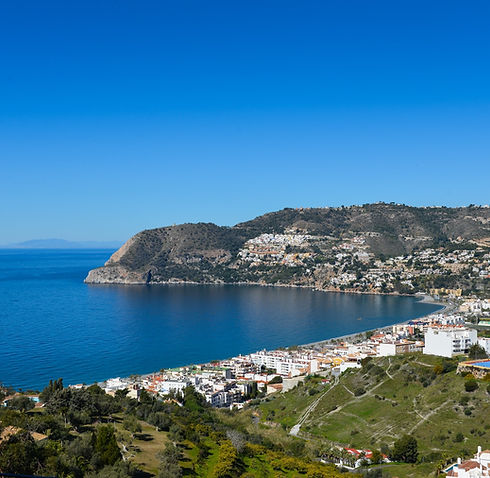
Motril: Sugar, Rum, and Harbour Magic
"The only place in Europe where sugar cane becomes liquid gold."
Motril is the heartbeat of the coast and was once the centre of Europe’s sugar industry. At the Ron Montero distillery, you can see how they still produce the continent's only local rum from sugar cane.
-
Foodie Tip: Head to the fishing port to taste the famous quisquillas de Motril (sweet local shrimp) straight from the morning catch.

Motril
The Capital of Liquid Sugar.
Visit Europe’s only artisanal sugarcane rum distillery and taste the 1,000-year history of the "sweet gold" that defined this unique microclimate.
Best for: Rum tastings and the perfect blend of mountain and sea.
Into the Valleys: Rio Verde & Vélez de Benaudalla
"Leap from cliffs into emerald-green pools."
Leave the salt air behind for an afternoon and head into the mountains of Vélez de Benaudalla. Here you’ll find the Jardín Nazarí, often called the "Small Generalife," a rare Islamic garden filled with the sound of trickling water.
-
Adrenaline Junkies: Rio Verde is the premier spot for canyoning, where you can slide down waterfalls into natural turquoise basins.
Into the Valleys
Rio Verde & Vélez de Benaudalla
Trade the saltwater for the sweet serenity of emerald pools and secret Moorish gardens. From high-adrenaline canyoning to the "Small Generalife," these valleys reveal a different side of the tropical coast.
Best for: Cliff jumping, freshwater swimming, and Islamic garden architecture.

3-Day "Tropical Soul" Itinerary
-
Day 1: The Historical Coast (Almuñécar & Salobreña)
-
Morning: Explore the 3,000-year-old Phoenician and Roman ruins in Almuñécar. Don't miss the view from Peñón del Santo.
-
Afternoon: Head to Salobreña to climb the 10th-century Moorish Castle.
-
Stay: Check for top-rated rooms at Hotel Helios (Almuñécar) or the designer Hotel Miba (Salobreña) on Expedia or Hotels.com.
-
Day 2: The Horseshoe Bay (La Herradura)
-
Morning: Dive into the crystal-clear waters of La Herradura. It is one of Spain’s premier spots for scuba diving and snorkeling.
-
Afternoon: Rent a kayak to explore the dramatic Cerro Gordo cliffs.
-
Stay: Look for charming guesthouses like La Tartana on Trip.com.
-
Day 3: Adventure & Sugar (Rio Verde & Motril)
-
Morning: Drive inland for canyoning at Rio Verde. It is considered one of the best descents in Andalusia, featuring natural slides and turquoise waterfalls.
-
Afternoon: Visit Motril to tour the Ron Montero rum distillery and sample the region's famous tropical fruits.
-
Stay: Find great deals at the Impressive Playa Granada Golf & Spa on Expedia.
Pro Tip: If you are booking, remember that spring (March–May) and fall (September–November) offer the most comfortable temperatures for both hiking and beach days.
Ready to Book

Costa de Almeria
"Spain’s Wildest Shore: Where the Desert Meets the Deep Blue."
Forget the crowded promenades of the Costa del Sol; the Costa Almería is Spain’s raw, sun-baked secret where the desert meets the deep blue Mediterranean. From the volcanic cliffs of a UNESCO biosphere reserve to the cinematic dunes where Hollywood legends were born, this 200km stretch of coastline offers a "slow travel" escape into the authentic heart of Andalusia.
The Best Time to Visit
The Costa Almería offers some of Europe's sunniest weather and most unique "slow travel" accommodations, from volcanic farmhouses to historic city sanctuaries.
With 320 days of sunshine a year, the "off-season" is just Almería’s way of saying it’s time to hike instead of swim.
-
Peak Beach Weather (June – August): Best for sunseekers, with temperatures between 25°C and 35°C and the warmest sea temperatures for swimming.
-
Active Adventures (May – June & September – October): These "shoulder" months are ideal for hiking the Cabo de Gata trails or exploring the Tabernas Desert without the intense summer heat.
-
Winter Escape (November – April): Mild days often reach 16°C to 18°C, perfect for photography and sightseeing under clear blue skies
-
May to June or September to October offer the perfect balance of warm water and manageable temperatures.
The Desert & Volcanic Shores (Almería)
“Where Europe’s only desert meets the untamed volcanic cliffs of the Mediterranean—a cinematic landscape of light and salt.”
Roquetas de Mar
Una Joya del Litoral Almeriense
Roquetas de Mar es una de las localidades turísticas más populares de la provincia de Almería.
Un destino clásico de sol y playa que sigue atrayendo a miles de turistas cada verano.
-
The Highlights: Historical & Cultural Landmarks.A 14th-century fortress that now serves as a vibrant cultural center. It offers panoramic ocean views and hosts various art exhibitions.
-
A highly accessible beach in the vibrant Aguadulce district, popular for its golden sands and lively atmosphere.
-
Paseo Marítimo: An extensive 3km promenade perfect for sunset strolls, cycling, or dining at various seaside restaurants.
-
Natural Beauty & Beaches: A 15km stretch of protected coastline featuring dunes, lagoons, and salt marshes. It is a prime spot for birdwatching (including flamingos) and quiet nature walks.
-

Alpujarra of the Almerian Mountains
The last refuge of Boabdil, the undiscovered Alpujarra, the Almería Alpujarra
-
The Highlights: The towns feature traditional, flat-roofed houses (terraos) designed to combat rain, linked by covered alleyways known as tinaos.
-
Almócita: Known for its whitewashed streets filled with flowers, wall paintings, and a well-preserved Moorish water cistern.
-
Padules: Famous for the Canales de Padules, natural, clear water channels formed by the Andarax River that are perfect for hiking.
-
Fondón: Features impressive stately homes (Casas Palaciegas) and is known for its traditional Alpujarran cuisine.
-
Bayárcal: The highest village in the province, offering panoramic mountain views and traditional 16th-century architecture.
-

Alpujarra Almeriense
The Hidden Mountain Oasis
Discover a serene world of whitewashed villages clinging to the slopes of Sierra Nevada. This "undiscovered" Alpujarra is a landscape of ancient water channels, terraced vineyards, and a deep-rooted Moorish legacy.
Best for: Slow travel, high-altitude wines, and authentic hiking.
Almería City: The Citadel Above the Sea
Trade your morning coffee for a 10th-century view at one of Europe’s largest Moorish fortresses.
-
The Highlights: The provincial capital is a walkable blend of history and modern Spanish life.
-
The Alcazaba: Towering over the city, this massive Moorish citadel offers lush gardens, ancient water cisterns, and sweeping views of the harbor.
-
Cathedral of the Incarnation: A unique fortress-cathedral built in the 16th century to protect worshipers from pirate raids.
-
Cable Inglés: Marvel at this early 20th-century iron pier, a striking piece of industrial heritage designed by a student of Gustave Eiffel.
-

Cabo de Gata-Níjar: Nature Without a Filter
Where else can you stand on a fossilised dune and watch the Mediterranean kiss a volcanic shore?
-
The Highlights: This protected natural park is home to some of Spain's most iconic "virgin" beaches.
-
Playa de Mónsul: Instantly recognizable by its massive volcanic rock formations, this beach served as a backdrop for Indiana Jones and the Last Crusade.
-
Playa de los Genoveses: A sprawling, horseshoe-shaped bay perfect for those seeking pure, untouched scenery without a beach umbrella in sight.
-
Arrecife de las Sirenas: Take a sunset drive to the Cabo de Gata lighthouse to witness these jagged volcanic reefs, named after the "mermaids" (monk seals) that once lived there.
-

Mojácar: The Bohemian White Village
Get lost in a labyrinth of whitewashed alleys where every corner tells a story of Moorish legends and artistic rebirth.
-
The Highlights: Perched high on a hilltop, Mojácar Pueblo is often cited as one of Andalusia’s most beautiful villages.
-
The Old Town: Wander through narrow, flower-filled streets to the Mirador del Castillo for panoramic views that stretch from the Sierra Cabrera to the sea.
-
Artistic Benches: Look for the newly installed "SentArte" benches—public art pieces placed at scenic viewpoints to encourage slow reflection.
-
Mojácar
The Labyrinth of the Indalo
Explore a cascading labyrinth of whitewashed houses perched high above the sea, where ancient Moorish legends meet a vibrant bohemian pulse.
Best for: Panoramic Mediterranean views and artistic inspiration.

The Tabernas Desert: A Slice of Hollywood
Step out of Spain and into the Wild West in Europe’s only true desert.
-
The Highlights: Just 30 minutes from the coast, the arid badlands of Tabernas have stood in for the American West, North Africa, and even alien planets.
-
Mini Hollywood (Oasys): Visit the original film sets of The Good, the Bad and the Ugly to watch live cowboy shootouts and explore a western town frozen in time.
-
Cinematic Trails: Hike through the sculpted ravines and sun-scorched canyons that have hosted everyone from Clint Eastwood to Harrison Ford.

The Tabernas Desert
The Silent Cinema of the Badlands
Step into Europe’s only true desert—a starkly beautiful landscape of sun-scorched canyons that once served as Hollywood's Wild West frontier.
Best for: Cinematic history and rugged, off-road adventures.
Tapas & Taste: The Flavor of the Desert
In Almería, the best things in life are free—including the tapa that comes with your beer.
-
The Highlights: Almería is one of the last bastions of the traditional "free tapa" culture.
-
Local Staples: Try a Cherigan (toasted bread with toppings), sun-dried octopus (pulpo seco), or a hearty rabbit stew with gurullos pasta.
-
Central Market: Head to the Almería Central Market to sample fresh Mediterranean seafood, local cheeses, and artisanal honey.
Tapas & Taste
The Flavor of the Desert
Indulge in Almería’s unique culinary tradition, where every glass of crisp local wine or beer is served with a creative, complimentary taste of the region.
Best for: Authentic Andalusian soul and sun-dried delicacies.

Where to Stay,Coolest Boutique Stays
Skip the high-rises; these hidden gems let you sleep in volcanic calderas or historic Moorish quarters.
-
Cortijo Boutique Siete Calas (Rodalquilar): An adults-only oasis in the heart of Cabo de Gata, this restored farmhouse offers panoramic views of Playazo Beach and a volcanic caldera.
-
Boutique Hideaway Cortijo El Sarmiento (Mojácar): A highly-rated, tranquil B&B for adults featuring an outdoor pool and personalised tips from hosts for local dining.
-
Aire Hotel & Ancient Baths (Almería City): A stylish boutique hotel in the historic center where you can unwind in ancient-style thermal baths after a day of exploring
-
Boutique Hotel El Olivar (Mojácar Pueblo): Located in the heart of the old town, this spot is celebrated for its spectacular terrace views and proximity to local restaurants.
Traveler’s Tips
-
Getting Around: While buses connect major hubs like Almería Airport and Mojácar, a rental car is highly recommended to reach the hidden coves of Cabo de Gata.
-
Pro Tip: Most tapas bars in the city close between 4:00 PM and 8:00 PM for the siesta, so plan your "crawl" for late evening!
Customized 3-day itinerary
This 3-day itinerary balances the rugged volcanic coast, the cinematic desert, and the Moorish charm of the capital, using Almería City as your central base.
Day 1: The Volcanic Coast (Cabo de Gata)
-
The Hook: Trade your GPS for a dusty track and discover why these "virgin" beaches are the soul of the Mediterranean.
-
Morning: Drive to Playa de Mónsul and Playa de los Genoveses. These are untouched by development; bring plenty of water and snacks.
-
Afternoon: Visit the Arrecife de las Sirenas near the lighthouse for the best photos of jagged volcanic reefs.
-
Evening: Have a sunset dinner in the tiny fishing village of San José. Try the fresh "Gallo Pedro" (John Dory) at a seaside terrace.
Day 2: Hollywood in the Badlands (Tabernas & Mojácar)
-
The Hook: Walk the same dusty streets as Clint Eastwood before losing yourself in a labyrinth of whitewashed hills.
-
Morning: Head to the Tabernas Desert. Visit Oasys MiniHollywood to see live western shows on the original sets of legendary Spaghetti Westerns.
-
Afternoon: Drive up to Mojácar Pueblo. Park at the bottom and walk up into the village to explore the flower-drenched alleys and the Plaza Nueva viewpoint.
-
Evening: Enjoy a cocktail at a "chiringuito" (beach bar) on Mojácar Playa as the moon rises over the Alboran Sea.
Day 3: Fortresses & Flavors (Almería City)
-
The Hook: Step back 1,000 years into a Moorish citadel before diving into the city’s legendary (and free!) tapas scene.
-
Morning: Tour the Alcazaba of Almería. It’s the second-largest Muslim fortress in Spain—give yourself at least two hours to wander the gardens and battlements.
-
Afternoon: Visit the Shelters of the Civil War (Refugios), a fascinating underground network of tunnels, followed by a walk past the Cable Inglés iron pier.
-
Evening: Tapas crawl! Start at Casa Puga (open since 1870) or Taberna Nuestra Tierra. Remember: in Almería, you usually get to choose a free tapa with every drink.
Cabo de Gata Chronicles


Mediterranean East Coast
Where the sun embraces the sea.
The east coast of Spain, often called the Levante, stretches along the Mediterranean Sea and is famous for its diverse "Costas," vibrant cities like Barcelona and Valencia, and sun-drenched beaches
Embarking on a road trip along's Mediterranean coast promises abundant sunshine, beautiful beaches, and numerous exciting destinations. We recommend exploring the coastline at your leisure, without a schedule, allowing for spontaneity. Here are some tips on attractions to discover along the way, helping you tailor your route to your preferences Embrace the freedom of the open road and enjoy an unforgettable adventure.
Murcia & Costa Calida
mediteranean Coast, Cartagena and Quiet Towns
The sun shines for over 3,000 hours a year, and its coast is bathed by two warm seas. In fact, its coastline is known as the Costa Cálida ( Warm Coast ), and there you'll find long beaches and small coves with a wide range of leisure, sports, and wellness activities.
One of the most attractive areas is La Manga del Mar Menor , a destination where you can relax and enjoy the sea and the activities at its Nautical Station. You'll also find long, white beaches like those of San Pedro del Pinatar ; semi-wild coves like those of Cartagena ; intriguing landscapes like the erosions of Mazarrón ; and fishing villages like Águilas .
The region is also known for its diverse health and beauty offerings. Many of its beaches are considered open-air spas due to the hypersaline waters of the Mar Menor and its mud. In addition, the region boasts several important spa resorts.
Dividing the Murcia Region for tourism is best done by focusing on four main zones:
Costa Cálida (The Coast):
Features 155 miles of coast, including the 22km long La Manga del Mar Menor saltwater lagoon, perfect for water sports and therapeutic mud baths.
Key areas include Cartagena (historic port), Cabo de Palos, and the natural park of Calblanque.
-
Murcia City & The Valley: Focus on the city center, the Cathedral, and the riverside. The area is known for the "Huerta" (fertile farmland) and cultural sights.
-
North/Northeast (Wine Country): Famous for the Denominación de Origen (D.O.) wines in Jumilla and Yecla, characterized by Monastrell grapes and rural landscapes.
-
Northwest & Inland Heritage: Areas like Caravaca de la Cruz (a Holy City) and Cehegín offer historical, cultural, and pilgrimage tourism.
-
Nature & Inland Regions: Sierra Espuña provides hiking and mountainous scenery, while the Ricote Valley offers lush, fertile landscapes and historical Moorish towns.
Suggested Itinerary Focuses
-
Culture & History: 2 days in Murcia City & Cartagena, 1 day in Caravaca de la Cruz.
-
Nature & Adventure: Hiking in Sierra Espuña, rafting/hiking in the Almadenes Canyon.
-
Relaxation: Wellness in the Balneario de Archena (spa) and beaches of La Manga.
A 3–5 day trip allows time to split stays between the coast and the inland historical areas, utilizing a rental car for easy access to these distinct zones.
Costa Calida
The Costa Cálida which translates to Warm Coast is approximately 250 kilometres of coastline in the Spanish province of Murcia, where the first signs of human civilization can be traced back as far as one and a half million years. In more recent times, native Iberian tribes inhabited the coastline, trading with other Mediterranean cultures including the Greeks and Romans. However, the region was only put on the map after the arrival of the Carthaginians in 230 BC, when they founded a trading port at Cartagena.
In 713 AD the Moors (Arabs) invaded the region after defeating the Hispanic-Visigoth army of Teodomiro in Cartagena. Then, in 815 AD the Caliph of Cordoba, Abderraman II founded the city of Murcia on the site of a former Roman colony. During the years of Arab occupation there were many advances in art and architecture, importation, and irrigation techniques needed to transform the arid landscape into a successful agricultural community. The Moors were so successful in exploiting the Segura River and irrigating the land, their system stills forms the basis for current watering throughout the region. Murcia and the Costa Cálida were re-conquered in 1243 by Alfonso X of Castilla and Leon, with many changes ahead. Murcia grew and prospered, transforming itself into a political and economic centre.
By the 18th century the city of Murcia was one of Spain’s architectural treasures, with elaborate churches, cathedrals and palaces. Then in 1810 disaster struck with the looting of Murcia city by Napoleonic troops. This was followed by epidemics of plague and cholera sending Murcia province into decline until modern times. These days the Costa Cálida is largely sustained by citrus fruit farming and associated industries. While industrial development is evident inland, the coastline thrives on tourism and many foreigners buying homes. This has injected a cosmopolitan feel to the region, while retaining much of its community feel and traditional culture.
Cultural Heritage
The Costa Cálida offers an extensive cultural panorama, with its wide variety of museums and historical collections, theatres, auditoriums and exhibition halls. From the long history of the Region of Murcia a great artistic heritage has been preserved. In Cartagena you will find many influences of Roman times, through roads, public buildings and a magnificent theatre. Since the dawn of Christianity there are still Paleo-Christian remains in Algezares and Roman Visigothic ruins in the city of Begastri.
The Islamic presence has left many traces in Murcian culture, with the most interesting of these being found in the Medina Siyasa located in Cieza. Medieval-Christian Murcia is represented in numerous castles around the Costa Cálida like the Torre Alfonsina in Lorca, the fortress in Moratalla, and the defensive castle in the mountain town of Aledo. During the Renaissance a multitude of religious buildings were built. One example is the magnificent church of San Patricio in Lorca. The neoclassical and modernist era has left its greatest influence on the Costa Cálida, in the grand Casino of Murcia, the beautiful city of La Union, and in the historical buildings scattered around the city of Cartagena.
One building however, that is truly breathtaking and depicts Murcian culture is the Murcia Cathedral, with its magnificent tower standing 92 metres high providing panoramic views of the city, it is the most representative landmark of the city. Other aspects of the traditions and culture from the Murcia Region can be found in the network of art galleries, archaeological museums and exhibitions around the Costa Cálida. The most famous being the Museum of Fine Arts in Murcia, the collections of sacred art in the Murcia Cathedral, and the Naval Museum located in the port of Cartagena.
Gastronomy
The Region of Murcia treasures a gastronomy made up of exceptional local quality products. The varied and imaginative recipes reflect the influences of the many communities that have settled in the region over the centuries. The geographical diversity of the Murcia region infuses a huge variety of dishes made from locally sourced produce, like fish and shellfish from the Mar Menor and Mediterranean sea, fruits and vegetables from the countryside, and traditional meats and fine wines which are recognized as quality nationally and internationally.
The region produces and exports highly demanded products such as Calasparra rice, wines from Bullas, Jumilla and Yecla, salamis, vegetables, citrus fruits, jams and preserves. All this is topped off by a culinary art of gastronomic excellence in traditional dishes like Caldero, Migas and Paparajotes. The migration of different civilizations and cultures through the Costa Cálida has left a lasting gastronomic influence, still present in the cooking of today. Hence, we can find clear similarities between current typical dishes and foods from the ancient Greco-Roman times. Many of the traditional crops of the Region of Murcia were used in the Roman era such as the vine, the olive tree, the fig tree and the artichoke. Later, the settling of the Arab culture in the Mediterranean brought a tremendous heritage of flavours and aromas to the Murcian cookbook, with a long list of foods and recipes which were named by the Muslims that still remain the same today. After the discovery of the Americas, a series of products from the new continent were introduced like the tomato and the pepper, which quickly became essential in the local gastronomy.
Local Vineyards
The Region of Murcia benefits from excellent climate conditions, great soil and good human resources for grape growing and producing quality wines. There are over 47,000 hectares of land in the Murcia region dedicated to the cultivation of the perfect vine. The three original main areas for wine production on the Costa Cálida are in Bullas, Jumilla and Yecla. Though there is also a strong presence of vineyards in the regions of Abanilla and in the countryside of Cartagena, where they are known as “wines of the earth”. The variety of good soil and the perfect weather conditions enable the production of a wide range of red, rose and white wines.
The typical wines of this area are derived from the Monastrell grape variety, bringing us the popular wines such as Cabernet Sauvignon and Chardonay. Wine Tourism or “Enoturismo” in Spanish is becoming evidently popular on the Costa Cálida as local vineyards and bodegas, large and small, open their doors and give you a chance to discover, explore and taste their fine wines from the region. The unique experience of Wine Tourism makes an ideal day out, giving you the opportunity to see a new area, learn about how vineyards and wine cellars work, and experience fine wine tasting accompanied by local tapas in a beautiful countryside setting. A bodega visit must be one of the nicest ways to soak up some Spanish culture and tradition.
Top Travel Destinations on the Costa Blanca and Valencia: City Summary
Valencia
The regional capital, Valencia, is known for its blend of historic and modern attractions. Highlights include the Valencia Cathedral, La Lonja de la Seda (a UNESCO World Heritage site), and the Serranos Towers. The city also offers vibrant cultural experiences and renowned cuisine.
Alicante
Alicante is a lively coastal city famous for its beautiful beaches, the imposing Santa Bárbara Castle, and a bustling marina. The city’s old town, Barrio de la Santa Cruz, is filled with colorful houses and narrow streets.
Benidorm
Benidorm is a major resort city on the Costa Blanca, popular for its skyscraper skyline, sandy beaches, and vibrant nightlife. Family attractions include theme parks like Terra Mítica and Terra Natura.
Altea
Altea is a picturesque town known for its whitewashed houses, cobbled streets, and the iconic blue-domed church. The old town offers stunning views of the Mediterranean.
Calpe
Calpe is recognized for the dramatic Peñón de Ifach rock formation, sandy beaches, and a charming old town. It’s a favorite spot for both relaxation and outdoor activities.
Denia
Denia boasts a historic castle, a lively harbor, and easy ferry connections to the Balearic Islands. Its beaches and gastronomy make it a popular destination for travelers.
Javea (Xàbia)
Javea offers a mix of sandy and rocky beaches, a charming old town, and scenic coastal walks. The Montgó Natural Park nearby is ideal for hiking and nature lovers.
Town/City Natural Attractions & Historical Highlights
Several Costa Blanca towns stand out for offering a harmonious blend of natural beauty and historical sites. Here’s a summary of the best options:
Denia
Montgó Natural Park, beaches, maritime port
Historic castle, old town, UNESCO Creative City of Gastronomy
Calpe
Peñón de Ifach Natural Park, Mediterranean views
Fishing traditions, historic old town, and ancient ruins
Altea
Hilltop viewpoints, Mediterranean bay, scenic coast
Whitewashed old town, cobbled streets, Church of Nuestra Señora del Consuelo
Guadalest
Mountain scenery, turquoise reservoir
Medieval castle (Castillo de San José), ancient city gate, historic village
Jávea
Montgó Natural Park, beaches, sea caves
Gothic church, traditional old town, historic architecture
Villajoyosa
Beaches, coastal scenery, colorful houses
Ancient fishing village, historic-artistic center, castle ruins, Church of the Asuncion
Alicante
City beaches, panoramic sea views from castle
Castillo de Santa Bárbara, old quarter (El Barrio), historic squares and churches
Benissa
Rocky coves, coastal walks, rural landscapes
Medieval old town, historic buildings, traditional squares


Gastronomic Highlights
Several Costa Blanca towns are celebrated for their outstanding gastronomy, each offering unique culinary experiences rooted in Mediterranean tradition and local produce:
Alicante
Named Spanish Capital of Gastronomy 2025; renowned for its rice dishes (arroz a banda, black rice, caldero), fresh seafood, local wines, and over 1,700 restaurants
Dénia
UNESCO Creative City of Gastronomy; famous for red prawns, arròs a banda, espencat, fish soup, and over 300 restaurants
Calpe
Known for its seafood-based cuisine, fishing traditions, and a growing reputation as a culinary destination with Michelin-starred restaurants
Jávea
Noted for fresh fried fish, seafood, and traditional Mediterranean dishes, benefiting from its coastal location.
These towns are top choices for food lovers seeking authentic Costa Blanca cuisine, featuring a range of traditional dishes, seafood, and innovative fine dining experiences.

Valencia Travel Guide
Why Visit Valencia?
Valencia’s blend of history, innovation, sun-soaked beaches, and mouthwatering cuisine make it a must-visit destination for any traveler seeking the authentic heart of Spain. Whether you’re exploring ancient streets, marveling at modern architecture, or savoring a plate of paella by the sea, Valencia promises memories to last a lifetime.
Travel Tips
-
Getting Around: Valencia is walkable, with excellent bike lanes and a reliable metro/tram system.
-
Best Time to Visit: Spring (March for Las Fallas) and early autumn offer pleasant weather and vibrant festivals.
-
Language: Spanish and Valencian are spoken; English is widely understood in tourist areas.
-
Local Etiquette: Lunch is typically between 2–4pm, and dinner starts late (after 8:30pm).
Best Time to Visit Valencia
Spring (March to June):
This is the ideal season for visiting Valencia. Temperatures are mild (18–26°C), rainfall is low, and the city’s gardens are in full bloom. Major events like Las Fallas take place in March, making this a vibrant and festive time to visit
Autumn (September to November):
Another excellent period, with pleasant temperatures (28°C in September down to 20°C in November) and fewer crowds. The weather remains comfortable for outdoor activities and exploring the city’s parks and beaches
Summer (July and August):
Best for beach lovers, with hot weather (30–33°C). However, it can be humid, and some traditional businesses may close as locals leave for holidays. Beach bars and summer festivals are in full swing
Winter (December to February):
Mild by European standards (14–16°C), but cooler than other seasons. It’s quieter, and while you won’t swim, you can still enjoy the city’s sights without crowds

How to Get to Valencia
By Air:
Valencia Airport (VLC) is just 8 km from the city centre and offers regular flights to major Spanish and European cities. From the airport, you can reach the city centre by metro, taxi, or bus.
By Train:
Valencia has two main train stations:
-
Estación del Norte: Serves local and regional trains.
-
Joaquín Sorolla: Handles high-speed AVE trains from Madrid, Cuenca, Seville, Córdoba, and long-distance ALVIA and EUROMED services, including direct connections from Barcelona.
By Bus:
Long-distance buses connect Valencia with cities across Spain. The main bus station is centrally located and served by several companies, including Avanza.
By Car:
Valencia is accessible via modern motorways:
-
AP-7: Runs along the Mediterranean coast, connecting Valencia with Barcelona.
-
A-3: Connects Valencia with Madrid.
By Sea:
Valencia’s port is a major hub for ferries to the Balearic Islands and Italy, as well as cruise ships
From Madrid:
-
Train: The high-speed AVE train is the fastest and most convenient, taking about 1.5–2 hours.
-
Bus: Takes just over 4 hours and is the cheapest option
-
Flight: Technically fastest, but when airport transfers are included, the train is usually quicker overall
From Barcelona:
-
Train: Direct high-speed and regional trains connect Barcelona Sants to Valencia Joaquín Sorolla.
-
Bus and car: Both are viable options along the AP-7 motorway

Getting Around in Valencia
Valencia is a highly accessible city with a variety of efficient, sustainable, and affordable transport options. Here’s how you can explore the city with ease:
Public Transport
-
Metro & Tram:
Valencia’s Metrovalencia network includes 6 metro lines and 4 tram lines, connecting the city centre, neighbourhoods, beaches, and even the airport. The system is modern, air-conditioned, and reliable, with frequent service from early morning until late at night (typically 5:00 am–11:00 pm on weekdays, later on weekends).
Fares range from €1.50 for a single ticket in Zone A (city centre and beach) to €4.80 for three zones. Multi-journey passes like the SUMA 10 (€8 for 10 trips) and unlimited daily passes are available. The Valencia Tourist Card offers unlimited travel for 24, 48, or 72 hours and includes museum discounts and other perks. -
Bus:
Valencia has 60 city bus lines and 180 metropolitan routes, covering all neighbourhoods and major attractions. Buses run frequently and are integrated with the metro and tram system, so you can transfer easily using the same travel card. -
Commuter Trains:
Six commuter train lines connect Valencia with nearby towns and the airport, making day trips easy.
Tourist Cards & Tickets
-
Valencia Tourist Card:
Offers unlimited travel on buses, metro, trams, and commuter trains for 24, 48, or 72 hours, plus free museum entry and discounts at attractions and shops. It also covers the airport route, which would otherwise cost around €15 by taxi each way. -
SUMA Card:
Available at tobacco shops, this card costs €8 for 10 rides on any public transport within Zone A (city centre). It’s a flexible and cost-effective option for short stays.
Cycling
Valencia is one of Spain’s most bike-friendly cities, with over 200 km of cycle paths and a flat layout perfect for cycling.
-
Valenbisi: The city’s public bike-sharing system, ideal for short rides.
-
Bike Rentals: Numerous shops offer hourly or daily rentals.
-
Where to Ride: Dedicated cycle paths, “ciclocalles” (bike-priority streets), and the scenic Turia Gardens greenway are popular routes.
Taxis & Rideshares
-
Taxis:
Readily available and can be hailed on the street or booked via apps. Fares are about €1 per kilometre. -
Rideshare Apps:
Cabify and Free Now operate in Valencia, offering both standard and luxury vehicles. Uber’s availability is limited or non-existent; local apps are more reliable.
Walking
Valencia’s compact size and pedestrian-friendly historic centre make walking a pleasant and practical way to explore, especially for sightseeing in the Old Town and along the Turia Gardens.
Summary:
Getting around Valencia is easy thanks to its integrated metro, tram, bus, and bike networks, as well as affordable travel cards like the Valencia Tourist Card and SUMA. Walking and cycling are also excellent options in this compact, flat, and sustainable city.

Top Attractions
-
City of Arts and Sciences
This futuristic complex is Valencia’s architectural icon, featuring the Oceanogràfic (Europe’s largest aquarium), the interactive Principe Felipe Science Museum, and the stunning Palau de les Arts Reina Sofía opera house. Don’t miss a stroll through the surrounding Turia Gardens. -
Mercado Central (Central Market)
One of Europe’s largest and most spectacular fresh food markets, housed in a beautiful modernist building. Sample local produce, fresh juices, and authentic tapas as you soak up the lively atmosphere. -
La Lonja de la Seda (Silk Exchange)
A UNESCO World Heritage Site, this late Gothic masterpiece reflects Valencia’s golden age as a medieval trading hub. Marvel at its intricate stonework and palm tree-inspired columns. -
Valencia Cathedral & El Micalet Tower
Climb the 207 steps of El Micalet for panoramic city views. Inside the cathedral, discover a mix of architectural styles and see the chalice claimed to be the Holy Grail. -
Barrio del Carmen
Wander the labyrinthine streets of this historic quarter, where medieval buildings, Moorish influences, vibrant street art, and trendy bars create a unique atmosphere. -
Oceanogràfic Valencia
Dive into Europe’s largest aquarium, home to beluga whales, sharks, dolphins, and immersive underwater tunnels. -
Albufera Natural Park
Escape to this tranquil lagoon just outside the city, famous for its sunsets, boat rides, and as the birthplace of paella. -
Valencia’s Beaches & Marina
Relax on golden sands at Playa de la Malvarrosa or Playa de las Arenas, or enjoy the lively Marina with its restaurants and sea views
Cultural Experiences
-
Flamenco Shows
Experience the passion of flamenco in intimate tablaos across the city, with soul-stirring music and dance. -
Muixeranga Human Towers
Witness this breathtaking Valencian tradition—UNESCO-recognized human pyramids performed during festivals. -
Traditional Music & Dance
Enjoy performances of folk dances like the jota and fandango, often accompanied by unique Valencian instruments. -
Festivals
-
Las Fallas (March): Explosive celebrations with giant papier-mâché sculptures, fireworks, and the dramatic burning of the fallas.
-
Feria de Julio (July): A month-long summer festival with concerts, parades, and fireworks.
-
Día de la Comunidad Valenciana (October 9): Parades and festivities marking the city’s historic conquest
-

Valencian Cuisine: What to Eat
-
Paella Valenciana
The region’s signature dish, traditionally made with chicken, rabbit, green beans, and sometimes snails. Try it in its birthplace, Albufera. -
Fideuà
A seafood dish similar to paella but made with noodles instead of rice. -
All i Pebre
A rustic stew of eel, potatoes, garlic, and paprika, best enjoyed in the Albufera area. -
Esgarraet
Roasted red peppers and salted cod, drizzled with olive oil and garlic—perfect as a tapa. -
Other Local Specialties
-
Arròs al forn (baked rice with sausages and chickpeas)
-
Arròs negre (rice with squid ink)
-
Coques (savory pastries)
-
Horchata (refreshing tiger nut drink) with fartons (sweet pastries)
-

Where to stay in Valencia
Some Recommended accomodation in Valencia

-
This ultra-stylish hotel stands out for its central location in Ciutat Vella, making it ideal for first-time visitors who want to be close to Valencia's main attractions, shopping, and dining. Its modern design, spacious rooms, and rooftop restaurant offer both comfort and a vibrant city experience. Some may find it on the trendier side, but its amenities and service are consistently praised.

-
Set in a beautifully restored palace with Roman, Moorish, and Gothic architectural elements, Caro Hotel offers a unique blend of history and contemporary luxury in a quiet corner of the Old Town. It's perfect for travelers seeking a boutique, design-forward stay with a sense of place, though it may be quieter than some centrally located options

-
Known for its stylish interiors, attentive staff, and prime location in the heart of the old town, this boutique hotel is a favorite among travelers who appreciate personalized service and cozy, well-appointed rooms. Its proximity to attractions and local dining make it a convenient and charming choice, though boutique ambiance may mean fewer large-scale amenities.

-
This Marriott Autograph Collection property combines upscale boutique vibes with the reliability of a global brand, featuring vintage-inspired décor and local art. Its central location near Carrer Colón puts you steps from shopping and restaurants, making it a great choice for those who want a blend of luxury, history, and convenience.

-
Located in the lively Ruzafa neighborhood, this chic hotel offers stylish rooms, some with terraces, and complimentary loaner bikes, making it ideal for those looking to explore Valencia's trendy side. It's LGBTQ+ friendly and well-suited for travelers who enjoy vibrant local culture, though it's slightly removed from the historic core.

-
This modern hotel features a spa, rooftop pool, and easy access to public transportation, making it a solid choice for those seeking comfort and relaxation after sightseeing. Its location is slightly outside the historic center but offers excellent amenities for families or business travelers.

Costa Blanca Travel Guide
Table of Content
1. Where is Costa Blanca Located
2. Major Cities and Highlights

Exploring the Costa Blanca
The Costa Blanca district of Spain spans from south of Valencia, past the shores of Benidorm and Alicante to Torrevieja in the south.
The Costa Blanca has two striking areas, Costa Blanca North (also known as the Marina Alta) and Costa Blanca South (the Marina Bajo). The Northern part of the Costa Blanca features sea side towns and resorts such as Dénia, Jávea and Moraira to the far north. Further south larger resorts like Altea, Calpe, Benidorm, Alicante and Torrevieja attract millions of tourists annually.
Costa Blanca is decidedly a spectacular part of Spain in terms of nature, beaches and culture. With clean and immaculate beaches dipping into the crystal clear Mediterranean sea, flat fertile valleys and plenty of charming villages buzzing with traditional Spanish cultural events.
White sandy beaches, pleasant resorts and relatively cheap accommodation are the main features of the Costa Blanca from a traveler's perspective. The area is further blessed with stunning nature, hidden coves, the odd golf course and graciously adapted domestic areas. The grand mountain ranges provides vivid scenery to this gorgeous area and the ancient villages scattered along the coast has plenty of authentic Spanish life to be explored. The popularity of the Costa Blanca as a holiday destination is easy to comprehend.
Where is the Costa Blanca Located
Costa Blanca, meaning "White Coast," is a stretch of over 200 kilometers of Mediterranean coastline in the province of Alicante, part of the Valencian Community in southeastern Spain. It extends from the town of Dénia in the north to Pilar de la Horadada in the south, bordered by the Costa de Valencia to the north and the Costa Cálida to the south

Major Cities and Highlights
Costa Blanca is renowned for its vibrant cities, charming towns, and diverse attractions along Spain’s southeastern Mediterranean coast.
Here are the most notable cities and their highlights:
Alicante
Santa Bárbara Castle, Explanada de España promenade, Old Town (El Barrio), San Juan Beach, Mercado Central, Santa Cruz district, Contemporary Art Museum.
Benidorm
Levante and Poniente Beaches, Old Town, lively nightlife, Aqualandia water park, Terra Mítica theme park, Balcony of the Mediterranean, San Jaime and Santa Anna churches.
Altea
White-washed houses, blue-domed Church of Nuestra Señora del Consuelo, cobblestone streets, panoramic viewpoints (Mirador de los Cronistas), tranquil pebbled beaches.
Dénia
Hilltop castle, fishing port, sandy and rocky beaches, Montgó Natural Park, UNESCO City of Gastronomy.
Calpe
Peñón de Ifach rock, Roman ruins (Baños de la Reina), salt flats with flamingos, old town, sandy beaches (Levante, La Fossa), marinas.
Elche
UNESCO-listed Palm Grove (Palmeral), Basilica of Santa Maria, Huerto del Cura Garden, vibrant old town squares.
Torrevieja
Pink salt lakes, beaches, promenade, submarine museum, sunset views from the pier.
Villajoyosa
Colorful old town houses, chocolate factories (Valor), quiet sandy beaches, fishing heritage.
Jávea (Xàbia)
Old fishing village charm, medieval old town, San Bartolomé church, Montgó Natural Park, coves and beaches (Cala Portixol, Cala Ambolo).
Moraira
Secluded beaches (El Portet), small-town charm, Castillo de Moraira, relaxed atmosphere.
Additional Noteworthy Towns
-
Benissa: Rich history, scenic coastline, authentic local experiences.
-
Guardamar del Segura: Long sandy beaches, dunes, pine forests.
-
Santa Pola: Salt lakes, fishing port, Tabarca Island excursions.
-
Orihuela Costa: Popular for golf courses and beaches.
These cities and towns together offer a blend of history, culture, natural beauty, and leisure, making Costa Blanca a diverse and attractive destination for all types of travelers.
Why Visit Costa Blanca?
-
Stunning Beaches:
Over 200 km of coastline with golden sands, crystal-clear waters, and Blue Flag beaches. -
Mild Mediterranean Climate:
More than 300 days of sunshine per year, making it a year-round destination. -
Rich Culture & History:
Ancient castles, charming old towns, Moorish architecture, and vibrant festivals. -
Outdoor Activities:
Hiking in natural parks (Sierra Helada, Montgó), water sports, golf, and cycling. -
Gastronomy:
Renowned for fresh seafood, traditional paella, and local wines enjoyed in seaside restaurants. -
Family-Friendly Attractions:
Theme parks, water parks, and safe, accessible beaches. -
Quality of Life:
Safe, well-connected, and offering excellent healthcare and education infrastructure.

How Long to Spend in Costa Blanca
The ideal length of stay in Costa Blanca depends on your interests, pace, and how much of the region you want to explore. Here’s a guide to help you plan:
Short Break (3–4 Days)
-
Perfect for: A quick getaway focused on one or two cities, beach relaxation, and sampling local cuisine.
-
Sample Itinerary:
-
Day 1: Explore Alicante’s Old Town, Santa Bárbara Castle, and Postiguet Beach.
-
Day 2: Day trip to Tabarca Island or visit Elche’s UNESCO-listed Palm Grove.
-
Day 3: Discover Benidorm’s beaches and vibrant nightlife, or visit Altea for its charming old quarter.
-
Optional Day 4: Head to Calpe for the Peñón de Ifach hike and seaside lunch.
-
Classic Visit (5–7 Days)
-
Perfect for: A more comprehensive experience, including several cities, natural parks, and cultural sites.
-
Sample Itinerary:
-
Day 1: Alicante highlights.
-
Day 2: Dénia and Jávea for coastal scenery and local gastronomy.
-
Day 3: Calpe and Altea—mountain views, beaches, and historic towns.
-
Day 4: Guadalest and Villajoyosa—mountain village and colorful coastal town.
-
Day 5: Benidorm’s attractions or a nature hike in Sierra Helada.
-
Days 6–7: Relax on beaches, visit markets, or take a boat trip.
-
Extended Stay (10+ Days)
-
Perfect for: Slow travel, in-depth exploration, or combining relaxation with day trips.
-
What to Do:
-
Visit all major towns (Alicante, Benidorm, Dénia, Altea, Calpe, Elche, Torrevieja).
-
Enjoy multiple beaches, hiking trails, and water sports.
-
Take excursions to less-touristy villages and natural parks.
-
Immerse yourself in local festivals, markets, and gastronomy
-

When to Visit Costa Blanca
-
Best Time: May to October offers warm temperatures, abundant sunshine, and minimal rainfall—perfect for beach activities and outdoor exploration.
-
Spring (March–May): Pleasant weather (18–24°C), blooming landscapes, and fewer tourists—great for hiking and sightseeing.
-
Summer (June–August): Hot and lively, with temperatures up to 30°C, ideal for sunbathing and swimming, but also the busiest season.
-
Autumn (September–October): Warm sea, mild temperatures, and fewer crowds—excellent for a relaxed visit.
-
Winter (November–February): Mild and quieter, with temperatures between 10–18°C, suitable for those seeking tranquility and off-season rates.
Costa Blanca is a destination that combines natural beauty, cultural richness, and a welcoming atmosphere, making it a top choice for travelers seeking both relaxation and adventure on Spain’s Mediterranean coast.


Barcelona is one of the most popular destinations in Europe.
When it comes to the buzzing Catalan capital, a few days’ stay is never enough. These are the experiences that should be on every visitor’s list
Boasting a reputation as one of the most attractive cities in Europe, Barcelona celebrates its role as the capital of Catalonia. The city’s cosmopolitan and international vibe makes it a favourite city for many people around the world. The city is especially known for its architecture and art—travellers flock from around the world to see the iconic Sagrada Família church and other modernist landmarks designed by Gaudí. These Barcelona travel tips just scrape the surface of what can be found in the vibrant city!
Barcelona is separated into many different districts and neighborhoods; each offering a unique flavor of the city! The most popular Barcelona neighborhoods worth visiting are:
For behind-the-scenes tours, check out Get Your Guide.

Also known as the Gothic Quarter or heart of Barcelona, this is the oldest part of the city incorporating the popular area of Las Ramblas. Las Ramblas is usually filled with tourists, as it is the central boulevard that cuts through the heart of the city. Visit the museum, showcasing the first Roman foundations, and enjoy the superb seafront with its boardwalk and beach.
Ciutat Vella is the oldest part of the city and is home to most of Barcelona’s attractions. The history of Ciutat Vella tells the story of Roman Barcino, the first city walls and medieval Barcelona. Barcelona was the city that dominated the Mediterranean as the capital of the kingdom.
The district of Ciutat Vella is characterised by its famous promenade of Las Ramblas, its Gothic Cathedral and the churches of Santa Maria del Mar and Santa Maria del Pi, the trendy shops of El Born, the fishermen of La Barceloneta and the multicultural Raval.
If you want to get to know the district, read this guide to Ciutat Vella, which has all kinds of useful information, interesting sights, and the best tips from locals.
Boutique Hotels in Ciutad Vella

Located in front of Canaletas fountain, the hotel's identity is based on its legend. Whoever drinks its water will fall in love with this charming city and will return to live it again. Because on this promenade that never sleeps, and has been connecting the center of the city with the sea for centuries, you can still breathe all the stories that have filled it.
Yurbban Ramblas Boutique Hotel

Bang in the centre of the Barcelona bustle, Grand Hotel Central provides respite for many a weary traveller, shopper or culture-hound. An imposing 1920s façade masks a warm and well-lit modern retreat, where visitors can watch the city unfold from the eighth-storey roof terrace, then swing back down into the urban action, a doorway’s width away.

Nestled between two more sedate brick buildings, urbanista boutique stay Yurbban Trafalgar Hotel is for the effortlessly hip creative crowd. The bright and modern rooms have a slightly industrial edge, and the poolside rooftop bar is the stuff nights under the city stars are made of.
Yurbban Trafalgar Hotel

Outside the original city walls, this area of the city is where many of the best modernist architecture is to be found. It is also home to many of the best bars and clubs in the city.
Eixample is made up of the following barris (neighbourhoods): L’Antiga Esquerra De L’Eixample | La Nova Esquerra De L’Eixample | Dreta De L’Eixample | El Fort Pienc | Sagrada Família | Sant Antoni. It is a vibrant district with many sights to see, especially in terms of architecture. Eixample also has many restaurants and shops, with some of the city’s chicest addresses.

Boutique Hotels in Eixample

More Scandinavian than Spanish, Ohla Eixample is a cool, contemporary hotel in its namesake district, close to Barcelona's shopping heaven: Passeig de Gràcia. Sundowners are served on the roof, there’s a Michelin-starred restaurant, and avant-garde interiors that are straight out of the pages of a magazine.
Ohla Eixample Hotel

The must-see sites of the Gothic Quarter are a short Metro ride away from laidback boutique hotel Ocean Drive Barcelona, but bring your binoculars and you’ll spy a couple of Gaudí’s colourful casas from the roof terrace. In contrast to Gaudí’s OTT tiling, the hotel’s decorated with sleek modern furnishings and natural materials – they've got lots of wood.
Ocean Drive Barcelona

Barcelona is no slouch when it comes to looking sharp, from the bells, whistles and loud sirens of the Modernista icons, to the Gothic Quarter’s spires and reliefs, and contemporary structures resembling spacecraft. And, chic city-pad Antiga Casa Buenavista has straightened up its collar and polished its brogues, with a modernist look of textured glass, industrial ironwork, exposed brick and Catalan floor tiles, plus highly prized furnishings
Antiga Casa Buenavista

The former family home and studio of prolific Modernista architect Enric Sagnier, the eponymous Casa Sagnier cuts a stately figure on Rambla de Catalunya, all wrought-iron balconies and ornamental Gothic parapets. Inside, parquet floors, statement rugs and cane furniture lend bedrooms a polished, modern feel, the cod cheeks and Catalan stew at Café de l’Arquitecte are clinchers, and there’s a leafy rooftop terrace with loungers for sunseeking and sundowners.
Casa Sagnier
Gracia
.jpg)
Having once been a Catalan town on the outskirts of the city, the growth of Barcelona has seen the area become a suburb, with a significant student population and the beautiful architecture of Gaudi’s Park Guell. Antoni Gaudí created Park Güell, an architectural masterpiece, with tree-shaped columns and undulating forms that merge in perfect harmony. The colours of the broken tile mosaics that cover the surface of the distinct elements is an unprecedented technique of Gaudí that makes the astonishing shapes come to life. It was also built in the middle of the city atop a hill, hence it is blessed with some of the best views in Barcelona.
Boutique Hotels in Gracia

Live like a Catalan local at Casagrand Luxury Suites, a collection of full-service apartments tucked into the hip Eixample district, around the corner from Passeig de Gràcia, Barcelona’s legendary shopping boulevard. Bright and spacious, with plenty of bedrooms, each apartment has original architectural details and is fully equipped with the best mod cons, including a full kitchen and laundry room.
Casagrand Luxury Suites

Elegant Alma Barcelona boutique hotel in the upscale Eixample district is a stylish little number, wrapping its minimally chic interior within a fab Forties building. Design fans will go ga-ga for the pared down but poised assets of this Barcelona beauty, from its sculptural staircase to Gaudi-glam views.
Alma Barcelona

Sir Victor, part of Sircle Collection's design and decor in a nutshell: the straight lines and plain materials are in themselves the art. And, the handsome leather-and-wood steakhouse is quite the charmer too. But the pinnacle of urban living must be an elegant rooftop terrace with a swimming pool looking out across the jumbled horizon of Barcelona and the gorgeous Mediterranean sky.
Sir Victor

Radisson Blu 1882 Hotel, Barcelona Sagrada Familia invites you to experience everything Barcelona has to offer. Located near the historical Sagrada Família and the Sant Pau Modernist complex, very close to Passeig de Gràcia, one of Barcelona's most emblematic neighborhoods. Our hotel boasts 182 comfortable rooms, equipped with modern amenities to ensure a comfortable stay.
Radisson Blu 1882 Hotel
Sant Montjuic
Sants-Montjuïc is Barcelona's largest district, covering a surface area of 2,090 hectares, almost equivalent to a fifth of the municipal territory. It comprises neighbourhoods with extremely diverse populations and their distinct personalities.
The historic village of Sants is located above the Gran Via. Once a rural settlement, it proliferated in the first half of the 20th century when textile mills, factories and shops set up their premises here. Like many other villages on the Barcelona Plain, Barcelona annexed Sants in 1897.
Montjuïc has been, and remains, a superb lookout point over Barcelona. You can enjoy exceptional views of the city, port and coastline from its many belvederes – such as the Mirador del Alcalde, and the Mirador del Migdia and the path that connects them – and unique means of transport, such as the cable cars which run up to the castle and across the harbour.

Boutique Hotels in Sant Montjuic
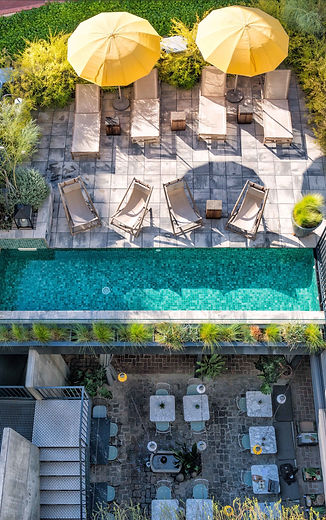
Hotel Brummell is a chic, contemporary boutique hotel located a few steps from the Miró Foundation and The Grec theatre. Guests will benefit from free and unlimited yoga classes. A running club, for both guests and locals, is organized regularly. The hotel features an outdoor pool, a garden and a sauna. T-training and boxing sessions are hosted at the well-being centre The Loft.
Hotel Brummell

Gothic elegance with rooftop serenity
Amid the historic Gothic Quarter, this charming hotel offers a serene oasis with unique architectural character and intimate ambience. Unwind by the rooftop pool or savour exquisite cuisine at the renowned restaurant, all while enjoying attentive service and tranquil surroundings.
Hotel Neri Relais & Chateaux

Serene elegance in the Gothic Quarter
Stylish and intimate, this beautifully designed hotel in the Gothic Quarter offers a serene escape amidst a bustling city. Enjoy a rooftop deck with a plunge pool, a well-stocked minibar, and an excellent restaurant, all complemented by exceptional, personalized service.
Wittmore Hotel

This stylish design hotel is located 150 metres from Rocafort Metro Station in Barcelona. It offers a trendy rooftop bar and air-conditioned rooms with free Wi-Fi and plasma satellite TV. The soundproofed rooms at Hotel Villa Emilia feature parquet floors and modern décor. Each one has a minibar and a private bathroom with a hairdryer. Hotel Villa Emilia Barcelona’s restaurant serves creative Catalan food, and there is a weekly barbecue. The Villa Emilia Bistrot offers live music.
Hotel Villa Emilia
Tips for Booking a Hotel
Booking the right hotel is one of the most important factors when it comes to getting the most out of your vacation. If you're looking to plan an unforgettable trip, you'll need to find the right place to stay. Learn how Expedia can help you book the right hotel for your needs whether you're taking the family on a vacation, traveling with someone special, or just taking some time away for yourself.
How to book a hotel on Expedia?
When you book through Expedia, the entire process is simple. You'll find a wide range of accommodation options and destinations to choose from, as well as a variety of search filters to help you find exactly what you're looking for. That means you can search exclusively for hotels with a pool, pet-friendly policies, or family-friendly amenities.Las Vegas hotels and New York hotels are especially popular, but you'll also find options for other destinations like Myrtle Beach.
Getting to Barcelona
Once you arrive at the airport, the RENFE train service runs approximately every 30 minutes to and from Barcelona airport to the city centre -- it stops at three main stations: Estació Sants, Passeig de Gràcia and El Clot. The travel time is approximately 25 minutes. The second best option is the Airport Express bus! You can find more info on the Aerobus here.
Barcelona Budget Tips
Barcelona isn't known to be a "budget-friendly" destination. Yet it's not too expensive either. Luckily, there are a lot of cheap (and even free) things that you can do while visiting. Read my tips for visiting Barcelona on a budget to see just how you can save yourself some money.
Which airport do you fly to for Barcelona?
Barcelona-El Prat Airport
Barcelona-El Prat Airport is the only airport serving Barcelona. It's only 8 miles southwest of the City Centre and is easily accessible by public transport.
Metro: Barcelona currently has eight metro lines that can get you pretty much everywhere in the city. However, it is a popular spot for pickpockets. If you're traveling on a budget, it's a great option—a single ticket will cost you 2,55€ but a T-10 Card, good for 10 rides, only costs 12,15€.
Taxi: Barcelona's licensed taxis are easily identified by their yellow and black exterior. They have to charge you the amount displayed on the meter. Taxis here are said to be the cheapest in Europe so if it's more convenient, I'd recommend a taxi over the metro.
Walking + Biking: Barcelona is very walkable and accessible to bikes. Save your money and get some fresh air!
When is the best time to visit Barcelona?
With comfortable temperatures and less crowds, March, April, May, and October are perfect for exploring the city. If you want to make the most of Barcelona’s beaches, then summer offers up seven or more hours of daily sunshine. This doesn’t mean the city sleeps in winter. With mild temperatures and snow being rare, Barcelona can still be a good choice for a winter getaway.
Barcelona enjoys a Mediterranean climate with mild temperatures throughout the year. Compared to some popular Spanish seaside resorts, Barcelona is less hot in the summer but warmer in the winter.