
_edited.png)

Switserland Travel Guide
Switzerland captivates travelers with its stunning Alpine landscapes, pristine lakes, and seamless blend of historic charm and modern efficiency, making it an ideal destination for adventure, culture, and relaxation. Nestled in central Europe and bordered by France, Germany, Italy, Austria, and Liechtenstein, this landlocked gem spans diverse terrain including the towering Alps covering 60% of its area, the rolling Swiss Plateau where most of the population resides, and the Jura Mountains, all shaped by ancient geological forces like the African plate's thrust.
Brief History and Geography
Switzerland's history traces back to medieval confederations that evolved into its neutral, federal structure today, with a rich multicultural heritage reflected in its old town centers, Roman sites, and iconic landmarks like Chillon Castle. Geographically, it features glacier-carved peaks, deep valleys, and over 1,500 lakes, earning it the title "water tower of Europe" for holding 6% of the continent's freshwater.
Climate and Distinctive Traits
The Alpine climate brings four distinct seasons, with cooler temperatures at higher elevations, moderate rainfall, and influences from nearby seas preventing extremes—summers are mild for hiking, winters ideal for skiing. Distinctive traits include world-class chocolate and cheese production, tourism railways, and a commitment to neutrality and precision, embodied in thriving cities like Zurich, Geneva, and Bern.

Useful Facts about Netherlands
Airport
Zurich Airport (ZRH) is 10km from Zurich. Geneva Airport is 7 km from Geneva.
Time Difference
UTC+1 (UTC+2 from last Sunday in March to last Sunday in October)
Visa Requiered
Population
7.9 million
Currency
Swiss Franc CHF
Capital
Bern
Int.Dial Code
+41
Languages
German, French, Italian and Romansch
Voltage
Type C and Type J
Credit Card


Best Time to Visit
Switzerland features a temperate continental climate with four distinct seasons, varying by region due to its Alpine topography, elevation, and influences like Atlantic winds and the Foehn effect—lowlands enjoy milder conditions while mountains experience cooler temperatures and heavier precipitation.
Seasonal Overview
Winter (December–February) brings cold snaps with lows of -2°C to 7°C, short days, and snow in the Alps, ideal for skiing, though lowlands may see fog or mild spells. Spring (March–May) transitions with 8–15°C days, blooming landscapes, and variable showers, suiting city explorations but lingering high-altitude snow. Summer (June–September) offers pleasant 18–28°C warmth, longer days for hiking and lakeside activities, though afternoon thunderstorms occur, especially in the Alps. Autumn (September–November) features mild 8–15°C with colourful foliage, fewer crowds, and increasing rain or early snow.
June to September provides optimal weather for outdoor pursuits like hiking, festivals, and sightseeing with warm days and minimal extremes. Winter appeals to snow sports enthusiasts, while shoulder seasons (spring/autumn) offer value and scenery without peak crowds. Pack layers, rain gear, and sun protection year-round, given regional fluctuations.
Getting here
Reach Switzerland via its three major international airports: Zurich (ZRH) handling over 31 million passengers annually, Geneva (GVA) with around 18 million, and Basel-Mulhouse-Freiburg (BSL) serving about 9 million, all connected to global hubs. Major airlines include Swiss International Air Lines, easyJet, Lufthansa, United Airlines, British Airways, and others like Aegean, LOT, Singapore Airlines, and Etihad, offering direct flights from Europe, North America, Asia, and beyond. From airports, efficient transfers include SBB trains every 10 minutes from Zurich to the city center (15 minutes, ~7 CHF), buses like Swiss PostBus to remote areas, taxis/limousines/private services with flight monitoring, and car rentals from partners like Mobility or Enterprise at terminals.
Trains and Buses
Switzerland's renowned SBB rail network links airports directly to cities like Zurich HB, Geneva, and Basel, with international connections to neighboring countries; book via the SBB app for seamless travel including SWISS Air Rail check-in. Buses complement trains for rural routes, while FlixBus or regional services provide affordable intercity options.
Car Rentals and Driving
Rent cars at airports from Hertz, Sixt, Europcar, or SBB partners for flexibility across Alps and lakes; international driving permits recommended, vignettes required for highways (~40 CHF yearly).
Visa and Entry
Schengen Area member; US, UK, EU/EEA citizens need no visa for 90/180-day stays, but from late 2025/2026, ETIAS pre-authorization (online, ~7 EUR) and EES biometric registration apply for visa-exempt travelers. Land borders from France, Germany, Italy, Austria, or Liechtenstein are seamless with ID checks; no routine crossings needed
Find Flights To Switserland
getting around
Switzerland boasts one of the world's most efficient and integrated public transport networks, spanning over 5,000 km of rails, buses, trams, boats, and cable cars, operated primarily by SBB (Swiss Federal Railways) with clockwork punctuality and nationwide ticketing via apps or the Swiss Travel Pass.
Trains
InterCity (IC) trains connect major cities like Zurich to Geneva in 2.5–3 hours at speeds up to 200 km/h, stopping minimally; InterRegio (IR) and regional trains serve mid-range and local routes with frequencies from every 15–60 minutes. Trams thrive in cities like Zurich (16 lines, every 2 minutes peak), Basel, Bern, and Geneva for urban and suburban travel.
Buses and Other Options
Iconic yellow PostBuses reach remote Alpine villages via scenic passes, integrating seamlessly with trains under unified fares. Boats ply lakes like Geneva and Lucerne, while funiculars, gondolas, and rack railways access peaks; night networks and e-buses expand coverage.
Practical Tips
Buy tickets via SBB app for zones or passes (e.g., Swiss Travel Pass unlimited for tourists); vignettes (~40 CHF) required for cars on highways, with rentals available but traffic/congestion common—public options preferred for eco-efficiency. English signage and apps ensure ease for visitors.

Things To See & Do
Here are some of the very best attractions in Switzerland, spanning mountains, lakes, cities, and cultural highlights.
Iconic natural wonders
Matterhorn & Zermatt
Switzerland’s most iconic peak, the Matterhorn, towers above the car‑free resort village of Zermatt, famous for skiing, hiking, and dramatic views from Gornergrat and Klein Matterhorn.
Jungfraujoch Sphinx Observatory
A UNESCO World Heritage high‑alpine saddle in the Bernese Alps with Europe’s highest railway station, glacier views, an Ice Palace, and year‑round snow activities.
Rhine Falls
Europe’s most powerful waterfall near Schaffhausen, where viewing platforms and boat rides bring you close to the 150‑meter‑wide cascade.
|
Oeschinensee
A stunning turquoise alpine lake above Kandersteg, ideal for hiking, rowing, and mountain views in the Bernese Oberland.
Lauterbrunnen
A dramatic U‑shaped valley with sheer cliffs, traditional chalets, and 72 waterfalls including Staubbach Falls, often called one of the most beautiful valleys in the Alps.
|
Charming towns, cities & lakes
Lucerne
Historic lakeside city with Chapel Bridge, a preserved Old Town, nearby Mt. Pilatus and Mt. Rigi, and easy access to lake cruises on Lake Lucerne.
|Interlaken
Adventure hub between Lakes Thun and Brienz, popular for paragliding, boat trips, and as a base for Jungfrau region excursions.
Zürich
Switzerland’s largest city combines a picturesque Old Town, Bahnhofstrasse shopping, Lake Zurich promenades, and important museums like Kunsthaus and the Swiss National Museum.
Montreux
Europe’s largest alpine lake, lined with promenades, vineyards, and castles such as Château de Chillon near Montreux, plus the charming town of Vevey.
Lugano
A sun‑kissed, Italian‑speaking lakeside city with palm trees, waterfront promenades, and easy access to nearby viewpoints like Monte Brè and Monte San Salvatore.
Culture, history & unique experiences
Château de Chillon (Montreux)
Fairy‑tale medieval castle on a rock in Lake Geneva, one of Switzerland’s most visited historic monuments.
Swiss National Park
Switzerland’s only national park in the Engadine, protecting high‑alpine landscapes, wildlife, and hiking trails.
Bern Old Town
UNESCO‑listed capital city center with arcaded streets, medieval towers, fountains, and views from the rose garden.
Basel
Culture‑rich Rhine city with over 40 museums, a handsome Old Town, and striking modern architecture.
Lavaux Vineyards
Terraced vineyards above Lake Geneva, a UNESCO World Heritage landscape ideal for scenic walks and wine tasting.
Tips
Switzerland is generally very safe, with low violent crime, high health standards, and well-organized emergency services, but visitors should still respect local norms and take basic precautions in cities and mountains. The information below is general; always confirm details with your own government’s latest travel advice.
Local customs and culture
Swiss society values punctuality, quietness, and respect for rules, so being on time for tours and reservations and keeping noise down on public transport is appreciated. Dress is usually neat-casual, and people expect you to wait for pedestrian lights, buy tickets before boarding transport, and follow recycling rules where indicated.
In German-speaking areas, greetings like “Grüezi” and polite “please/thank you” in any language go a long way, and tipping is modest (rounding up the bill or leaving 5–10% in restaurants if service was good). Public displays of drunkenness or loud behavior on trams or trains are frowned upon, and smoking is restricted in many indoor public places.
Health, vaccinations, and food safety
For most travelers, routine vaccines (such as measles, tetanus, and seasonal flu) should be up to date, but there are no special mandatory vaccines for typical trips solely to Switzerland. Health care is high quality but expensive, so comprehensive travel insurance covering medical treatment and evacuation is strongly recommended.
Tap water is safe to drink throughout the country, and food hygiene standards in restaurants and supermarkets are very high, making foodborne illnesses relatively uncommon. For outdoor activities, the main health concerns are sun exposure at altitude, sudden weather changes, and tick bites in forests and meadows, so sun protection, layers, and tick checks are advisable.
Crime and personal safety
Switzerland has low rates of serious crime, and many governments rate it as a place where you can exercise “normal safety precautions.” The main risks for visitors are petty theft such as pickpocketing and bag-snatching, especially at airports, major train stations, and on busy trains and trams.
Keep valuables out of sight, secure bags in crowded areas, and avoid leaving items unattended on café terraces, in parked cars, or in overhead racks on trains. In mountain areas, accidents are a bigger concern than crime, so only undertake hikes or snow sports suitable to your fitness and experience, check weather and avalanche reports, and consider insurance that covers mountain rescue.
Emergency numbers and practical tips
Nationwide emergency numbers in Switzerland are: police 117, ambulance/medical emergencies 144, and fire 118. The general European emergency number 112 also works and can connect you to relevant services.
Save your embassy or consulate contact details and your insurer’s emergency assistance number in your phone and on paper. When calling for help, be ready to give your location (train station name, road number, or hiking trail reference) and follow local instructions, especially in mountain and winter conditions.

Basel Travel Guide
Basel is a compact, culturally rich city on the Rhine River in northwestern Switzerland, known for its beautifully preserved medieval old town, cutting‑edge architecture, and world‑class art scene. It sits at the meeting point of Switzerland, France, and Germany, which gives it an unusually international character for its size.
Overview and purpose
Basel is Switzerland’s third‑largest city and a major hub for culture, trade, and transport in Central Europe, with suburbs that even spill over into France and Germany. It serves as an important gateway for travelers exploring Switzerland and the tri‑border region, combining easy access with a relaxed, walkable urban core.
Brief history
The city’s roots go back to Roman times, and it later grew into an important medieval bishopric and trading center along the Rhine. Basel embraced the Protestant Reformation in 1529, and its long history is still visible in landmarks such as Basel Minster and the richly painted Town Hall in the old town.
Geography and climate
Basel lies on relatively low‑lying terrain along the Rhine, with flatter riverside areas and some hillier ground inland that offers views toward the Rhine valley and the nearby Black Forest. The city has a temperate climate with four distinct seasons: warm, pleasant summers and cold winters, making it attractive year‑round for both city breaks and outdoor time along the river.
Distinctive characteristics
Basel is often described as Switzerland’s cultural capital, boasting more than 40 museums and a particularly strong focus on visual arts and design. Its identity is shaped by a mix of medieval architecture and bold contemporary buildings, plus a vibrant calendar of events such as the Art Basel fair and the lively Fasnacht carnival.
Tourist attractions
Key sights include the red‑sandstone Basel Minster with its twin towers and river views, the atmospheric old town streets around Marktplatz and Münsterplatz, and the ornate Town Hall. Visitors also flock to the Kunstmuseum and Fondation Beyeler for art, enjoy walks and boat trips along the Rhine, and use Basel as a springboard for nearby excursions into France and Germany.

Best Time to visit
The best times to visit Basel are spring (March–May) and autumn (September–November) for mild weather, fewer crowds, and lower costs, or summer (June–August) for festivals and Rhine swimming.
Spring (March–May)
Average temperatures range from 8–17°C (46–63°F), with blooming parks and lighter tourist numbers ideal for Old Town walks and museums like Kunstmuseum Basel. Rain is possible but manageable; book ahead for early events like Fasnacht carnival if aligning with your dates.
Summer (June–August)
Warm days of 18–25°C (64–77°F) suit outdoor activities such as Rhine ferries, biking, and events like Art Basel or Street Music Festival, though expect peak crowds and higher prices. This is prime for swimming in the Rhine and zoo visits, but pack layers for evening coolness.
Autumn (September–November)
Pleasant 10–18°C (50–64°F) weather with fall foliage enhances hikes and cultural spots, plus Art Basel in early autumn draws art lovers without summer heat. Fewer visitors mean easier access to Fondation Beyeler; check for wine fairs later in the season.
Winter (December–February)
Cool 1–7°C (34–45°F) with possible snow suits Christmas markets at Münsterplatz and Barfüsserplatz, offering a festive vibe and fewer daytime tourists. Indoor attractions like Museum Tinguely shine; shorter days call for midday visits

Find Flights To Basel
How to Get
Basel is easy to reach by air via EuroAirport Basel–Mulhouse–Freiburg, by frequent international trains and buses, and by car from neighboring France and Germany, with standard Schengen‑area visa and border rules applying. Visitors from many countries can enter visa‑free for short stays, while others need a Swiss Schengen visa and, from 2025, ETIAS authorization.
Flying to Basel
The main gateway is EuroAirport Basel–Mulhouse–Freiburg (BSL/MLH/EAP), located in France just a few kilometers northwest of Basel and about 15 minutes from the city center. The airport offers several hundred weekly scheduled and charter flights to more than 60 European destinations, including major hubs served by full‑service and low‑cost carriers.
Airlines operating to EuroAirport typically include Swiss/Swiss International Air Lines, easyJet, Lufthansa Group carriers, Air France–KLM partners, and low‑cost airlines such as Ryanair and Wizz Air, with routes from cities like London, Paris, Amsterdam, Berlin, Barcelona, and other European centers. Travelers arriving from intercontinental destinations often connect via hubs such as Zurich, Frankfurt, Paris, Amsterdam, or London before continuing to Basel.
Airport to city transfers
From EuroAirport, BVB bus line 50 connects the airport with Basel SBB main railway station in about 18–20 minutes, stopping at Kannenfeldplatz and Cargo, with high frequency during peak hours (as often as every 7 minutes) and regular service throughout the day. Basel SBB is the main hub for onward trains and trams, making the bus the most convenient and budget‑friendly transfer for most visitors.
Taxis and ride‑hail services are available outside the terminal, with driving time to central Basel usually around 15 minutes depending on traffic. Car‑rental desks are located at the airport on both the Swiss and French sides, allowing travelers to pick up vehicles for trips into Switzerland, France (Alsace), or Germany (Black Forest).
Trains and long‑distance buses
Basel SBB (Swiss side) and Basel Badischer Bahnhof (German‑operated station) are major rail hubs with frequent international and domestic services. Direct trains typically link Basel with Zurich (around 1 hour, with dozens of trains per day), Paris (TGV/ICE via TGV Lyria and SNCF, often around 3 hours), and many other cities such as Interlaken, Lucerne, Strasbourg, Frankfurt, and Milan.
High‑speed and InterCity services are provided by Swiss Federal Railways (SBB/CFF/FFS), Deutsche Bahn, SNCF (including TGV Lyria), and other operators, making rail an efficient option from neighboring countries. Long‑distance buses also serve Basel from cities in France, Germany, and beyond, usually stopping near central transport hubs where trams and local buses connect easily into the city.
Driving, car rental, and border crossings
Basel lies at the junction of Switzerland, France, and Germany, close to major motorways from all three countries. Roads are well maintained, but drivers entering Switzerland must respect motorway vignette requirements and national traffic rules, and check that rental cars are authorized to cross borders into neighboring countries.
Border crossings between Switzerland and EU neighbors are usually quick, with spot checks rather than systematic passport control for Schengen‑area travelers, though valid identification must always be carried. Day trips from Basel by car to nearby areas such as Saint‑Louis and Mulhouse in France or Freiburg in Germany are straightforward thanks to short driving distances from the airport and city.
getting around
Basel is compact and highly walkable, especially in the central Old Town and along the Rhine, but its efficient public transport system—primarily trams and buses—makes getting around simple and reliable for all visitors.
Trams and Buses
The backbone is the Basel tramway network with 12 lines (green BVB city trams and yellow/red BLT regional ones), covering the city center, suburbs, and even cross-border spots in France and Germany. Buses fill gaps in outer areas; services run every 7–15 minutes daytime (less at night), are clean and punctual, and connect key sights like Basel SBB station, museums, and the Rhine promenade.
Hotel guests receive a free Basel Card upon check-in, granting unlimited rides on all public transport in central Zone 10 (city core) for the duration of their stay—ideal for tourists exploring attractions without extra costs. Single tickets cost CHF 1.80–2.60 by zone/duration (validate before boarding to avoid fines); day passes start at CHF 8–10, or use apps like BVB or Google Maps for planning and mobile tickets.
Walking and Cycling
Much of the Old Town, Rhine Promenade, and main shopping streets are pedestrian-friendly with flat paths and scenic routes under 2–3 km between major sites like the Minster and Kunstmuseum. City bikes are rentable via stations (around CHF 25–40/day); paths are extensive and safe, but avoid rush hours on trams with bikes as space is limited.
Taxis, Rideshares, and Trains
Taxis and Uber are available but pricier (CHF 3–4/km base); use for late nights or airport runs from EuroAirport (15–20 minutes). Regional S-Bahn trains from Basel SBB link day-trip spots like Zurich (1 hour) efficiently. Driving is less ideal due to one-way streets, paid parking, and pedestrian zones—public options suffice for most stays.
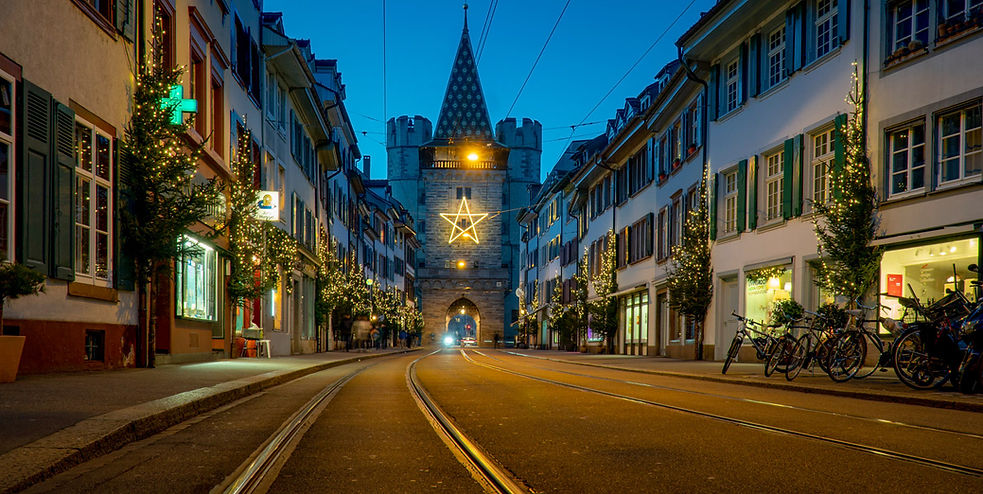
Basel activities
Basel offers easy outdoor adventures, hands-on food experiences, and relaxed nightlife and shopping, most of which you can enjoy on a moderate daily budget. Costs below are indicative mid‑range prices to help you frame your guide.
Outdoor: Hiking and biking
-
Around Basel you can hike forested valleys and rivers in the Basel-Landschaft region, such as trails in Kaltbrunnental or along the Rehberger Weg from Riehen to Weil am Rhein, typically 2–5 hour marked routes reachable by tram or regional train from Basel SBB in under 30–60 minutes. Most trails are free; budget a few euros/francs for public transport each way and wear sturdy shoes plus layers for changeable weather.
-
Cycling routes around Basel-Stadt include easy riverside rides on mostly paved paths and intermediate 20–40 km loops into surrounding countryside, popular with both locals and visitors. Expect to pay roughly 25–40 CHF per day for a standard bike rental in the city, use marked bike lanes where possible, and bring a reusable water bottle because fountains are common and safe.
Cultural: Classes and performances
-
Basel hosts small-group cooking activities such as Swiss chocolate‑making workshops, traditional cheese‑fondue dinners, and Italian‑style pizza or pasta classes, many of which run in central historic venues or local homes within the city. Prices generally range from about 70–140 CHF per person depending on duration and inclusions; book ahead, especially weekends, and alert hosts to dietary needs when reserving.
-
Dance‑related cultural evenings are often scheduled as special events, such as dinner-and-dance nights or New Year’s Eve programs at venues like event halls or former industrial sites in Basel. Check event listings close to your travel dates, factor in 30–80 CHF for entry or dinner packages, and arrive early if seating is open or combined with live music.
Entertainment: Nightlife and shopping
-
Basel’s Old Town and riverside districts offer bars and casual nightspots rather than big-club nightlife, with many venues clustered around central squares and near the river. Plan for typical Swiss drink prices (a cocktail often 15–20 CHF), use trams or walking to move between areas, and check last tram times if staying outside the center.
-
For shopping, the main “shopping mile” runs from Claraplatz through the old town, complemented by markets such as the daily fresh‑produce market at Marktplatz and regular flea and new‑goods markets at Barfüsserplatz. Window‑shopping is free; budget from 20–50 CHF for local specialties and snacks at markets, and visit in the morning for the best selection and lighter crowds.

Attractions
Basel’s highlights range from world-class art museums and a Gothic riverside cathedral to relaxed Rhine walks and quirky kinetic sculptures. Below are key attractions with brief descriptions, typical hours, approximate admission, and simple visit tips.
Historic Old Town & Basel Minster
Basel’s Altstadt (Old Town) is a compact maze of cobbled lanes, colorful townhouses, and small squares between Marktplatz, Mittlere Brücke, and the cathedral hill. It is free to explore at any time; visit in the morning or late afternoon for softer light and fewer crowds, and wear good shoes for steep, uneven streets.
Basler Münster (Basel Minster) is a red-sandstone Gothic cathedral with twin towers and a Rhine-facing terrace offering classic city views. Entry to the church is usually free or by small donation during the day, while tower access (when open) costs a few francs; go earlier in the day for clearer views and check for closures during services.
Rhine Promenade & Ferries
The Rhine Promenade is Basel’s outdoor living room, with broad steps, walking paths, and cafés along both banks of the river. Walking here is free 24/7; in summer, bring a swimsuit and a waterproof “Rhine swim bag” if you want to float with the locals, and always use designated entry and exit points.
Traditional “Fährimänner” ferries and short river crossings offer a scenic, low-cost way to see the skyline from the water. Expect to pay only a few francs in cash or contactless per crossing, and ride early evening for atmospheric light and photos without harsh glare.
Kunstmuseum Basel
Kunstmuseum Basel is the city’s flagship fine‑arts museum, famous for Old Masters and modern works by artists such as Holbein, Van Gogh, and Picasso. Standard opening hours are roughly 10:00–18:00 on most days with one late evening; Mondays are usually closed, so always confirm the current schedule before you go.
Adult admission is commonly around 28–30 CHF for the main collection and special exhibitions, with reductions for students and seniors and certain free times (such as one evening hour on select weekdays or the first Sunday of the month). Book tickets online at busy times, allow 2–3 hours, and start with the permanent collection if your time is limited.
Fondation Beyeler
Fondation Beyeler is a renowned modern art museum in nearby Riehen, set in a serene park with architecture by Renzo Piano. In 2025 its regular hours run daily from about 9:00 or 10:00 to 18:00, with extended opening to 20:00 on Wednesdays.
Adult tickets are around 30 CHF during major exhibitions, with reduced rates for concessions. Pre‑purchase timed tickets for blockbuster shows, plan at least 2 hours including the gardens, and consider visiting on a weekday morning for a quieter experience.
Museum Tinguely & Fountains
Museum Tinguely, on the Rhine, presents kinetic and interactive works by Jean Tinguely, where many sculptures move or make sound when activated. Typical hours are late morning to early evening most days, with one closed day per week; check the current timetable as seasonal hours can shift.
Adult admission is roughly in the mid‑20 CHF range with discounts for children and cardholders. This is especially fun for families—plan 1.5–2 hours and bring ear protection if sensitive to noise because some installations are loud.
City Museums: History & Nature
The Historisches Museum Basel (main site in Barfüsserkirche) traces the city’s development through medieval art, tapestries, and everyday objects set in a former Franciscan church. Expect standard museum hours from late morning to late afternoon on most days and similar mid‑range ticket prices, with multi‑site passes sometimes available.
Naturhistorisches Museum Basel showcases dinosaurs, fossils, minerals, and animal dioramas, making it a strong choice for families and science fans. Admission is typically comparable to other city museums; visit on a rainy day, and check for family tickets or free periods to save on costs.
Self‑guided city walk
Several self‑guided walking routes link Basel’s main sights, including the Tinguely Fountain, Basel Minster, Mittlere Brücke, and Rhine promenade. One popular loop is about 7–8 km and takes roughly 2 hours of walking, or half a day including museum stops and café breaks.
The walk itself is free; you only pay to enter museums you choose along the way. Pick up a printed map from the tourist office or download a digital route, and wear layers because weather can switch quickly between sun, wind, and showers.

Where to Stay
How to choose by budget and area
-
Old Town (Altstadt Grossbasel / Kleinbasel): Best for first-time visitors and short city breaks; pay more for character and proximity to sights (e.g., Hotel Märthof, Boutique & Design Hotel Volkshaus).
-
Near Basel SBB (Gundeldingen / Bachletten): Great for day trips across Switzerland and slightly better value; consider Schweizerhof, ibis Basel Bahnhof, ibis budget Basel City, or capsule options like MUE Cubes.
-
Messe / Clara & across the border: Good for fairs, drivers, or longer stays, with larger hotels and apartments at competitive rates (Basel Marriott, B&B HOTEL Basel, self-catering near Messe, or a cross-border stay in Germany for lower prices and easier parking).
Booking tips
-
Use the Basel Card: Many hotels and some guesthouses include a Basel Card that gives free public transport and discounts on museums—highlight this as added value in your guide.
-
Book early for peak dates: Summer, Art Basel, and big Messe events drive prices up; advise readers to secure rooms well in advance during these periods.
Some Recommended accomodation in Basel

-
The 4-star Hotel Maerthof Basel, situated in the Old Town Grossbasel district, is just 300 metres from Münsterplatz and offers stunning city views. Boasting a location just moments from the historic Middle Bridge, the hotel includes 68 rooms along with a hammam and a sauna.


Zermatt Travel Guide
Zermatt is a car-free alpine village nestled at the foot of the iconic Matterhorn in Switzerland's Valais canton, renowned as a premier destination for year-round adventure, luxury relaxation, and breathtaking mountain scenery.
Overview and Purpose
Zermatt serves as Switzerland's ultimate mountain retreat, drawing hikers, skiers, and nature lovers to its pristine valley environment below 4,000-meter peaks. It emphasizes sustainable tourism with electric vehicles, pedestrian paths, and horse-drawn carriages, making it an ideal base for exploring the Alps without urban hustle.
Brief History
Originally a settlement for alpinists and herders, Zermatt gained fame in the 19th century with the first ascent of the Matterhorn in 1865, sparking its evolution into a mountaineering hub. Historic hotels like Monte Rosa, built for early climbers, still stand amid preserved chalet architecture.
Geography and Climate
Located at 1,600 meters in a narrow valley surrounded by glaciers and peaks like Monte Rosa, Zermatt features dramatic terrain accessible by cog railways and cable cars. Its alpine climate brings snowy winters for skiing and mild summers with wildflower meadows, though weather shifts quickly at higher elevations.
Distinctive Characteristics
The village's charm lies in its traffic-free streets lined with wooden chalets, luxury boutiques, and Matterhorn views, fostering a sporty yet upscale vibe focused on outdoor pursuits over ostentation. Year-round glacier skiing and over 400 km of trails highlight its versatility as a sustainable, iconic alpine escape.
Tourist Attractions
Top draws include the Gornergrat Bahn railway for panoramic Matterhorn vistas, Matterhorn Glacier Paradise cable car to Europe's highest station, and hikes like the Five Lakes Walk. The Matterhorn Museum recounts climbing history, while summer offers biking and winter delivers world-class slopes
When to go
-
Winter (Dec–March): Prime ski season with extensive slopes linking Zermatt and Cervinia in Italy; days are short but village atmosphere is very cosy.
-
Summer (June–Sept): Best for hiking, biking and clear Matterhorn views; lifts and mountain railways run long hours and most trails around Gornergrat, Rothorn and Schwarzsee are open.
-
Shoulder seasons (April–May, Oct–Nov): Quieter and cheaper, but some lifts, hotels and restaurants close for maintenance; still good for scenic walks and spa time.
How to get there
-
By train: Zermatt is reached by cog railway from Visp/Brig via Täsch; these connect to Swiss mainline trains from Geneva, Zurich, Basel and Milan.
-
By car (part‑way): Private cars must stop in Täsch, where large car parks and shuttle trains or taxis run frequently up to Zermatt.
-
By scenic rail: The famous Glacier Express route between St. Moritz/Chur and Zermatt is a classic way to arrive, with panoramic carriages through the Alps.
Getting around locally
-
In Zermatt: The village is fully car‑free; people walk, use e‑buses, or small electric taxis and hotel shuttles.
-
Mountain access: A network of cog railways, funiculars and gondolas links the village with Gornergrat, Sunnegga–Rothorn, Schwarzsee and Matterhorn Glacier Paradise, so you can reach viewpoints and trailheads without a car.
Top things to do in Zermatt
-
Matterhorn Glacier Paradise (Klein Matterhorn): Ride the cable cars up to Europe’s highest year‑round lift station for glacier views, ice attractions and year‑round snow sports.
-
Gornergrat Railway: Take the cog train to an open ridge at over 3,000 m with a panorama of 29 peaks above 4,000 m and the Gorner Glacier; classic hikes lead down via Riffelsee and Riffelberg.
-
Sunnegga–Blauherd–Rothorn: This lift chain gives easy access to lakes like Stellisee, family‑friendly play areas and the Gourmet Trail with several mountainside restaurants.
-
Hiking highlights: Popular routes include the Matterhorn Glacier Trail (Trockener Steg–Schwarzsee), the Five Lakes Walk, and the path to Hörnlihütte at the Matterhorn’s base.
-
In the village: Stroll Bahnhofstrasse for shops and cafés, visit the Matterhorn Museum for mountaineering history, and explore the old wooden barns in the historic quarter.
-
Gorner Gorge: Short, scenic walk through a narrow ravine on wooden walkways, reachable on foot from the village.
Surroundings and day trips
-
Cervinia (Italy): In winter the connected ski area lets you cross the border on skis; in summer there are high‑level hikes and glacier trips from the Italian side.
-
Nearby valleys (Valais): From Visp/Brig you can detour into other side‑valleys like Saas Valley (Saas‑Fee) or Lötschental for quieter hiking and traditional villages.
-
Scenic passes and routes: Combining Zermatt with the Glacier Express, the Bernese Oberland, or Lake Geneva region works well for a broader Switzerland itinerary.
Where to stay
-
In the village core: Hotels and apartments near Bahnhofstrasse or the station are convenient for trains and lifts, with lots of dining options.
-
River or hillside locations: Properties along the river or on the hill above the centre often advertise direct Matterhorn views and quieter surroundings, sometimes with their own electric shuttle.
Zermatt highlights at a glance
Area / activityWhat it’s known forAccess from village
Matterhorn Glacier Paradise
Highest lift station, glacier views, year‑round snowSeries of gondolas/cable cars
Gornergrat
Iconic railway, glacier panorama, lake hikesGornergrat Railway from station
Sunnegga–RothornLakes,
family zones, Gourmet Trail, Matterhorn viewsFunicular + cable cars
Village & Gorner Gorge
Car‑free streets, museum, ravine walkOn foot / e‑bus from hotels